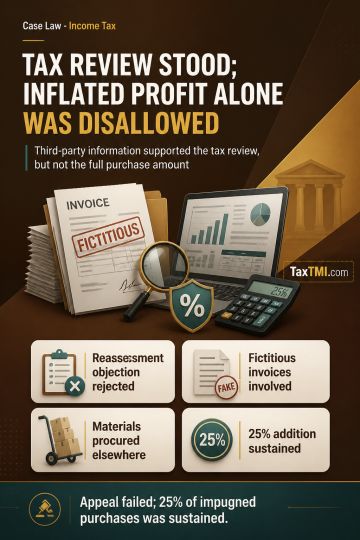
Pre-amendment reassessment limitation bars late notices under the preserved regime, invalidating consequential reassessment for affected earlier asses...
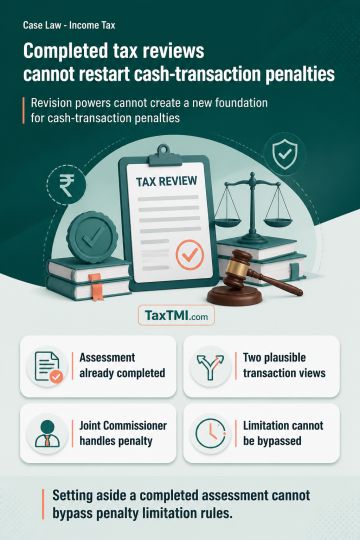
Cash-sales explanations for bank deposits require documentary reconciliation; reassessment notice survived where effective response time was available...
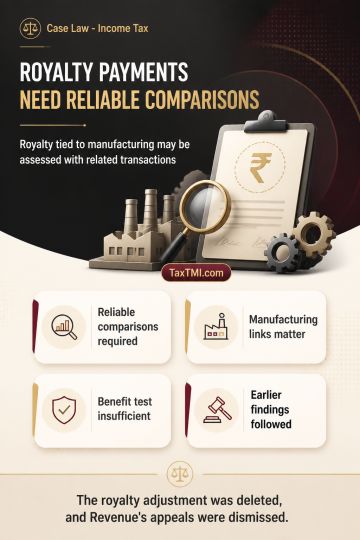
Functional comparability in transfer pricing prevents ad hoc arm's length adjustments where functions, assets, risks and reliable comparables are unes...
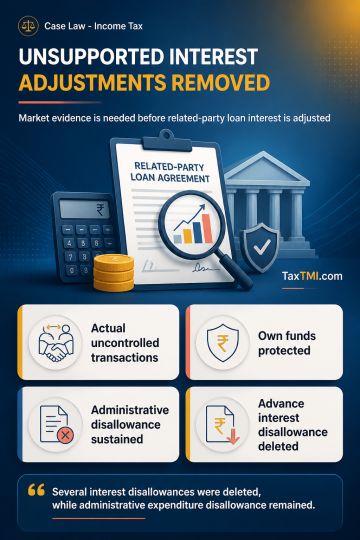
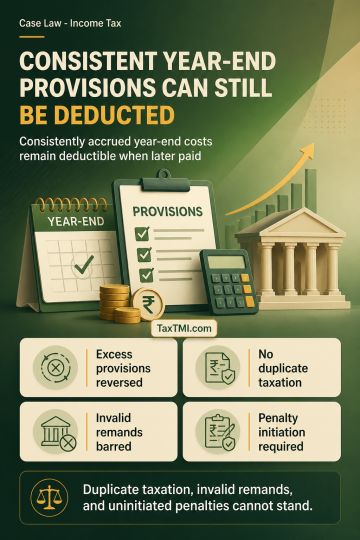
Contingency expenses, exempt-income disallowance, and royalty benchmarking: unsupported adjustments were deleted under consistent accounting and trans...
The Appellate Court exceeded its jurisdiction u/s 37 of the Arbitration and Conciliation Act, 1996, by setting aside an arbitral award that had already been confirmed u/s 34. The Supreme Court reiterated that courts should not interfere with arbitral awards lightly, and mere possibility of an alternative interpretation does not warrant reversal. The scope of intervention is confined to grounds specified u/s 34, and the appellate power u/s 37 is limited to examining if the court u/s 34 acted within its limits. The Appellate Court cannot reappraise evidence on merits as an ordinary court of appeal. Since the arbitral award was reasonable, based on evidence, and not against public policy or law, it was rightly upheld u/s 34. The Appellate Court erred by setting it aside without finding any illegality u/s 34. Merely having a better view is no ground for interference. The Supreme Court set aside the Appellate Court's judgment and restored the arbitral award.
The Appellate Court exceeded its jurisdiction u/s 37 of the Arbitration and Conciliation Act, 1996, by setting aside an arbitral award that had already been confirmed u/s 34. The Supreme Court reiterated that courts should not interfere with arbitral awards lightly, and mere possibility of an alternative interpretation does not warrant reversal. The scope of intervention is confined to grounds specified u/s 34, and the appellate power u/s 37 is limited to examining if the court u/s 34 acted within its limits. The Appellate Court cannot reappraise evidence on merits as an ordinary court of appeal. Since the arbitral award was reasonable, based on evidence, and not against public policy or law, it was rightly upheld u/s 34. The Appellate Court erred by setting it aside without finding any illegality u/s 34. Merely having a better view is no ground for interference. The Supreme Court set aside the Appellate Court's judgment and restored the arbitral award.
Note: It is a system-generated summary and is for quick reference only.
 TaxTMI
 TaxTMI

 of 4918