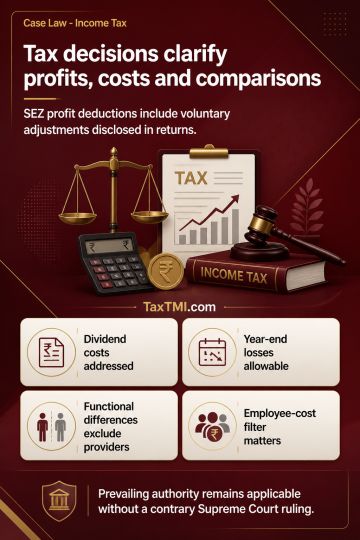
SEZ-unit profit deduction covers voluntary transfer-pricing adjustments, while exempt-income costs, foreign-exchange loss and ITeS comparables are exa...
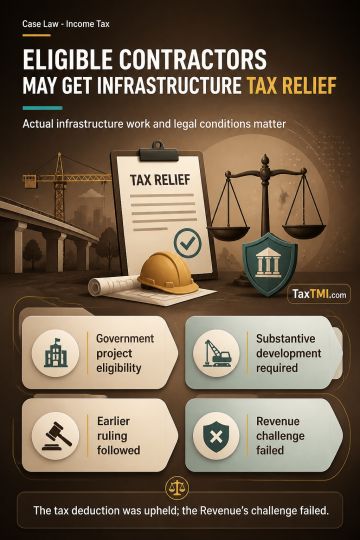
Infrastructure-development deduction remains available to EPC contractors when substantive statutory conditions outweigh contractor labels in agreemen...
Explained Investment Sources: documented gifts and traceable salary savings supported deletion of additions for property and mutual-fund SIP investmen...
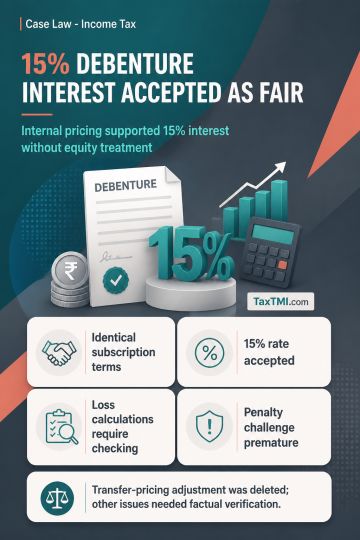
Internal comparable pricing supports arm's-length interest on compulsorily convertible debentures, preventing their recharacterisation as equity for t...
The petitioner, accused of money laundering under the Prevention of Money Laundering Act (PMLA), sought bail. The court held that Section 45 of PMLA imposes stringent conditions for granting bail, requiring the court to be satisfied that there are reasonable grounds to believe the accused is not guilty and is unlikely to commit an offence while on bail. The prosecution alleged the petitioner influenced a bank to sanction loans to Kiran P.P., from which the petitioner received Rs. 14 crore. The court found prima facie evidence supporting the allegations, including inconsistent statements, unexplained cash credits, and unaccounted capital in the petitioner's business. Relying on Supreme Court precedents, the court concluded there were no reasonable grounds to believe the petitioner was not guilty and denied bail, considering the serious nature of the accusations.
The petitioner, accused of money laundering under the Prevention of Money Laundering Act (PMLA), sought bail. The court held that Section 45 of PMLA imposes stringent conditions for granting bail, requiring the court to be satisfied that there are reasonable grounds to believe the accused is not guilty and is unlikely to commit an offence while on bail. The prosecution alleged the petitioner influenced a bank to sanction loans to Kiran P.P., from which the petitioner received Rs. 14 crore. The court found prima facie evidence supporting the allegations, including inconsistent statements, unexplained cash credits, and unaccounted capital in the petitioner's business. Relying on Supreme Court precedents, the court concluded there were no reasonable grounds to believe the petitioner was not guilty and denied bail, considering the serious nature of the accusations.
Note: It is a system-generated summary and is for quick reference only.
 TaxTMI
  TaxTMI
 of 4897