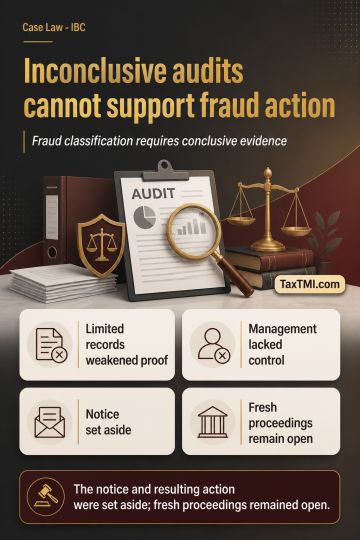
Fraud classification show-cause notices founded on inconclusive forensic audit material cannot sustain action, permitting fresh proceedings on conclus...
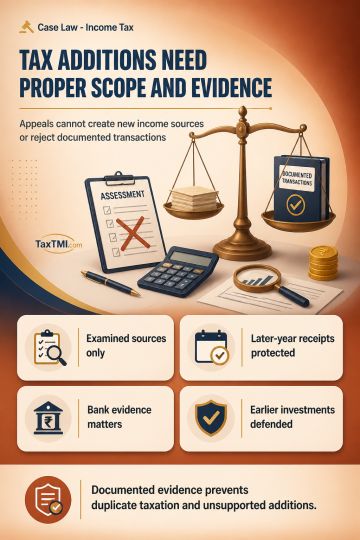
Appellate enhancement limits protect against new income sources, while documented credits and prior-year investments resist unexplained-income additio...
The High Court's judgment addressed the interpretation of Section 43A regarding losses arising from exchange rate fluctuations on foreign currency loans utilized for acquiring assets both within and outside India. The court held that Section 43A mandates capitalizing such losses for assets imported from abroad. However, for assets acquired locally, the applicability of Section 37(1) must be examined to determine if the expenditure qualifies as revenue or capital. The court remanded the matter to the ITAT to determine whether the expenditure disallowed by the AO and CIT-A, but allowed by the ITAT, qualifies as non-capital expenditure u/s 37(1), considering the substance of the expenditure. The Supreme Court's judgment in Wipro Finance Ltd. clarified that Section 43A's positive obligation does not necessarily mean the converse - that exchange rate losses on loans for locally acquired assets must be treated as capital expenditure. The High Court emphasized expediting the proceedings, given the vintage of the case.
The High Court's judgment addressed the interpretation of Section 43A regarding losses arising from exchange rate fluctuations on foreign currency loans utilized for acquiring assets both within and outside India. The court held that Section 43A mandates capitalizing such losses for assets imported from abroad. However, for assets acquired locally, the applicability of Section 37(1) must be examined to determine if the expenditure qualifies as revenue or capital. The court remanded the matter to the ITAT to determine whether the expenditure disallowed by the AO and CIT-A, but allowed by the ITAT, qualifies as non-capital expenditure u/s 37(1), considering the substance of the expenditure. The Supreme Court's judgment in Wipro Finance Ltd. clarified that Section 43A's positive obligation does not necessarily mean the converse - that exchange rate losses on loans for locally acquired assets must be treated as capital expenditure. The High Court emphasized expediting the proceedings, given the vintage of the case.
Note: It is a system-generated summary and is for quick reference only.
 TaxTMI
  TaxTMI
 of 4881