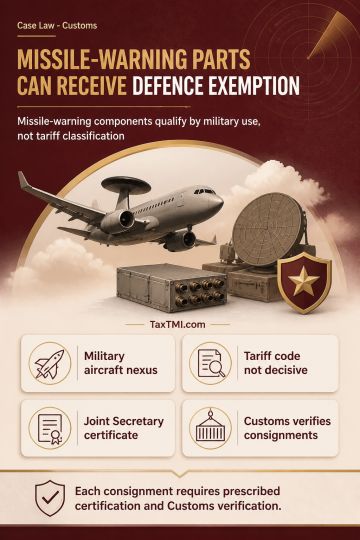
Customs-controlled cargo movement now includes GDL, subject to EXIM prioritisation, segregation, verification, reconciliation and enforcement safeguar...
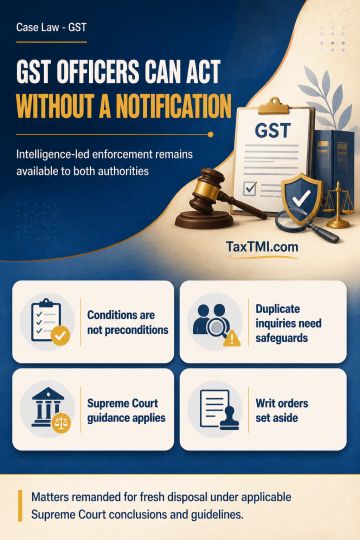
GST cross-empowerment remains effective without conditional notification, while duplicate proceedings require established safeguards against overlappi...
The provisions of section 69A allow for additions if the assessee is found to be the owner of unrecorded money, bullion, jewelry, or valuable articles. However, when sales are duly recorded and supported by the books of account, additions cannot be made u/s 69A. The assessee's books were rejected, and profits were estimated at 10% on the money deposited in the bank account. The Assessing Officer made a trading addition without reducing the profit already reflected in the books. The tribunal directed the Assessing Officer to reduce the profit already declared by the assessee at 5.74% and consider the remaining 4.26% as a trading addition. Regarding section 145(3), once the books of account are rejected based on detailed reasons, rejecting the method of accounting and stock valuation is not necessary. The assessee did not challenge the rejection of books, and the tribunal found no infirmity in the findings of the lower authorities.
The provisions of section 69A allow for additions if the assessee is found to be the owner of unrecorded money, bullion, jewelry, or valuable articles. However, when sales are duly recorded and supported by the books of account, additions cannot be made u/s 69A. The assessee's books were rejected, and profits were estimated at 10% on the money deposited in the bank account. The Assessing Officer made a trading addition without reducing the profit already reflected in the books. The tribunal directed the Assessing Officer to reduce the profit already declared by the assessee at 5.74% and consider the remaining 4.26% as a trading addition. Regarding section 145(3), once the books of account are rejected based on detailed reasons, rejecting the method of accounting and stock valuation is not necessary. The assessee did not challenge the rejection of books, and the tribunal found no infirmity in the findings of the lower authorities.
Note: It is a system-generated summary and is for quick reference only.
 TaxTMI
  TaxTMI
 of 4879