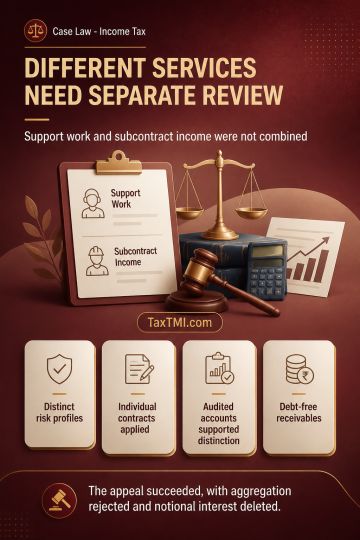
Transfer-pricing aggregation of distinct support-service and subcontract transactions was rejected, while debt-free receivables attracted no notional ...
Customs exemptions cover photovoltaic assembly machinery and PVF backsheets, while fully declared cleared imports may avoid confiscation and penalties...
Specific tariff classification for LCD devices overrides treatment as electricity-meter parts, defeating differential duty, extended limitation, and p...
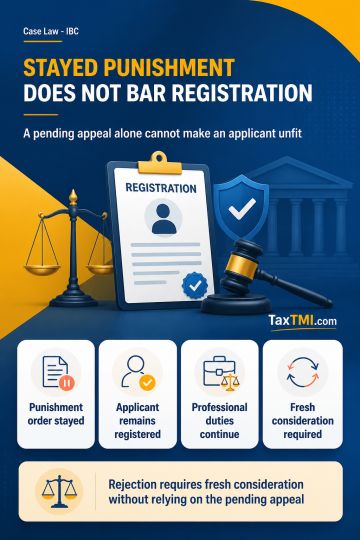
Stayed disciplinary punishment does not establish unfitness for insolvency professional registration; reconsideration must disregard mere pendency of ...
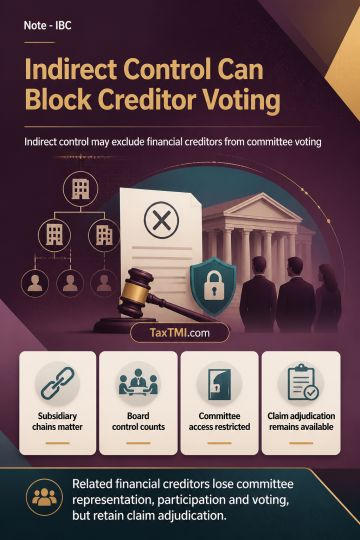
Indirect corporate control can create related-party status, excluding financial creditors from Committee of Creditors representation, participation an...
Page of 4881
Press 'Enter' after typing page number.
101 to 120 of 97618 Results
❮
❯
❯❯
0 / 200
Expand Note
Add to Folder
No Folders have been created
+
Are you sure you want to delete "My most important" ?
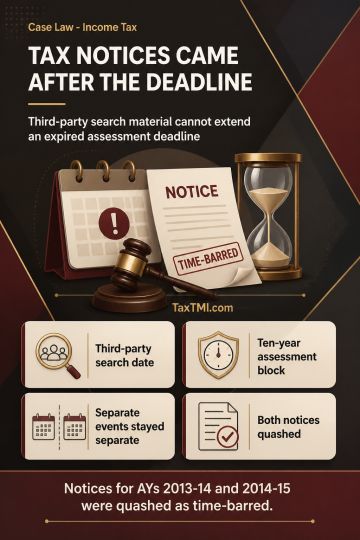
The assessment years beyond six years but not exceeding ten years can be reopened u/s 153A only if the Assessing Officer possesses evidence depicting escapement of income aggregating Rs.50,00,000/- or more in such relevant assessment years. These provisions extending the assessment period beyond six years up to ten years impose a stringent condition of the Assessing Officer possessing evidence of escapement of income of Rs.50,00,000/- or more. Such provisions must be construed strictly, and the evidence relied upon by the Assessing Officer in such extended period assessments must be tangible. The Departmental Valuation Officer's report on a standalone basis without corroborating material cannot be construed as incriminating material, and additions solely based on the Departmental Valuation Officer's report are unsustainable. In the assessee's case, no difference was found between the investment disclosed in the books of account and the Departmental Valuation Officer's report for the property. Since the evidence relating to undisclosed investments in the "relevant assessment years" was less than Rs.50,00,000/-, the reopening of the assessment for the "relevant years" was invalid and quashed. The assessee's appeal was allowed.
The assessment years beyond six years but not exceeding ten years can be reopened u/s 153A only if the Assessing Officer possesses evidence depicting escapement of income aggregating Rs.50,00,000/- or more in such relevant assessment years. These provisions extending the assessment period beyond six years up to ten years impose a stringent condition of the Assessing Officer possessing evidence of escapement of income of Rs.50,00,000/- or more. Such provisions must be construed strictly, and the evidence relied upon by the Assessing Officer in such extended period assessments must be tangible. The Departmental Valuation Officer's report on a standalone basis without corroborating material cannot be construed as incriminating material, and additions solely based on the Departmental Valuation Officer's report are unsustainable. In the assessee's case, no difference was found between the investment disclosed in the books of account and the Departmental Valuation Officer's report for the property. Since the evidence relating to undisclosed investments in the "relevant assessment years" was less than Rs.50,00,000/-, the reopening of the assessment for the "relevant years" was invalid and quashed. The assessee's appeal was allowed.
Note: It is a system-generated summary and is for quick reference only.
 TaxTMI
  TaxTMI
 of 4881