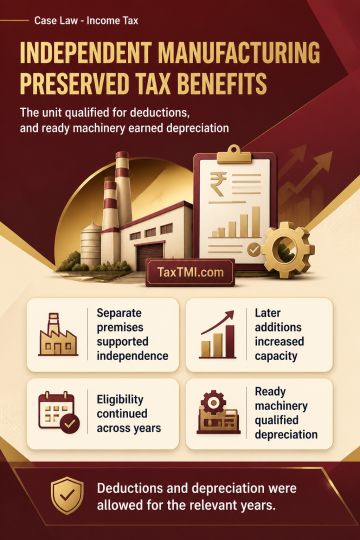
Independent manufacturing undertaking eligibility preserves Section 80IA/80IB deductions, while machinery kept ready for use qualifies for depreciatio...
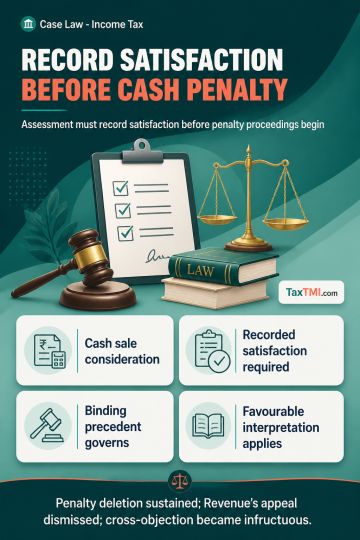
Assessing Officer Satisfaction Requirement Bars Penalty for Cash Receipt in Immovable-Property Sale Cases Where Initiation Lacks Recorded Satisfaction...
The NCLAT upheld the NCLT's decision to refuse waiver u/ss 244(1)(a) and (b) of the Companies Act 2013 to the Appellants, who held only 5.83% shareholding, to file an oppression and mismanagement case u/s 241. While the NCLAT can make a preliminary assessment to determine if the petition falls within Sections 241 and 244, it found no exceptional circumstances to bypass the minimum shareholding requirement. The Appellants' primary grievance revolved around the removal of one Appellant as Director, which the Supreme Court has held cannot trigger oppression relief u/ss 241 and 242. The petition did not substantiate a genuine case of oppression and mismanagement, and the NCLT rightly refused the waiver based on its assessment.
The NCLAT upheld the NCLT's decision to refuse waiver u/ss 244(1)(a) and (b) of the Companies Act 2013 to the Appellants, who held only 5.83% shareholding, to file an oppression and mismanagement case u/s 241. While the NCLAT can make a preliminary assessment to determine if the petition falls within Sections 241 and 244, it found no exceptional circumstances to bypass the minimum shareholding requirement. The Appellants' primary grievance revolved around the removal of one Appellant as Director, which the Supreme Court has held cannot trigger oppression relief u/ss 241 and 242. The petition did not substantiate a genuine case of oppression and mismanagement, and the NCLT rightly refused the waiver based on its assessment.
Note: It is a system-generated summary and is for quick reference only.
 TaxTMI
  TaxTMI
 of 4888