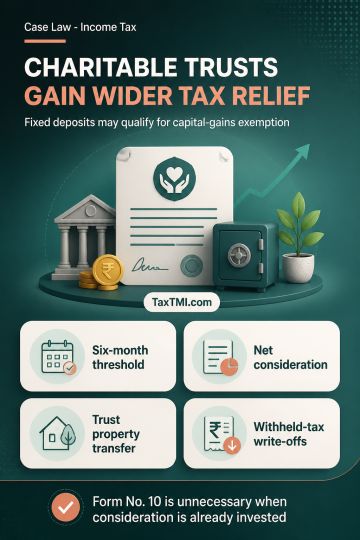
Capital-gains exemption for charitable trusts extends to qualifying fixed deposits, while unrecoverable TDS write-offs may constitute income applicati...
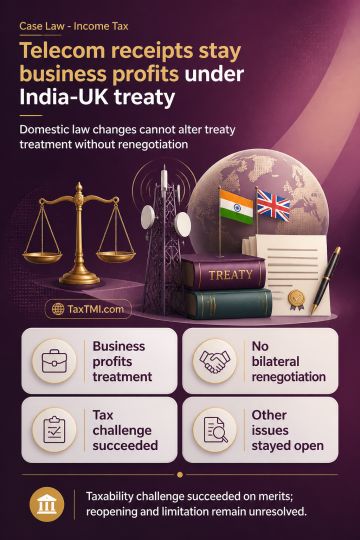
India-UK treaty characterisation of telecom-service receipts as business profits withstands unilateral domestic-law amendments for Indian tax purposes...
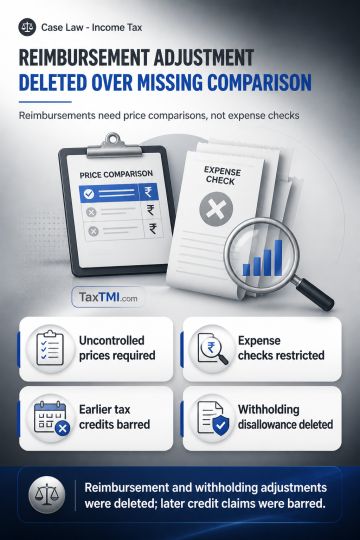
Transfer-pricing reimbursement adjustments require uncontrolled comparables and cannot become expense-genuineness reviews, resulting in deletion of th...
Page of 4881
Press 'Enter' after typing page number.
281 to 300 of 97618 Results
❮
❯
❯❯
0 / 200
Expand Note
Add to Folder
No Folders have been created
+
Are you sure you want to delete "My most important" ?
The NCLAT upheld the NCLT's decision to refuse waiver u/ss 244(1)(a) and (b) of the Companies Act 2013 to the Appellants, who held only 5.83% shareholding, to file an oppression and mismanagement case u/s 241. While the NCLAT can make a preliminary assessment to determine if the petition falls within Sections 241 and 244, it found no exceptional circumstances to bypass the minimum shareholding requirement. The Appellants' primary grievance revolved around the removal of one Appellant as Director, which the Supreme Court has held cannot trigger oppression relief u/ss 241 and 242. The petition did not substantiate a genuine case of oppression and mismanagement, and the NCLT rightly refused the waiver based on its assessment.
The NCLAT upheld the NCLT's decision to refuse waiver u/ss 244(1)(a) and (b) of the Companies Act 2013 to the Appellants, who held only 5.83% shareholding, to file an oppression and mismanagement case u/s 241. While the NCLAT can make a preliminary assessment to determine if the petition falls within Sections 241 and 244, it found no exceptional circumstances to bypass the minimum shareholding requirement. The Appellants' primary grievance revolved around the removal of one Appellant as Director, which the Supreme Court has held cannot trigger oppression relief u/ss 241 and 242. The petition did not substantiate a genuine case of oppression and mismanagement, and the NCLT rightly refused the waiver based on its assessment.
Note: It is a system-generated summary and is for quick reference only.
 TaxTMI
  TaxTMI
 of 4881