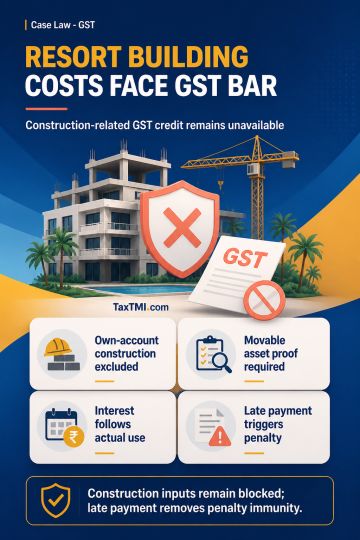
Blocked input tax credit for resort construction remains unavailable; interest follows actual utilisation, while delayed payment attracts statutory pe...
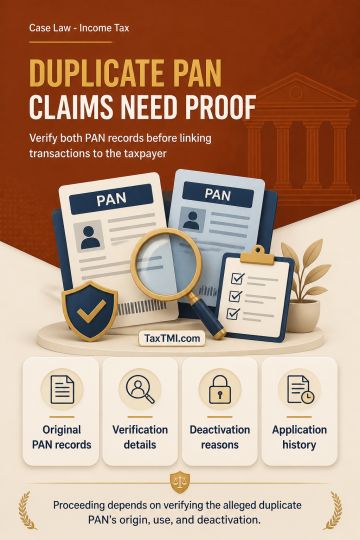
Duplicate PAN allocation requires record verification and deactivation reasons before assessment-related transactions can be attributed to an assessee...
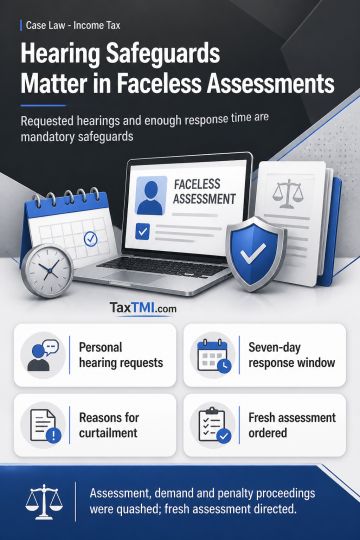
Faceless assessment safeguards require requested personal hearings and adequate final show-cause response time, failing which reassessment is required...
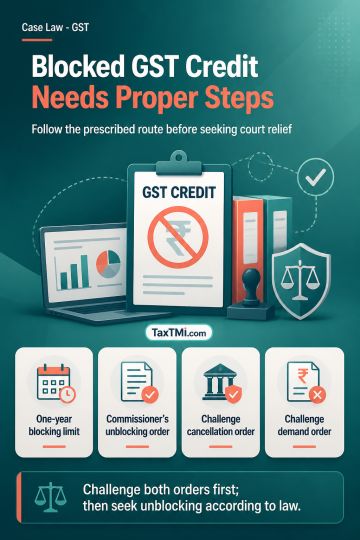
The court held that Section 6(2)(b) of the Act treats the empowered officers under the SGST/UGST Act at the central level to be at par and does not prescribe for transfer of investigation from State authority to Central authority or vice-versa. The object of Section 6(2)(b) is to avoid multiple proceedings on the same subject matter. Once the State authority initiates action, it would be the proper officer to conduct further proceedings. The Central Tax Officer cannot initiate proceedings if the State Tax Officer has already commenced proceedings. The word "subject-matter" means the nature of proceedings. If one authority has initiated proceedings, the other cannot initiate proceedings for the same subject matter. Allowing such action would violate Section 6(2)(b). The court quashed the Blocked Credit Ledger and summons issued by the Central authority as the State authority had already initiated proceedings. The petition was allowed.
The court held that Section 6(2)(b) of the Act treats the empowered officers under the SGST/UGST Act at the central level to be at par and does not prescribe for transfer of investigation from State authority to Central authority or vice-versa. The object of Section 6(2)(b) is to avoid multiple proceedings on the same subject matter. Once the State authority initiates action, it would be the proper officer to conduct further proceedings. The Central Tax Officer cannot initiate proceedings if the State Tax Officer has already commenced proceedings. The word "subject-matter" means the nature of proceedings. If one authority has initiated proceedings, the other cannot initiate proceedings for the same subject matter. Allowing such action would violate Section 6(2)(b). The court quashed the Blocked Credit Ledger and summons issued by the Central authority as the State authority had already initiated proceedings. The petition was allowed.
Note: It is a system-generated summary and is for quick reference only.
 TaxTMI
  TaxTMI
 of 4886