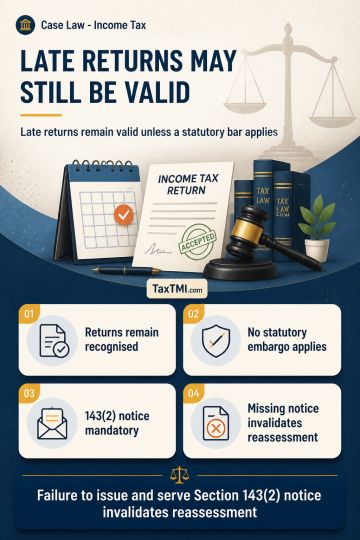
Faceless assessment safeguards require requested personal hearings and adequate final show-cause response time, failing which reassessment is required...
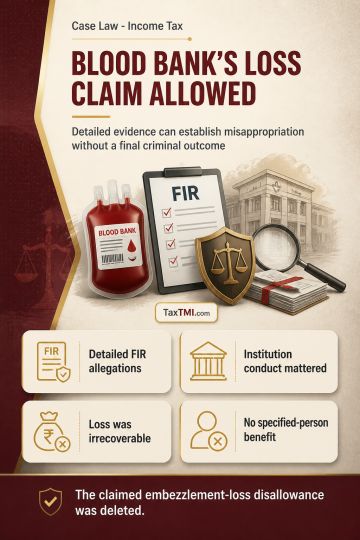
Embezzlement losses in charitable institutions remain allowable when misappropriation is established, irrecoverable, and not a specified-person benefi...
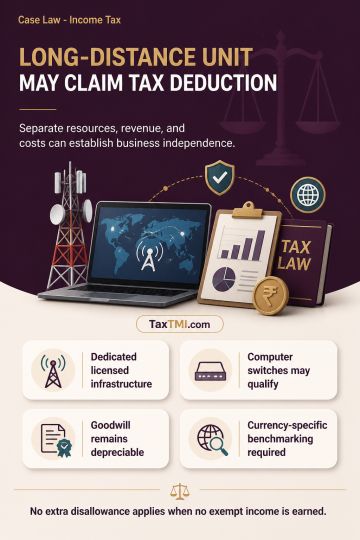
National long-distance undertaking status supports deduction where separately licensed infrastructure, resources, revenue, and expenditure establish c...
Agency reimbursement income follows contractual deposit-liability computation, while pending deposit collections do not constitute deemed-dividend loa...
In the present case involving economic offenses related to GST fraud, the court denied bail to the applicants. The applicants were found to be connected with Sanjay Dhingra in transactions involving fake GST firms registered using stolen PAN and Aadhaar details. The money trail and financial transactions revealed unexplained huge amounts being deposited into the applicants' accounts, indicating their involvement in illegal activities. The court noted that such fraudsters set up companies only on paper to generate fake transactions and claim Input Tax Credit, abandoning them later. Economic offenses like large-scale fraud, money laundering, and corruption are viewed seriously as they affect the economic fabric of society. The court considered factors like the nature of accusations, evidence, severity of punishment, character of the accused, possibility of securing presence at trial, apprehension of witness tampering, and public interest. Precedents are not the sole basis for granting or refusing bail, and each case is considered on its specific facts and circumstances. Based on the evidence and submissions, the court found it not a fit case for granting bail and dismissed the application.
In the present case involving economic offenses related to GST fraud, the court denied bail to the applicants. The applicants were found to be connected with Sanjay Dhingra in transactions involving fake GST firms registered using stolen PAN and Aadhaar details. The money trail and financial transactions revealed unexplained huge amounts being deposited into the applicants' accounts, indicating their involvement in illegal activities. The court noted that such fraudsters set up companies only on paper to generate fake transactions and claim Input Tax Credit, abandoning them later. Economic offenses like large-scale fraud, money laundering, and corruption are viewed seriously as they affect the economic fabric of society. The court considered factors like the nature of accusations, evidence, severity of punishment, character of the accused, possibility of securing presence at trial, apprehension of witness tampering, and public interest. Precedents are not the sole basis for granting or refusing bail, and each case is considered on its specific facts and circumstances. Based on the evidence and submissions, the court found it not a fit case for granting bail and dismissed the application.
Note: It is a system-generated summary and is for quick reference only.
 TaxTMI
  TaxTMI
 of 4884