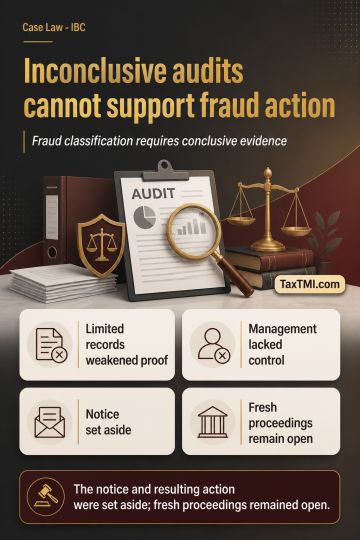
Fraud classification show-cause notices founded on inconclusive forensic audit material cannot sustain action, permitting fresh proceedings on conclus...
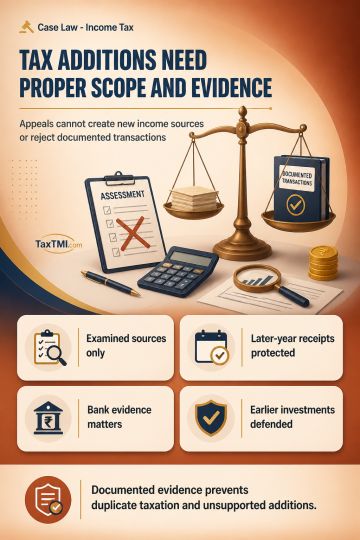
Appellate enhancement limits protect against new income sources, while documented credits and prior-year investments resist unexplained-income additio...
The case pertains to the reopening of assessment u/s 147 of the Income Tax Act. The key points are: The department had already raised queries regarding the accumulation and utilization of funds for different purposes during the original assessment proceedings in 2011. The assessee had provided explanations, which were accepted by the Assessing Officer (AO) at that time. The notice for reopening assessment in 2016 was based on the same issue, which amounts to a mere change of opinion by the AO, not permissible for reopening under the 6-year limitation period. The court relied on precedents like Kelvinator of India and Marico Limited to conclude that once an issue is raised and responded to during assessment, the AO is deemed to have accepted the assessee's explanation if not dealt with in the order. Therefore, the reopening notice was held invalid, being a case of change of opinion, and the assessee's appeal was allowed.
The case pertains to the reopening of assessment u/s 147 of the Income Tax Act. The key points are: The department had already raised queries regarding the accumulation and utilization of funds for different purposes during the original assessment proceedings in 2011. The assessee had provided explanations, which were accepted by the Assessing Officer (AO) at that time. The notice for reopening assessment in 2016 was based on the same issue, which amounts to a mere change of opinion by the AO, not permissible for reopening under the 6-year limitation period. The court relied on precedents like Kelvinator of India and Marico Limited to conclude that once an issue is raised and responded to during assessment, the AO is deemed to have accepted the assessee's explanation if not dealt with in the order. Therefore, the reopening notice was held invalid, being a case of change of opinion, and the assessee's appeal was allowed.
Note: It is a system-generated summary and is for quick reference only.
 TaxTMI
  TaxTMI
 of 4891