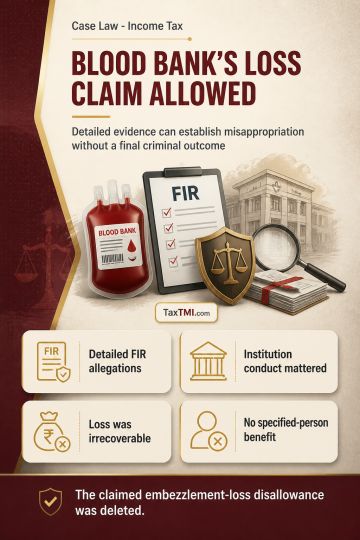
Embezzlement losses in charitable institutions remain allowable when misappropriation is established, irrecoverable, and not a specified-person benefi...
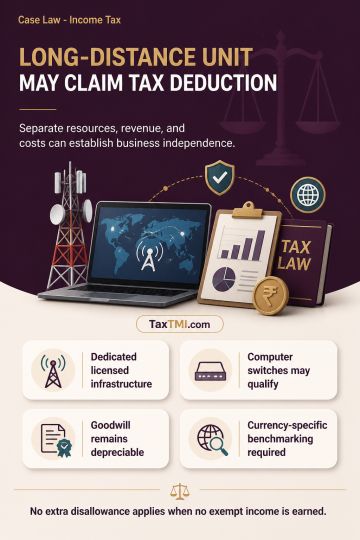
National long-distance undertaking status supports deduction where separately licensed infrastructure, resources, revenue, and expenditure establish c...
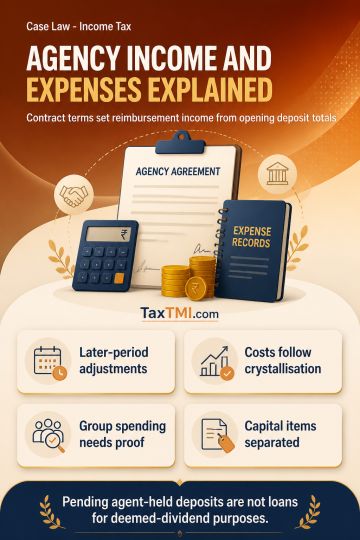
Agency reimbursement income follows contractual deposit-liability computation, while pending deposit collections do not constitute deemed-dividend loa...
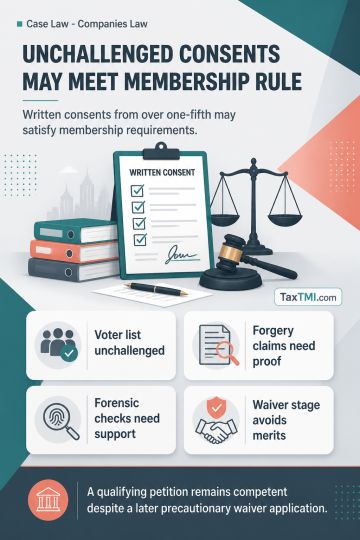
Membership-consent thresholds for oppression petitions are satisfied by unchallenged voter-list consents, while unsupported forgery claims require pro...
The case pertains to the validity of reopening of assessment by the Assessing Officer (AO) and the characterization of short-term capital gains (STCG) from the sale of shares as business income. Regarding reopening, the Tribunal held that the AO cannot reopen the assessment based on a change of opinion, as the Audit Party did not bring out any new facts that were not disclosed during the original assessment. The AO's omissions, if any, could have been addressed by the Principal Commissioner u/s 263, not through reopening u/s 147. Concerning the STCG issue, the Tribunal concurred with the CIT(A)'s findings that the AO failed to provide adequate analysis and details to treat the income from the sale of a single scrip (United Spirits) as business income instead of STCG. The AO did not furnish essential details like purchase and sale dates, holding period, purchase/sale prices, or the assessee's history of such transactions. Without relevant facts and materials, the transaction cannot be considered an adventure in the nature of trade. The Tribunal upheld the CIT(A)'s decision to delete the addition and treat the income as STCG.
The case pertains to the validity of reopening of assessment by the Assessing Officer (AO) and the characterization of short-term capital gains (STCG) from the sale of shares as business income. Regarding reopening, the Tribunal held that the AO cannot reopen the assessment based on a change of opinion, as the Audit Party did not bring out any new facts that were not disclosed during the original assessment. The AO's omissions, if any, could have been addressed by the Principal Commissioner u/s 263, not through reopening u/s 147. Concerning the STCG issue, the Tribunal concurred with the CIT(A)'s findings that the AO failed to provide adequate analysis and details to treat the income from the sale of a single scrip (United Spirits) as business income instead of STCG. The AO did not furnish essential details like purchase and sale dates, holding period, purchase/sale prices, or the assessee's history of such transactions. Without relevant facts and materials, the transaction cannot be considered an adventure in the nature of trade. The Tribunal upheld the CIT(A)'s decision to delete the addition and treat the income as STCG.
Note: It is a system-generated summary and is for quick reference only.
 TaxTMI
  TaxTMI
 of 4881