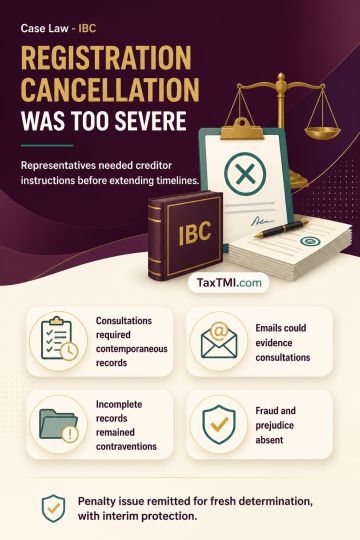
Disciplinary proportionality requires penalties for Authorised Representative misconduct to match proven harm, leading to reconsideration of registrat...
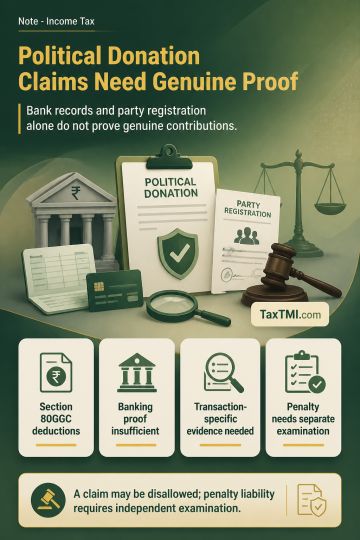
Political contribution deductions require genuine transactions; banking records and party registration alone cannot defeat evidence of accommodation e...
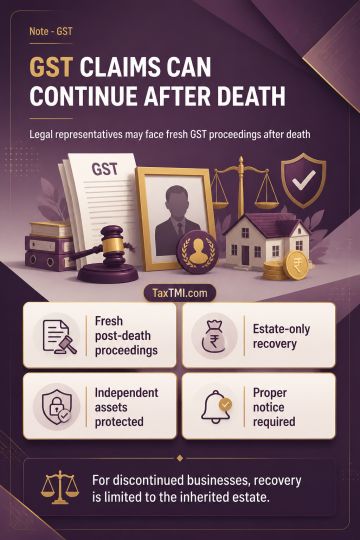
Post-death GST liability permits fresh proceedings against legal representatives, while discontinued-business recovery remains limited to the inherite...
Non-confirmation of FEMA seizure prevents adjudicators from overriding pending appellate findings on recorded reasons and suspected foreign asset hold...
GST Authorities invoked penal provisions under Indian Penal Code against the petitioner without invoking penal provisions of GST Act, despite the alleged offences being covered under GST Act. This was done without obtaining sanction u/s 132(6) of GST Act. The court held that GST Act is a special legislation dealing with GST-related procedures, penalties, and offences. Authorities cannot bypass the prescribed procedure for launching prosecution under GST Act by simply invoking IPC provisions without invoking GST Act provisions, especially when allegations constitute offences covered under GST Act. Doing so would amount to bypassing procedural safeguards like obtaining commissioner's sanction u/s 132(6), prejudicing the petitioner. Allowing authorities to adopt such a course would be an abuse of process of law, which cannot be permitted. Consequently, the petition was allowed, quashing the prosecution launched without following due process under GST Act.
GST Authorities invoked penal provisions under Indian Penal Code against the petitioner without invoking penal provisions of GST Act, despite the alleged offences being covered under GST Act. This was done without obtaining sanction u/s 132(6) of GST Act. The court held that GST Act is a special legislation dealing with GST-related procedures, penalties, and offences. Authorities cannot bypass the prescribed procedure for launching prosecution under GST Act by simply invoking IPC provisions without invoking GST Act provisions, especially when allegations constitute offences covered under GST Act. Doing so would amount to bypassing procedural safeguards like obtaining commissioner's sanction u/s 132(6), prejudicing the petitioner. Allowing authorities to adopt such a course would be an abuse of process of law, which cannot be permitted. Consequently, the petition was allowed, quashing the prosecution launched without following due process under GST Act.
Note: It is a system-generated summary and is for quick reference only.
 TaxTMI
  TaxTMI
 of 4921