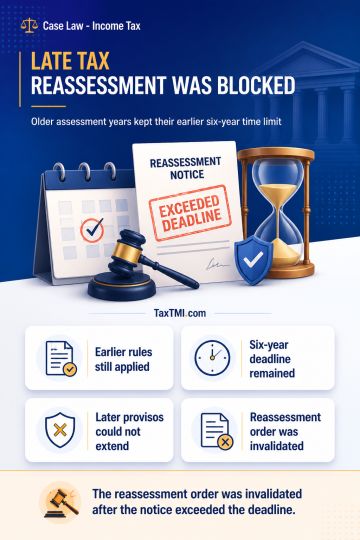
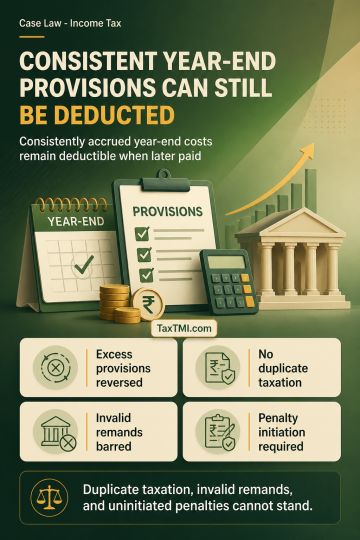
Pre-amendment reassessment limitation bars late notices under the preserved regime, invalidating consequential reassessment for affected earlier asses...
Cash-sales explanations for bank deposits require documentary reconciliation; reassessment notice survived where effective response time was available...
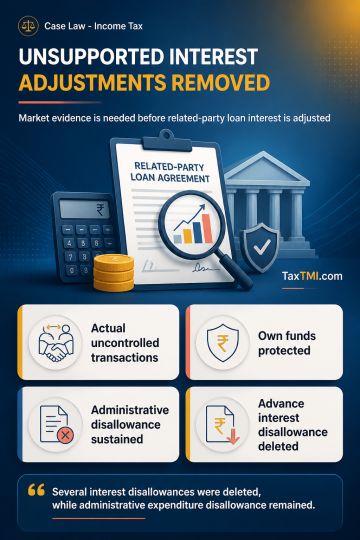
Functional comparability in transfer pricing prevents ad hoc arm's length adjustments where functions, assets, risks and reliable comparables are unes...
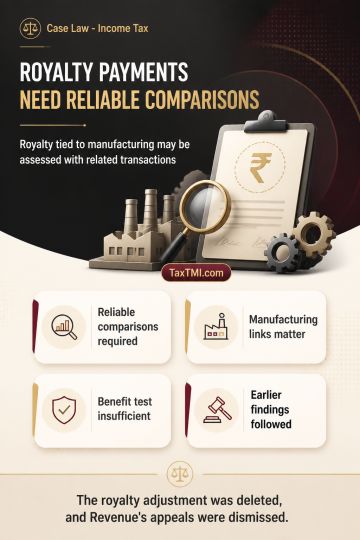
Contingency expenses, exempt-income disallowance, and royalty benchmarking: unsupported adjustments were deleted under consistent accounting and trans...
The doctrine of res judicata prevents parties from relitigating issues already conclusively determined by a court. However, in cases involving larger public interest, a flexible approach should be adopted. Suppression of material facts by appellants that could influence the merits of the case warrants dismissal. The doctrine of merger should not be applied mechanically in cases involving public infrastructure projects, as it may lead to irreversible consequences. The court invoked its extraordinary power under Article 142 to ensure complete justice between landowners, the state, and the public's vested interest in infrastructure projects. Subsequent purchasers lack locus standi to contest acquisitions or claim lapse of proceedings u/s 24(2) of the 2013 Act, overruling a previous decision. The petition was disposed of accordingly.
The doctrine of res judicata prevents parties from relitigating issues already conclusively determined by a court. However, in cases involving larger public interest, a flexible approach should be adopted. Suppression of material facts by appellants that could influence the merits of the case warrants dismissal. The doctrine of merger should not be applied mechanically in cases involving public infrastructure projects, as it may lead to irreversible consequences. The court invoked its extraordinary power under Article 142 to ensure complete justice between landowners, the state, and the public's vested interest in infrastructure projects. Subsequent purchasers lack locus standi to contest acquisitions or claim lapse of proceedings u/s 24(2) of the 2013 Act, overruling a previous decision. The petition was disposed of accordingly.
Note: It is a system-generated summary and is for quick reference only.
 TaxTMI
 TaxTMI

 of 4921