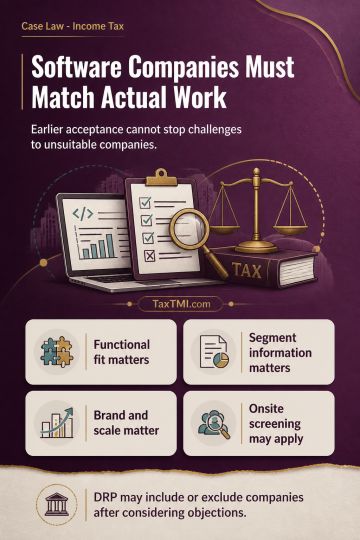
Transfer-pricing comparability permits fresh objections and filters where software service comparables are functionally unsuitable for arm's-length pr...
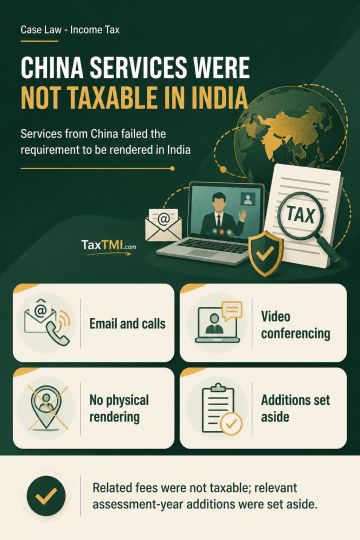
Territorial rendering requirement excludes China-based management and consultancy services from fees for technical services under the India-China DTAA...
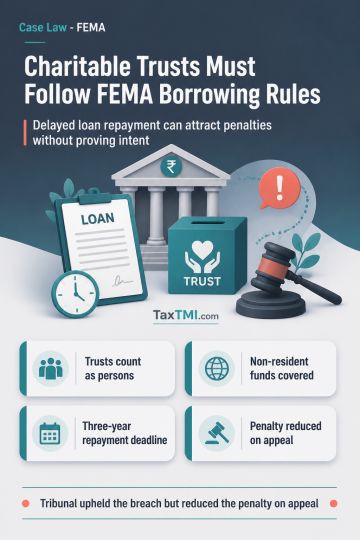
FEMA borrowing restrictions bind charitable trusts, and civil penalties apply without proving intent for delayed repayment of non-resident rupee loans...
The dispute centered around the classification of imported goods, calcium carbonate, under the appropriate Customs Tariff Heading (CTH). The revenue classified it as calcium carbonate under CTH 28365000, while the appellant declared it as calcite powder falling under CTH 25369030. The case hinged on the observation of the Chemical Examiner at the Customs Laboratory, Kandla, who opined that the imported goods were calcium carbonate. However, several factors undermined the revenue's claim. Firstly, to classify under CTH 28365000, the goods must conform to Indian Standard specifications, which was not tested. Secondly, Board Circulars 43/2017-Cus. and 15/2009-Cus. acknowledged that the Kandla laboratory lacked the facility to test the imported goods accurately. Furthermore, a CESTAT precedent held that laboratory test reports cannot be accepted when the facility lacks requisite testing capabilities. Consequently, the revenue's claim based solely on the Kandla laboratory report, which lacked proper testing facilities, was deemed untenable. The impugned orders were set aside, and the appeal was allowed.
The dispute centered around the classification of imported goods, calcium carbonate, under the appropriate Customs Tariff Heading (CTH). The revenue classified it as calcium carbonate under CTH 28365000, while the appellant declared it as calcite powder falling under CTH 25369030. The case hinged on the observation of the Chemical Examiner at the Customs Laboratory, Kandla, who opined that the imported goods were calcium carbonate. However, several factors undermined the revenue's claim. Firstly, to classify under CTH 28365000, the goods must conform to Indian Standard specifications, which was not tested. Secondly, Board Circulars 43/2017-Cus. and 15/2009-Cus. acknowledged that the Kandla laboratory lacked the facility to test the imported goods accurately. Furthermore, a CESTAT precedent held that laboratory test reports cannot be accepted when the facility lacks requisite testing capabilities. Consequently, the revenue's claim based solely on the Kandla laboratory report, which lacked proper testing facilities, was deemed untenable. The impugned orders were set aside, and the appeal was allowed.
Note: It is a system-generated summary and is for quick reference only.
 TaxTMI
  TaxTMI
 of 4881