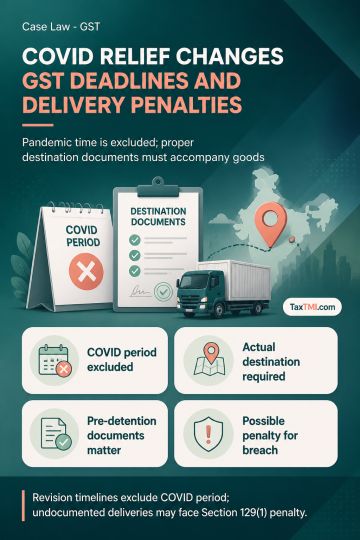
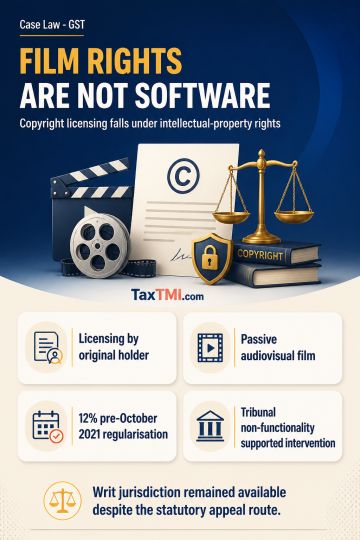
COVID-19 limitation exclusion and destination-specific e-way bills govern revisional timelines and penalties for undocumented third-party plywood deli...
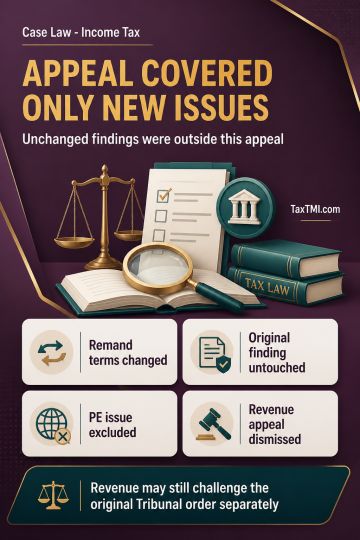
Questions arising from miscellaneous application orders cannot challenge unaltered Tribunal findings, leaving the original order separately challengea...
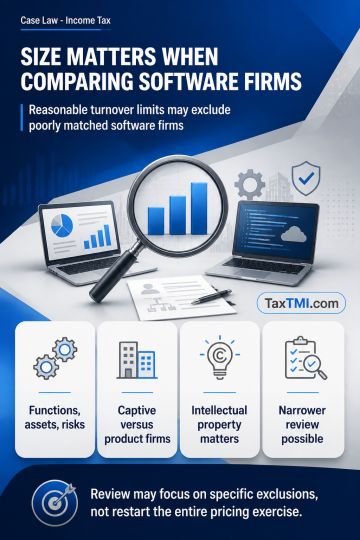
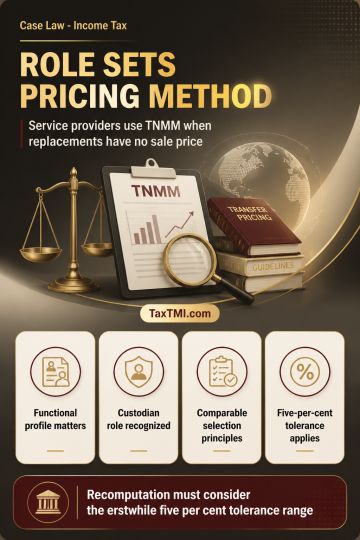
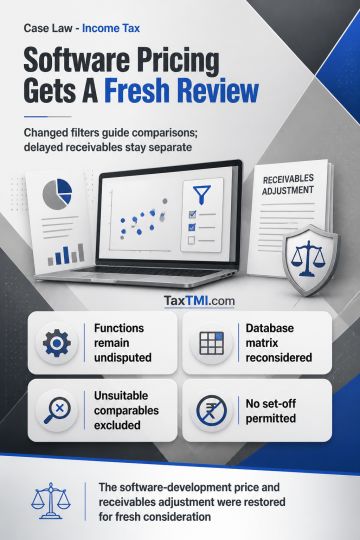
Transfer-pricing comparability filters require fresh arm's-length analysis, while delayed receivables need separate reconsideration with working-capit...
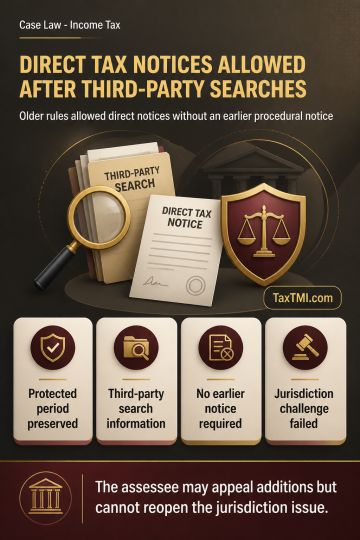
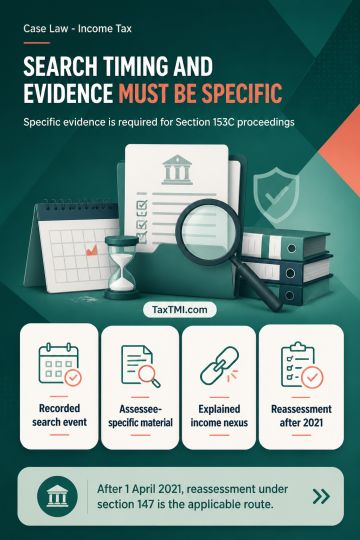
Section 153C jurisdiction requires timely deemed search and assessee-specific satisfaction material; otherwise reassessment must use the proper statut...
Page of 4891
Press 'Enter' after typing page number.
681 to 700 of 97820 Results
❮
❯
❯❯
0 / 200
Expand Note
Add to Folder
No Folders have been created
+
Are you sure you want to delete "My most important" ?
The dispute centered around the classification of imported goods, calcium carbonate, under the appropriate Customs Tariff Heading (CTH). The revenue classified it as calcium carbonate under CTH 28365000, while the appellant declared it as calcite powder falling under CTH 25369030. The case hinged on the observation of the Chemical Examiner at the Customs Laboratory, Kandla, who opined that the imported goods were calcium carbonate. However, several factors undermined the revenue's claim. Firstly, to classify under CTH 28365000, the goods must conform to Indian Standard specifications, which was not tested. Secondly, Board Circulars 43/2017-Cus. and 15/2009-Cus. acknowledged that the Kandla laboratory lacked the facility to test the imported goods accurately. Furthermore, a CESTAT precedent held that laboratory test reports cannot be accepted when the facility lacks requisite testing capabilities. Consequently, the revenue's claim based solely on the Kandla laboratory report, which lacked proper testing facilities, was deemed untenable. The impugned orders were set aside, and the appeal was allowed.
The dispute centered around the classification of imported goods, calcium carbonate, under the appropriate Customs Tariff Heading (CTH). The revenue classified it as calcium carbonate under CTH 28365000, while the appellant declared it as calcite powder falling under CTH 25369030. The case hinged on the observation of the Chemical Examiner at the Customs Laboratory, Kandla, who opined that the imported goods were calcium carbonate. However, several factors undermined the revenue's claim. Firstly, to classify under CTH 28365000, the goods must conform to Indian Standard specifications, which was not tested. Secondly, Board Circulars 43/2017-Cus. and 15/2009-Cus. acknowledged that the Kandla laboratory lacked the facility to test the imported goods accurately. Furthermore, a CESTAT precedent held that laboratory test reports cannot be accepted when the facility lacks requisite testing capabilities. Consequently, the revenue's claim based solely on the Kandla laboratory report, which lacked proper testing facilities, was deemed untenable. The impugned orders were set aside, and the appeal was allowed.
Note: It is a system-generated summary and is for quick reference only.
 TaxTMI
  TaxTMI
 of 4891