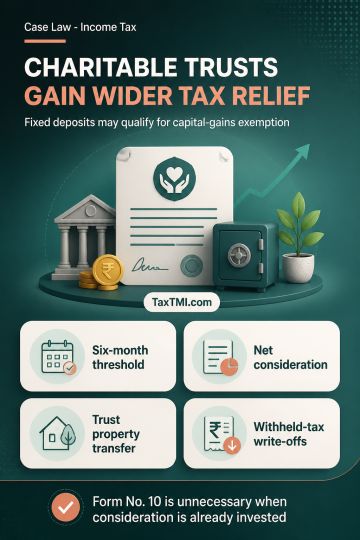
Capital-gains exemption for charitable trusts extends to qualifying fixed deposits, while unrecoverable TDS write-offs may constitute income applicati...
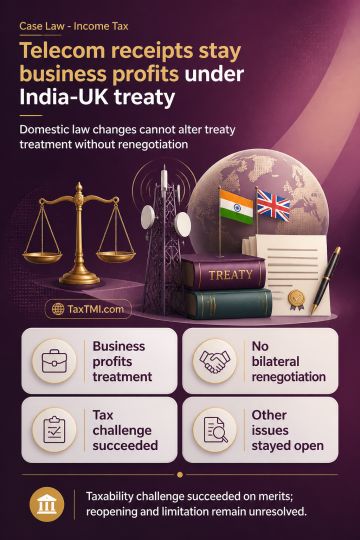
India-UK treaty characterisation of telecom-service receipts as business profits withstands unilateral domestic-law amendments for Indian tax purposes...
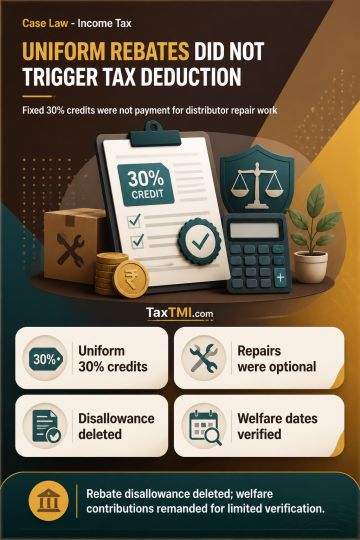
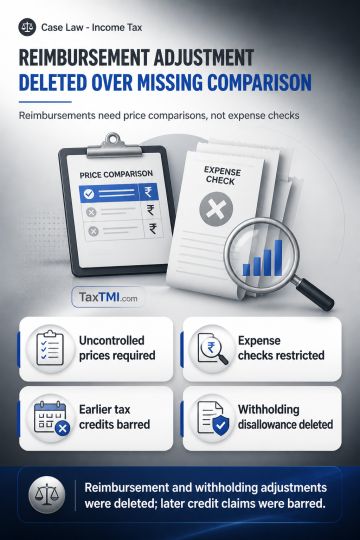
Transfer-pricing reimbursement adjustments require uncontrolled comparables and cannot become expense-genuineness reviews, resulting in deletion of th...
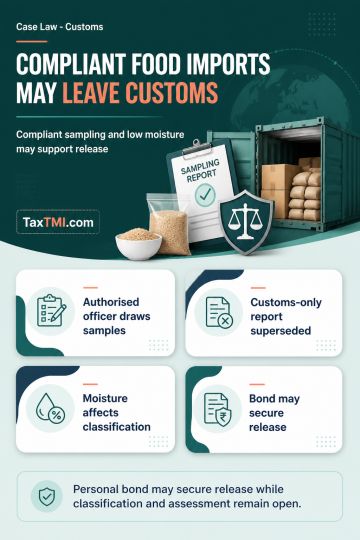
Food import sampling requirements support provisional release where unseized consignments conform to standards and raw areca classification is unestab...
The case pertains to the alleged misdeclaration of value of zinc ash, a restricted item under the Foreign Trade Policy, requiring an import license. The goods were classified as hazardous waste and subject to re-export u/r 17(2) of the Hazardous Waste Rules, 2008. The authorities imposed a fine u/s 125 of the Customs Act, 1962, in lieu of confiscation u/ss 111(d) and 111(m), and a penalty u/s 112. The Tribunal held that invoking Section 111(m) for enhanced value due to non-compliance with the Customs Valuation Rules was not justified. The misdescription did not warrant Section 111(m) as the goods had not cleared for home consumption, and no conspiracy was established. Re-export was ordered under the Hazardous Waste Rules, not as an alternative clearance option under the Customs Act. Citing a precedent, the Tribunal stated that importers have a statutory right to re-export prohibited goods, which cannot be overlooked by authorities. The issue of undervaluation arises after determining the goods' prohibited status. Consequently, the redemption fine u/s 125 and penalty u/s 112 were set aside, and the appeal was allowed.
The case pertains to the alleged misdeclaration of value of zinc ash, a restricted item under the Foreign Trade Policy, requiring an import license. The goods were classified as hazardous waste and subject to re-export u/r 17(2) of the Hazardous Waste Rules, 2008. The authorities imposed a fine u/s 125 of the Customs Act, 1962, in lieu of confiscation u/ss 111(d) and 111(m), and a penalty u/s 112. The Tribunal held that invoking Section 111(m) for enhanced value due to non-compliance with the Customs Valuation Rules was not justified. The misdescription did not warrant Section 111(m) as the goods had not cleared for home consumption, and no conspiracy was established. Re-export was ordered under the Hazardous Waste Rules, not as an alternative clearance option under the Customs Act. Citing a precedent, the Tribunal stated that importers have a statutory right to re-export prohibited goods, which cannot be overlooked by authorities. The issue of undervaluation arises after determining the goods' prohibited status. Consequently, the redemption fine u/s 125 and penalty u/s 112 were set aside, and the appeal was allowed.
Note: It is a system-generated summary and is for quick reference only.
 TaxTMI
  TaxTMI
 of 4896