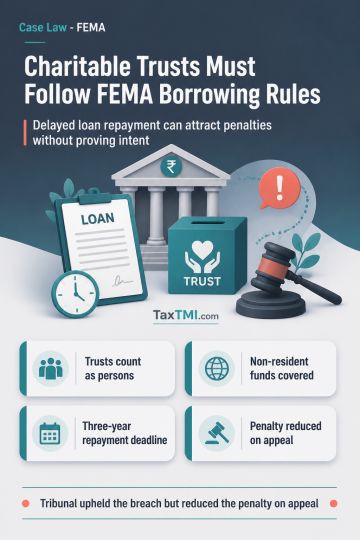
FEMA borrowing restrictions bind charitable trusts, and civil penalties apply without proving intent for delayed repayment of non-resident rupee loans...
The appellant provides warranty services to customers who purchased machines from its parent company, receiving commission on sales. The appellant made provisions in its books for expenses incurred in providing warranty services, termed as "warranty income." The department construed this "warranty income" as consideration received for repair and maintenance services during the warranty period and demanded service tax. However, the appellant had already discharged service tax on the commission received and did not receive any separate consideration for warranty services. The provisions made were as per Accounting Standard 29 to meet future expenses for fulfilling warranty obligations, not consideration received. The demand was raised solely based on book entries, assuming such figures as consideration, which is impermissible. The Tribunal held that since no separate consideration was received for warranty services, the demand cannot sustain and set aside the impugned order, allowing the appeal.
The appellant provides warranty services to customers who purchased machines from its parent company, receiving commission on sales. The appellant made provisions in its books for expenses incurred in providing warranty services, termed as "warranty income." The department construed this "warranty income" as consideration received for repair and maintenance services during the warranty period and demanded service tax. However, the appellant had already discharged service tax on the commission received and did not receive any separate consideration for warranty services. The provisions made were as per Accounting Standard 29 to meet future expenses for fulfilling warranty obligations, not consideration received. The demand was raised solely based on book entries, assuming such figures as consideration, which is impermissible. The Tribunal held that since no separate consideration was received for warranty services, the demand cannot sustain and set aside the impugned order, allowing the appeal.
Note: It is a system-generated summary and is for quick reference only.
 TaxTMI
  TaxTMI
 of 4894