Mandatory textile export qualifiers distinguish flame-retardant fabrics from other listed fabrics for automated identification under the textiles ince...
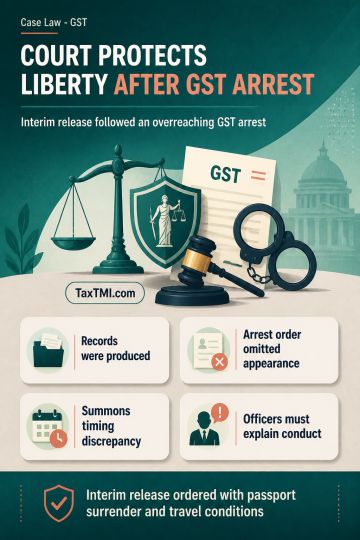
Personal liberty safeguards restrict arrest after court-directed GST appearance, requiring interim release where authorities overreach pending proceed...
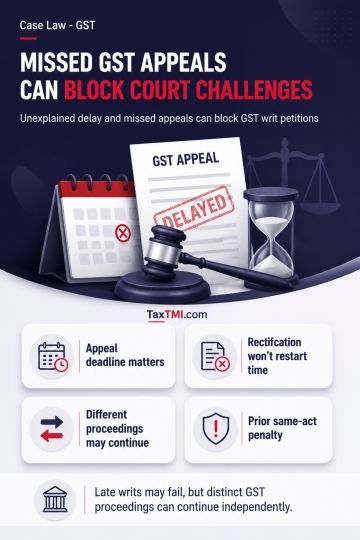
Alternative statutory remedy and delay bar GST writ challenges despite pending rectification, while distinct subject matter permits parallel proceedin...
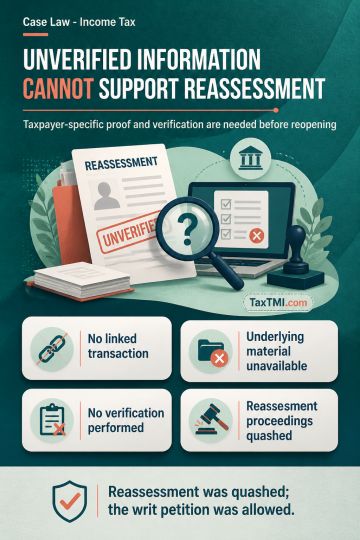
Unverified Insight Portal Information Cannot Justify Reassessment Without a Verified Taxpayer-Specific Income-Escape Nexus or Demonstrated Application...
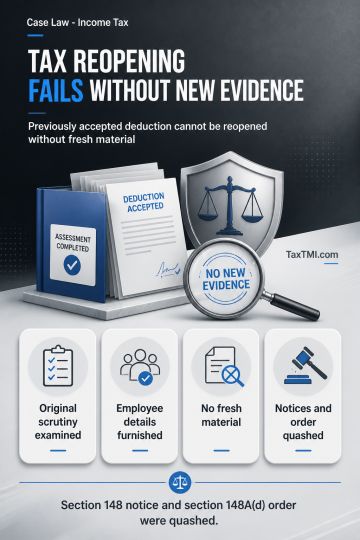
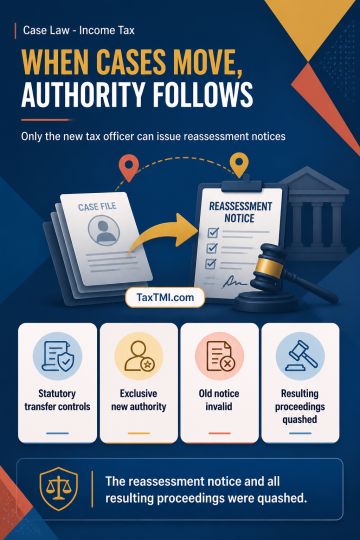
Assessing Officer jurisdiction after statutory transfer invalidates reassessment notices issued by transferor officers and nullifies resulting proceed...
Page of 4883
Press 'Enter' after typing page number.
261 to 280 of 97649 Results
❮
❯
❯❯
0 / 200
Expand Note
Add to Folder
No Folders have been created
+
Are you sure you want to delete "My most important" ?
Interpretation of Section 11D of the Central Excise Act, 1944, regarding the recovery of amounts collected as excise duty but not deposited with the government. The key points are: If an assessee collects excise duty or any amount representing excise duty, they cannot retain it and must deposit it with the government. Section 11D can be invoked to recover such amounts. In this case, the appellant made a pre-deposit of Rs. 1 crore and later issued supplementary invoices passing on the burden to another party. The demand raised in the show cause notice invoked Section 11D, not Rule 14 of the Cenvat Credit Rules, 2004. Section 11D is applicable only when excise duty or an amount representing excise duty is collected but not deposited with the government. The impugned order was set aside, and the appeal was allowed by the CESTAT (Appellate Tribunal).
Interpretation of Section 11D of the Central Excise Act, 1944, regarding the recovery of amounts collected as excise duty but not deposited with the government. The key points are: If an assessee collects excise duty or any amount representing excise duty, they cannot retain it and must deposit it with the government. Section 11D can be invoked to recover such amounts. In this case, the appellant made a pre-deposit of Rs. 1 crore and later issued supplementary invoices passing on the burden to another party. The demand raised in the show cause notice invoked Section 11D, not Rule 14 of the Cenvat Credit Rules, 2004. Section 11D is applicable only when excise duty or an amount representing excise duty is collected but not deposited with the government. The impugned order was set aside, and the appeal was allowed by the CESTAT (Appellate Tribunal).
Note: It is a system-generated summary and is for quick reference only.
 TaxTMI
  TaxTMI
 of 4883