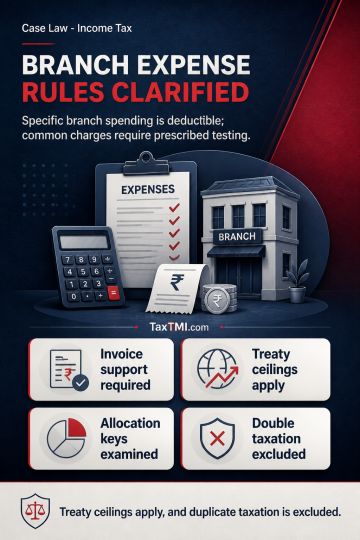
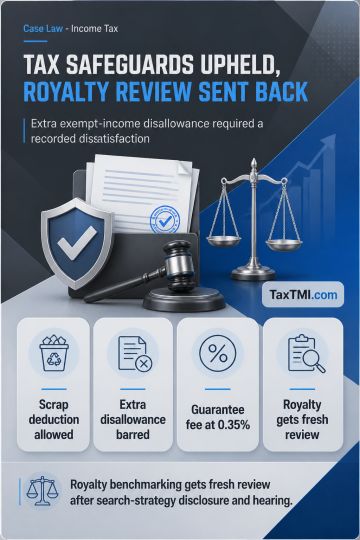
Head Office cost allocation requires prescribed transfer-pricing methods; treaty ceilings bar surcharge and cess, while duplicate taxation is excluded...
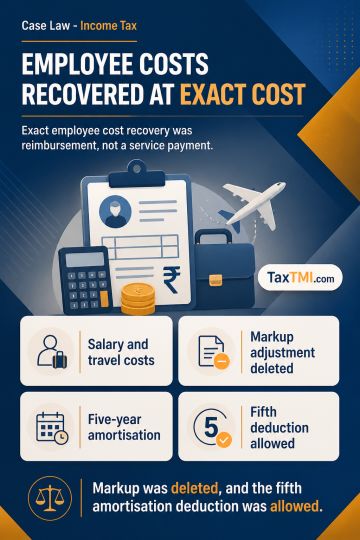
Cost-to-cost reimbursement of seconded employees is not service consideration; transfer-pricing markup was deleted and amalgamation amortisation allow...
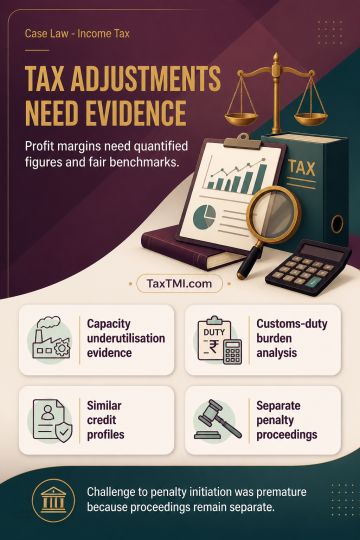
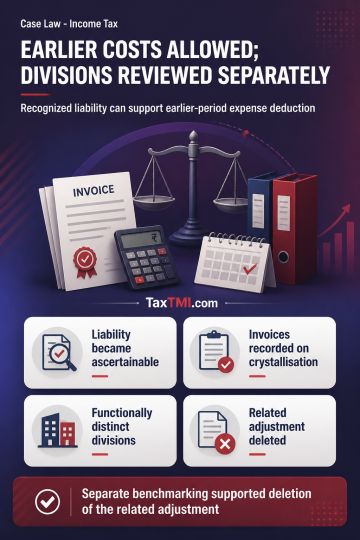
Crystallisation of liability supports prior-period expense deduction, while functionally distinct divisions require separate transfer-pricing benchmar...
Functional comparability under TNMM requires transaction-specific FAR analysis before benchmarking business-support services provided to associated en...
Advance pricing agreement methodology can guide benchmarking for non-covered years when functions, assets, risks and activities remain materially unch...
Tax-audit exemption for substantially State-funded educational universities prevents audit-failure penalties where income qualifies for statutory exem...
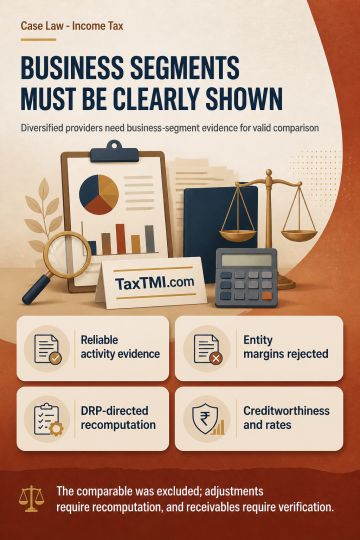
Functional, asset and risk analysis excludes diversified technology companies from captive software development comparables under cost-plus arrangemen...
Page of 4925
Press 'Enter' after typing page number.
481 to 500 of 98494 Results
❮
❯
❯❯
0 / 200
Expand Note
Add to Folder
No Folders have been created
+
Are you sure you want to delete "My most important" ?
The Supreme Court quashed the summoning order issued for offences u/ss 406, 420 and 120B of the Indian Penal Code, 1860, emphasizing the non-application of mind by the lower courts. It clarified the distinction between criminal breach of trust and cheating, stating that vicarious liability cannot be attributed to office bearers for these offences unless a statutory provision exists. Mere breach of contract or trust does not constitute criminal breach of trust or cheating unless fraudulent intention is proven from inception. In sale of goods, failure to pay consideration cannot amount to criminal breach of trust as the property passes to the purchaser upon delivery. The magistrate and police must carefully apply their mind to ascertain if allegations genuinely constitute these offences before taking cognizance or registering FIR.
The Supreme Court quashed the summoning order issued for offences u/ss 406, 420 and 120B of the Indian Penal Code, 1860, emphasizing the non-application of mind by the lower courts. It clarified the distinction between criminal breach of trust and cheating, stating that vicarious liability cannot be attributed to office bearers for these offences unless a statutory provision exists. Mere breach of contract or trust does not constitute criminal breach of trust or cheating unless fraudulent intention is proven from inception. In sale of goods, failure to pay consideration cannot amount to criminal breach of trust as the property passes to the purchaser upon delivery. The magistrate and police must carefully apply their mind to ascertain if allegations genuinely constitute these offences before taking cognizance or registering FIR.
Note: It is a system-generated summary and is for quick reference only.
 TaxTMI
 TaxTMI

 of 4925