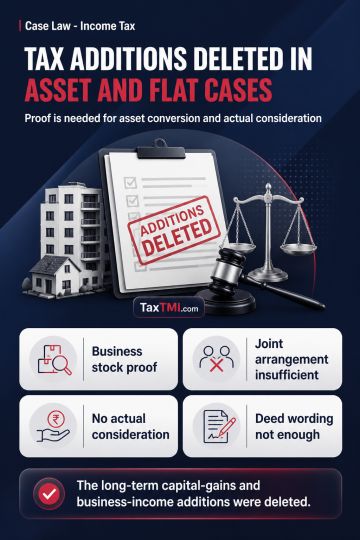
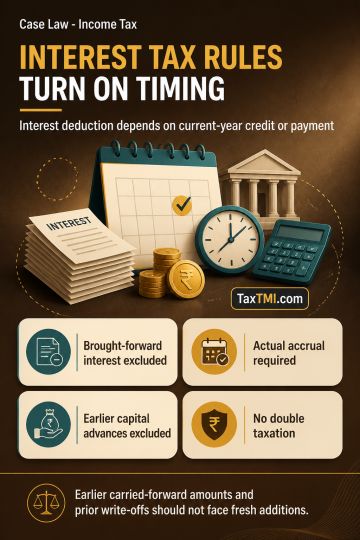
Capital Asset Conversion Requires Proven Business Stock Treatment; Paper Consideration in Spousal Flat Transfers Does Not Create Taxable Business Inco...
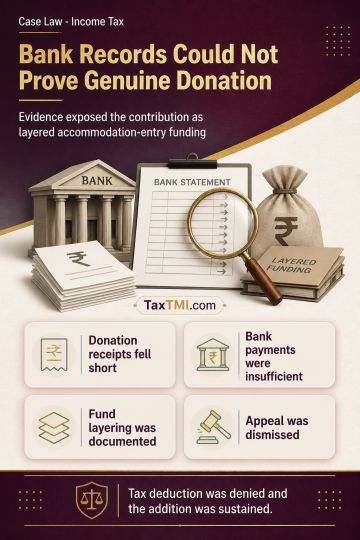
Human-probability test defeats political donation deduction where banking records mask accommodation-entry fund layering and evidence shows non-genuin...
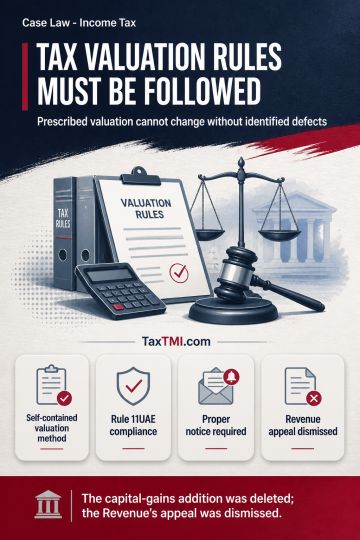
Commercial property status protects capital-gains exemption when residential-house ownership limits are tested, while agricultural-land character gove...
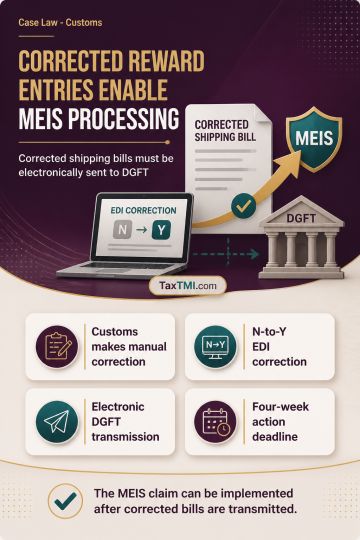
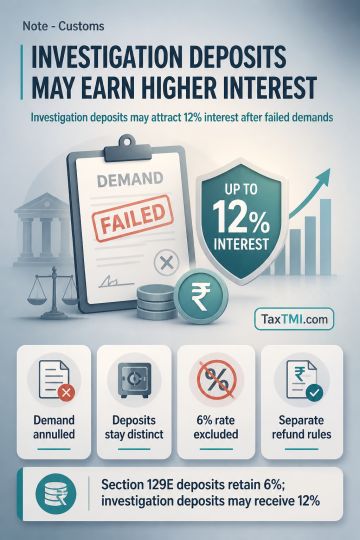
Investigation deposits refunded after failed customs demands fall outside the statutory appellate pre-deposit interest regime and may attract compensa...
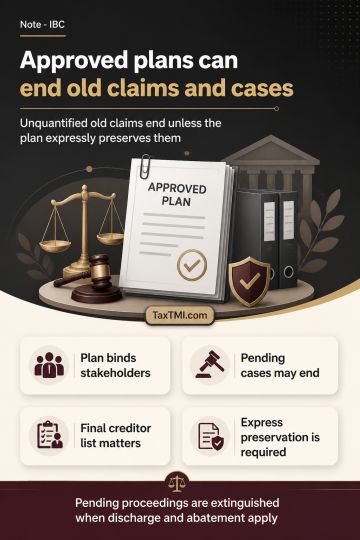
Resolution plan finality extinguishes unquantified operational-creditor claims and pending proceedings unless the approved plan expressly preserves th...
A bail application was rejected in a case involving the creation of fake companies, appointment of fictitious directors/ partners/ proprietors, and illegal passing of inadmissible Input Tax Credit under the Goods and Services Tax (GST) laws. The accused, without the knowledge of the purported directors/staff, utilized invoices from fictitious suppliers to wrongfully avail and pass on ineligible Input Tax Credit, resulting in substantial revenue loss to the government. The court emphasized that economic offenses involving deep-rooted conspiracies and massive public fund losses should be viewed seriously as grave offenses affecting the nation's economy. Citing a Supreme Court precedent, the court held that such white-collar criminals, driven by personal profit motives and impeding national development through calculated dishonesty, warrant a different approach to bail. Considering the allegations, verified materials, and the cognizance order for offenses under GST laws and the Indian Penal Code, the court rejected the bail application.
A bail application was rejected in a case involving the creation of fake companies, appointment of fictitious directors/ partners/ proprietors, and illegal passing of inadmissible Input Tax Credit under the Goods and Services Tax (GST) laws. The accused, without the knowledge of the purported directors/staff, utilized invoices from fictitious suppliers to wrongfully avail and pass on ineligible Input Tax Credit, resulting in substantial revenue loss to the government. The court emphasized that economic offenses involving deep-rooted conspiracies and massive public fund losses should be viewed seriously as grave offenses affecting the nation's economy. Citing a Supreme Court precedent, the court held that such white-collar criminals, driven by personal profit motives and impeding national development through calculated dishonesty, warrant a different approach to bail. Considering the allegations, verified materials, and the cognizance order for offenses under GST laws and the Indian Penal Code, the court rejected the bail application.
Note: It is a system-generated summary and is for quick reference only.
 TaxTMI
  TaxTMI
 of 4891