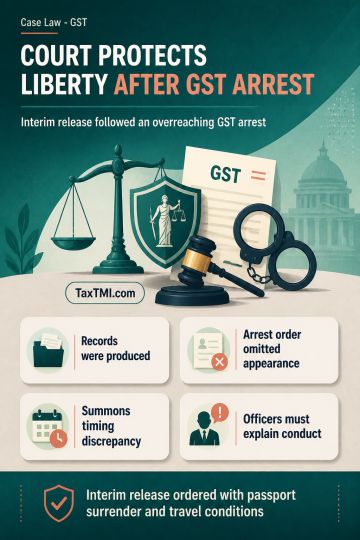
Personal liberty safeguards restrict arrest after court-directed GST appearance, requiring interim release where authorities overreach pending proceed...
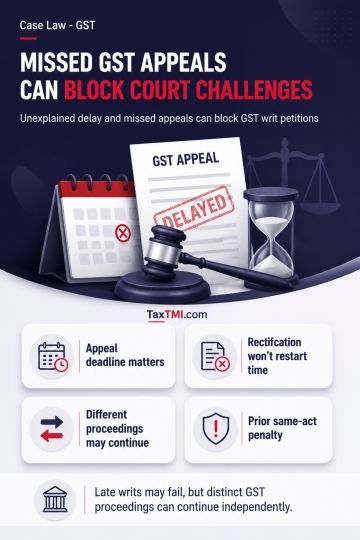
Alternative statutory remedy and delay bar GST writ challenges despite pending rectification, while distinct subject matter permits parallel proceedin...
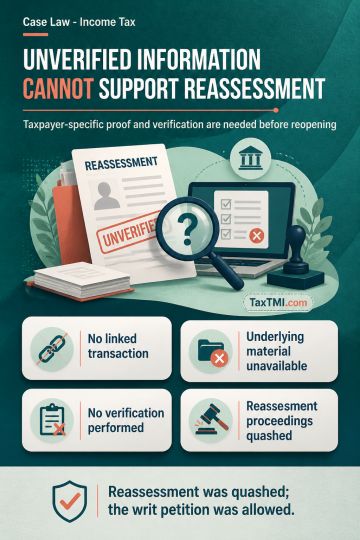
Unverified Insight Portal Information Cannot Justify Reassessment Without a Verified Taxpayer-Specific Income-Escape Nexus or Demonstrated Application...
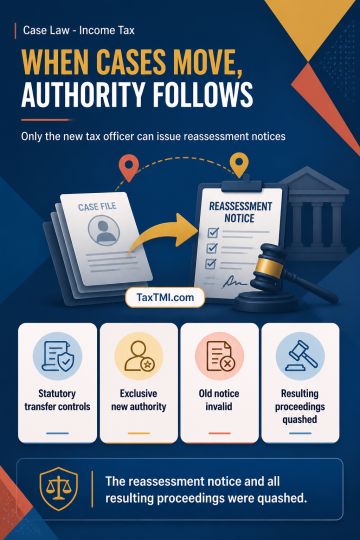
Assessing Officer jurisdiction after statutory transfer invalidates reassessment notices issued by transferor officers and nullifies resulting proceed...
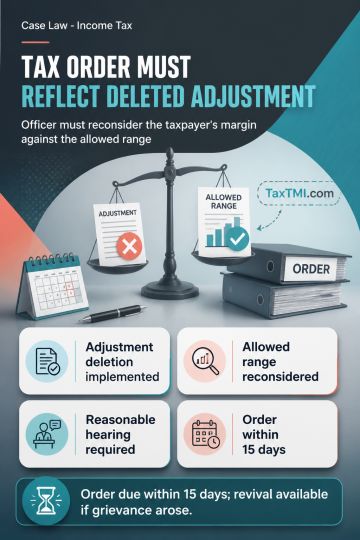
Consequential appeal-effect orders must implement rectification deleting working-capital adjustments and reconsider the resulting arm's-length range c...
A bail application was rejected in a case involving the creation of fake companies, appointment of fictitious directors/ partners/ proprietors, and illegal passing of inadmissible Input Tax Credit under the Goods and Services Tax (GST) laws. The accused, without the knowledge of the purported directors/staff, utilized invoices from fictitious suppliers to wrongfully avail and pass on ineligible Input Tax Credit, resulting in substantial revenue loss to the government. The court emphasized that economic offenses involving deep-rooted conspiracies and massive public fund losses should be viewed seriously as grave offenses affecting the nation's economy. Citing a Supreme Court precedent, the court held that such white-collar criminals, driven by personal profit motives and impeding national development through calculated dishonesty, warrant a different approach to bail. Considering the allegations, verified materials, and the cognizance order for offenses under GST laws and the Indian Penal Code, the court rejected the bail application.
A bail application was rejected in a case involving the creation of fake companies, appointment of fictitious directors/ partners/ proprietors, and illegal passing of inadmissible Input Tax Credit under the Goods and Services Tax (GST) laws. The accused, without the knowledge of the purported directors/staff, utilized invoices from fictitious suppliers to wrongfully avail and pass on ineligible Input Tax Credit, resulting in substantial revenue loss to the government. The court emphasized that economic offenses involving deep-rooted conspiracies and massive public fund losses should be viewed seriously as grave offenses affecting the nation's economy. Citing a Supreme Court precedent, the court held that such white-collar criminals, driven by personal profit motives and impeding national development through calculated dishonesty, warrant a different approach to bail. Considering the allegations, verified materials, and the cognizance order for offenses under GST laws and the Indian Penal Code, the court rejected the bail application.
Note: It is a system-generated summary and is for quick reference only.
 TaxTMI
  TaxTMI
 of 4879