Mandatory textile export qualifiers distinguish flame-retardant fabrics from other listed fabrics for automated identification under the textiles ince...
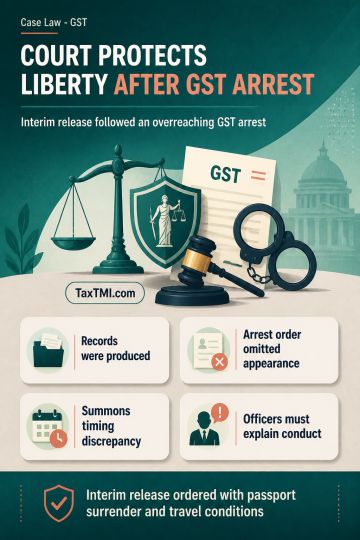
Personal liberty safeguards restrict arrest after court-directed GST appearance, requiring interim release where authorities overreach pending proceed...
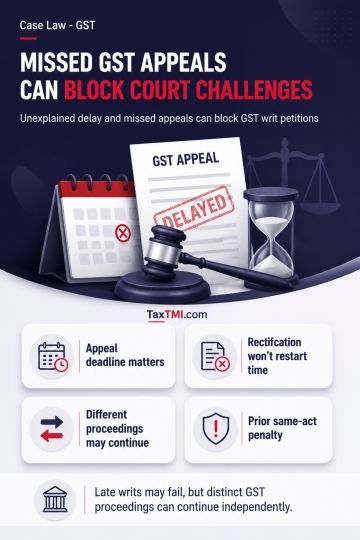
Alternative statutory remedy and delay bar GST writ challenges despite pending rectification, while distinct subject matter permits parallel proceedin...
The High Court accepted the petitioner's contention that they were prevented from filing an appeal within the stipulated time due to the delay in communicating the impugned order. Despite the provision stating that the limitation period commences from the date of passing the order, the court held that since there is a provision for filing an appeal, it necessarily implies that the factual aspects shall be examined by the Appellate Authority. Consequently, the petition was disposed of, allowing the petitioner to file an appeal against the impugned order within the prescribed time limit from the date of receiving the order's communication.
The High Court accepted the petitioner's contention that they were prevented from filing an appeal within the stipulated time due to the delay in communicating the impugned order. Despite the provision stating that the limitation period commences from the date of passing the order, the court held that since there is a provision for filing an appeal, it necessarily implies that the factual aspects shall be examined by the Appellate Authority. Consequently, the petition was disposed of, allowing the petitioner to file an appeal against the impugned order within the prescribed time limit from the date of receiving the order's communication.
Note: It is a system-generated summary and is for quick reference only.
 TaxTMI
  TaxTMI
 of 4888