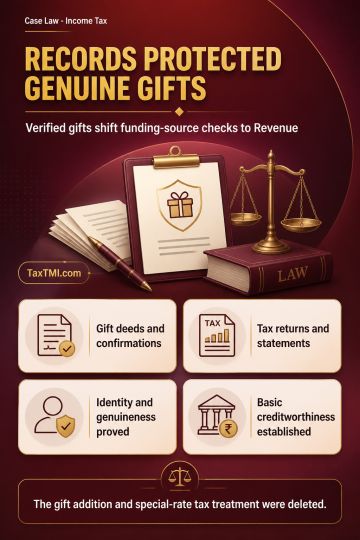
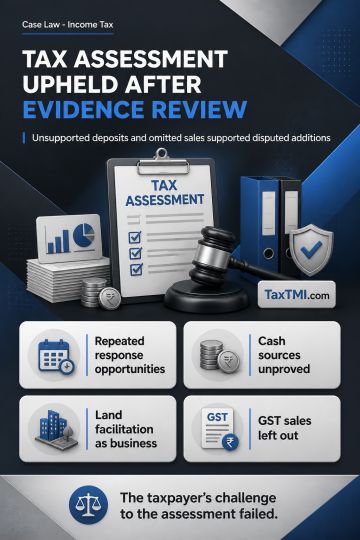
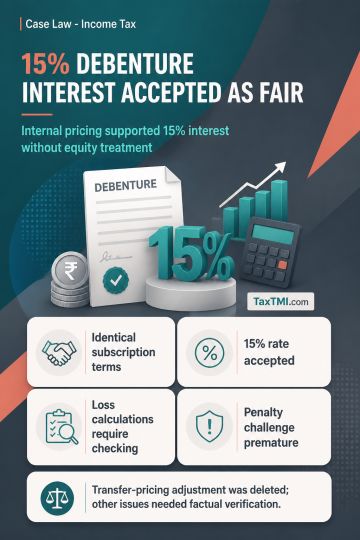
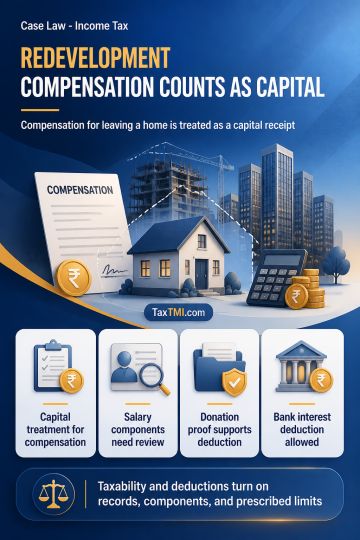
Explained Investment Sources: documented gifts and traceable salary savings supported deletion of additions for property and mutual-fund SIP investmen...
Internal comparable pricing supports arm's-length interest on compulsorily convertible debentures, preventing their recharacterisation as equity for t...
Nominee director protection shields independent financial-institution appointees from criminal liability where they lack involvement in deposit defaul...
Once the original reassessment orders u/s 148 were quashed, they ceased to exist legally. The rectification order u/s 154 was premised on the quashed orders, which could not be revived or corrected. Section 154 could only be invoked if a valid order capable of rectification existed. Since the original orders were non-existent after being quashed, invoking Section 154 was impermissible. Additionally, the condition u/s 149(1)(b) requiring income escaping assessment to be Rs. 50 lakhs or more was not fulfilled. Consequently, the rectification order was unsustainable and quashed by the High Court.
Once the original reassessment orders u/s 148 were quashed, they ceased to exist legally. The rectification order u/s 154 was premised on the quashed orders, which could not be revived or corrected. Section 154 could only be invoked if a valid order capable of rectification existed. Since the original orders were non-existent after being quashed, invoking Section 154 was impermissible. Additionally, the condition u/s 149(1)(b) requiring income escaping assessment to be Rs. 50 lakhs or more was not fulfilled. Consequently, the rectification order was unsustainable and quashed by the High Court.
Note: It is a system-generated summary and is for quick reference only.
 TaxTMI
  TaxTMI
 of 4888