Customs-controlled cargo movement now includes GDL, subject to EXIM prioritisation, segregation, verification, reconciliation and enforcement safeguar...
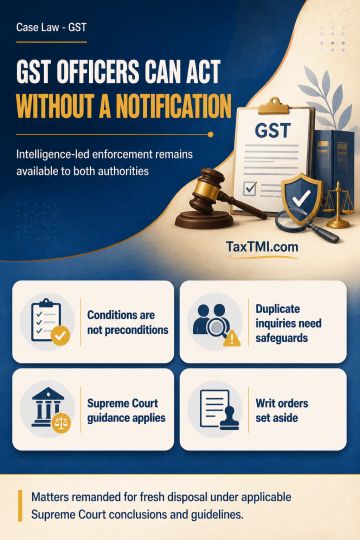
GST cross-empowerment remains effective without conditional notification, while duplicate proceedings require established safeguards against overlappi...
The taxpayer filed an original return which was processed by the CPC. Subsequently, a revised return was filed u/s 139(5) with a self-assessment tax of Rs. 10,820/-. However, the taxpayer again paid self-assessment tax not aligned with either the original or revised return. The CPC did not process the revised return, and rectification was disallowed. The ITAT directed the Assessing Officer to consider the rectification petition without limitation issues. The AO must verify the returns, compute income correctly, and not dismiss the petition solely on limitation grounds. The assessee must furnish relevant evidence. Tax cannot be collected without legal authority, and the assessee's bona fides were evident due to erroneous tax payment.
The taxpayer filed an original return which was processed by the CPC. Subsequently, a revised return was filed u/s 139(5) with a self-assessment tax of Rs. 10,820/-. However, the taxpayer again paid self-assessment tax not aligned with either the original or revised return. The CPC did not process the revised return, and rectification was disallowed. The ITAT directed the Assessing Officer to consider the rectification petition without limitation issues. The AO must verify the returns, compute income correctly, and not dismiss the petition solely on limitation grounds. The assessee must furnish relevant evidence. Tax cannot be collected without legal authority, and the assessee's bona fides were evident due to erroneous tax payment.
Note: It is a system-generated summary and is for quick reference only.
 TaxTMI
  TaxTMI
 of 4879