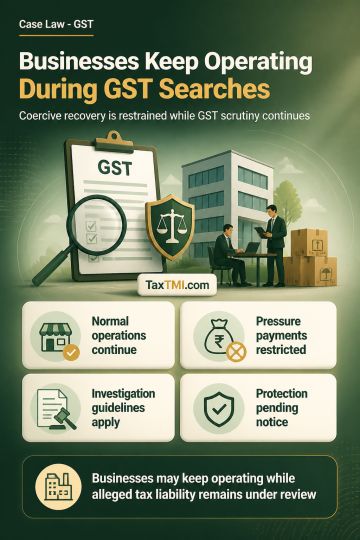
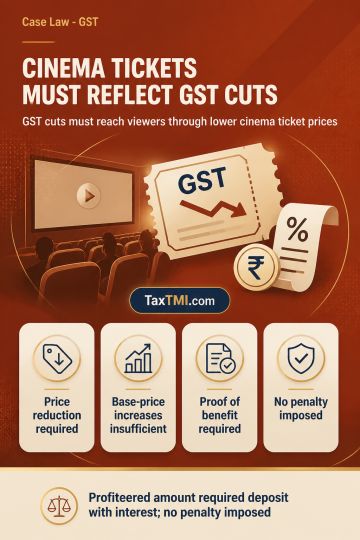
Coercive recovery during GST searches is restrained pending scrutiny, preserving normal business operations and requiring adherence to investigation g...
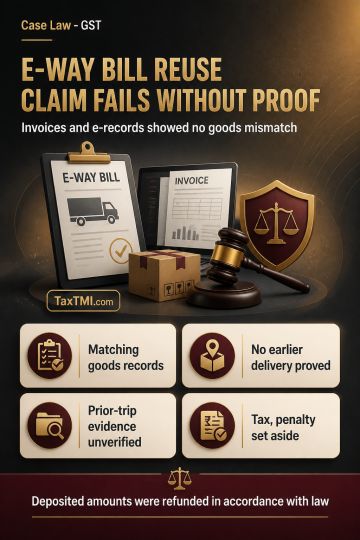
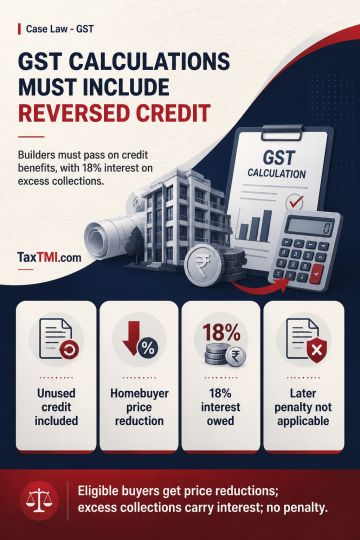
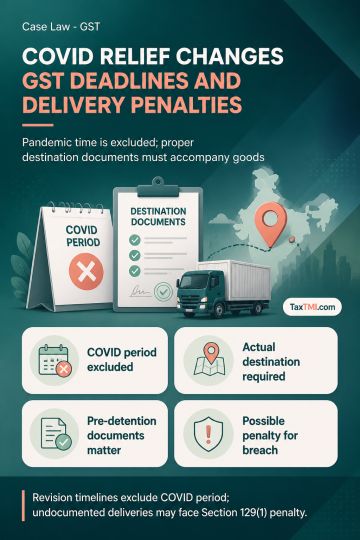
COVID-19 limitation exclusion and destination-specific e-way bills govern revisional timelines and penalties for undocumented third-party plywood deli...
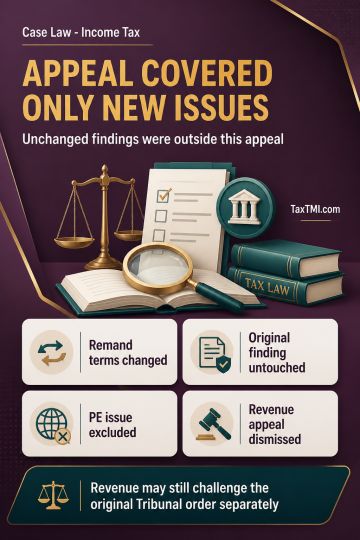
Questions arising from miscellaneous application orders cannot challenge unaltered Tribunal findings, leaving the original order separately challengea...
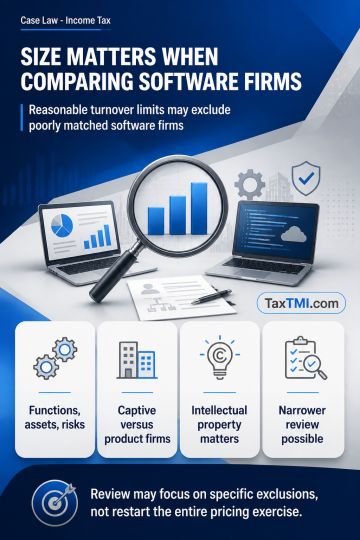
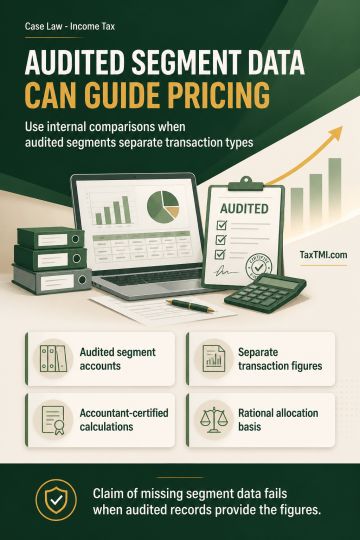
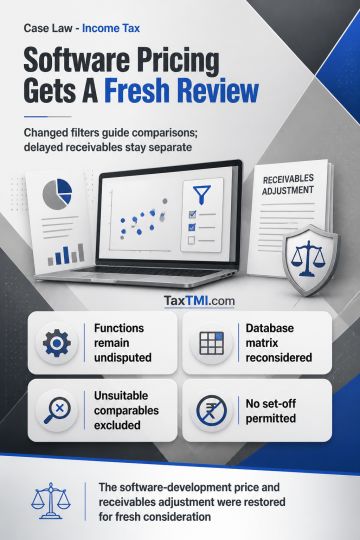
Transfer-pricing comparability filters require fresh arm's-length analysis, while delayed receivables need separate reconsideration with working-capit...
Page of 4894
Press 'Enter' after typing page number.
721 to 740 of 97867 Results
❮
❯
❯❯
0 / 200
Expand Note
Add to Folder
No Folders have been created
+
Are you sure you want to delete "My most important" ?
The case pertains to the reopening of assessment u/s 147/148 of the Income Tax Act due to undisclosed cash deposits in the assessee's bank accounts. The key points are: The Assessing Officer (AO) had sufficient information to believe that the assessee's income had escaped assessment, justifying reopening u/s 147. The existence of tangible material forming the AO's belief is relevant, not its sufficiency at the reopening stage. The assessee did not file a return of income or participate in the reassessment proceedings. The assessee failed to explain the source of cash deposits. The Tribunal admitted additional evidence filed by the assessee regarding peak cash credits, requiring verification by lower authorities. The matter was remanded to the CIT(A) for readjudication on merits, as both assessment and appellate proceedings were ex-parte. The mandate is to bring the correct income to tax in the hands of the correct assessee for the correct assessment year.
The case pertains to the reopening of assessment u/s 147/148 of the Income Tax Act due to undisclosed cash deposits in the assessee's bank accounts. The key points are: The Assessing Officer (AO) had sufficient information to believe that the assessee's income had escaped assessment, justifying reopening u/s 147. The existence of tangible material forming the AO's belief is relevant, not its sufficiency at the reopening stage. The assessee did not file a return of income or participate in the reassessment proceedings. The assessee failed to explain the source of cash deposits. The Tribunal admitted additional evidence filed by the assessee regarding peak cash credits, requiring verification by lower authorities. The matter was remanded to the CIT(A) for readjudication on merits, as both assessment and appellate proceedings were ex-parte. The mandate is to bring the correct income to tax in the hands of the correct assessee for the correct assessment year.
Note: It is a system-generated summary and is for quick reference only.
 TaxTMI
  TaxTMI
 of 4894