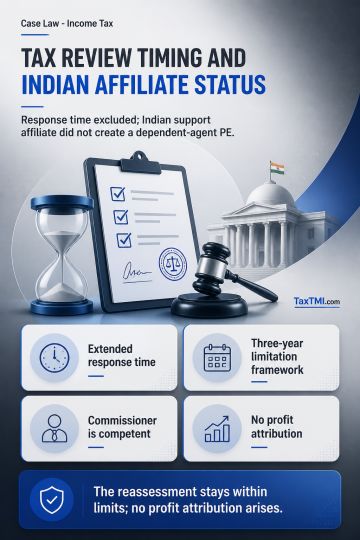
Supervisory permanent establishment requires project-wise duration and qualifying construction nexus; offshore supplies and salary reimbursements rema...
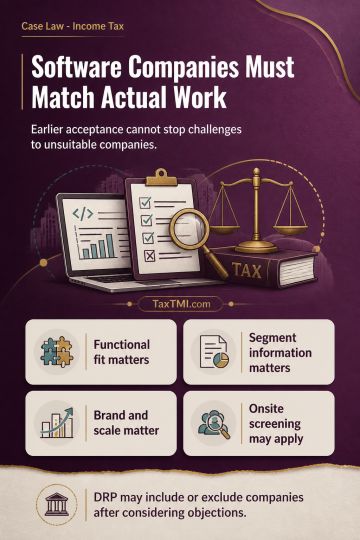
Transfer-pricing comparability permits fresh objections and filters where software service comparables are functionally unsuitable for arm's-length pr...
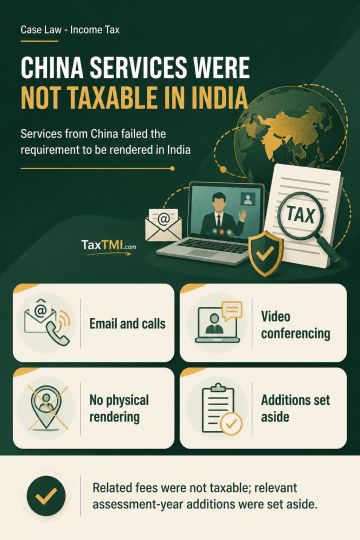
Territorial rendering requirement excludes China-based management and consultancy services from fees for technical services under the India-China DTAA...
Page of 4888
Press 'Enter' after typing page number.
281 to 300 of 97755 Results
❮
❯
❯❯
0 / 200
Expand Note
Add to Folder
No Folders have been created
+
Are you sure you want to delete "My most important" ?
The adhoc exemption order did not restrict the use of floodlights solely for World Cup matches; it aimed to uplift the stadium's infrastructure standards. The department erroneously assumed that World Cup matches were non-commercial, while one-day internationals were commercial. The exemption order made no such distinction. The show cause notice lacked factual or legal basis for alleging a violation of condition (ii). Regarding time limitation, the notice did not allege suppression of facts or intention to evade customs duty. The department issued the notice after collecting documents from the appellant, indicating no suppression. With a lapse of over 7 years, the demand was time-barred as the proviso to Section 28(1) was not applicable. The Appellate Tribunal set aside the impugned order and allowed the appeal.
The adhoc exemption order did not restrict the use of floodlights solely for World Cup matches; it aimed to uplift the stadium's infrastructure standards. The department erroneously assumed that World Cup matches were non-commercial, while one-day internationals were commercial. The exemption order made no such distinction. The show cause notice lacked factual or legal basis for alleging a violation of condition (ii). Regarding time limitation, the notice did not allege suppression of facts or intention to evade customs duty. The department issued the notice after collecting documents from the appellant, indicating no suppression. With a lapse of over 7 years, the demand was time-barred as the proviso to Section 28(1) was not applicable. The Appellate Tribunal set aside the impugned order and allowed the appeal.
Note: It is a system-generated summary and is for quick reference only.
 TaxTMI
  TaxTMI
 of 4888