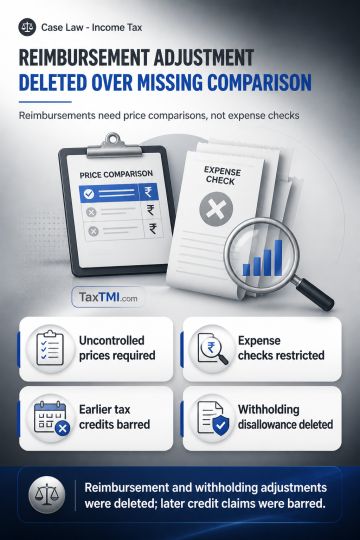
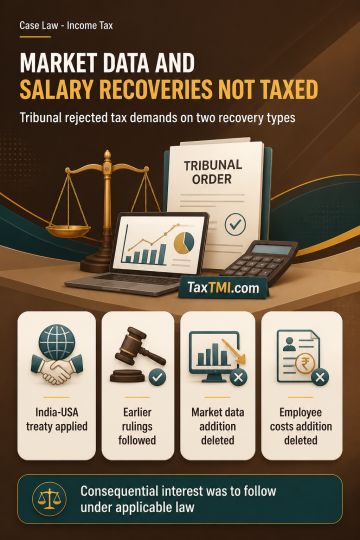
Transfer-pricing reimbursement adjustments require uncontrolled comparables and cannot become expense-genuineness reviews, resulting in deletion of th...
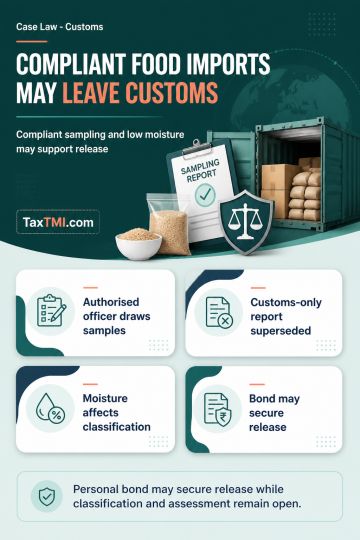
Food import sampling requirements support provisional release where unseized consignments conform to standards and raw areca classification is unestab...
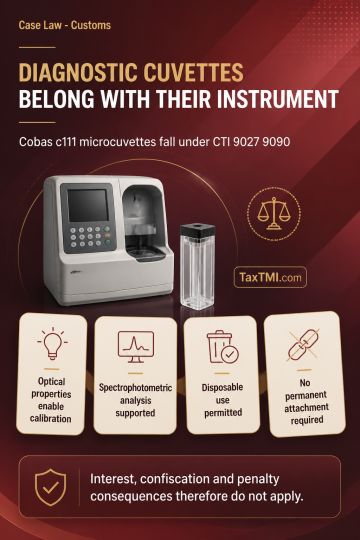
Diagnostic microcuvette classification follows sole-use analytical function, placing specialised disposable cuvettes with their analyser rather than g...
The case deals with the levy of service tax on 'indent commission' received by an Indian company from its overseas holding company for providing business auxiliary services. The judgments of the Delhi High Court in Verizon Communication India Pvt. Ltd. and the Larger Bench of CESTAT in Paul Merchants Limited were analyzed. It was observed that the Indian company provided necessary details of customers in India to foreign steel mills, enabling them to execute contracts directly with Indian customers. The Indian company satisfied the conditions of the Export of Service Rules, 2005, as payments were received in convertible foreign exchange. Applying the principles laid down in the cited cases, it was held that the services rendered by the appellant to its holding company fell within the scope of the Export of Service Rules, 2005. Consequently, the demand for service tax could not be sustained, and the impugned orders were set aside.
The case deals with the levy of service tax on 'indent commission' received by an Indian company from its overseas holding company for providing business auxiliary services. The judgments of the Delhi High Court in Verizon Communication India Pvt. Ltd. and the Larger Bench of CESTAT in Paul Merchants Limited were analyzed. It was observed that the Indian company provided necessary details of customers in India to foreign steel mills, enabling them to execute contracts directly with Indian customers. The Indian company satisfied the conditions of the Export of Service Rules, 2005, as payments were received in convertible foreign exchange. Applying the principles laid down in the cited cases, it was held that the services rendered by the appellant to its holding company fell within the scope of the Export of Service Rules, 2005. Consequently, the demand for service tax could not be sustained, and the impugned orders were set aside.
Note: It is a system-generated summary and is for quick reference only.
 TaxTMI
  TaxTMI
 of 4884