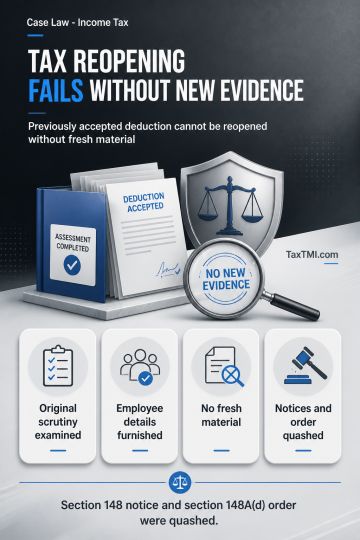
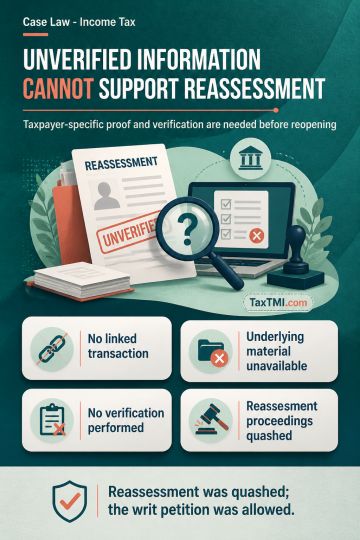
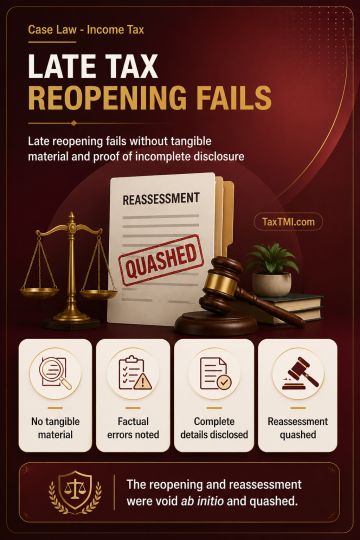
Unverified Insight Portal Information Cannot Justify Reassessment Without a Verified Taxpayer-Specific Income-Escape Nexus or Demonstrated Application...
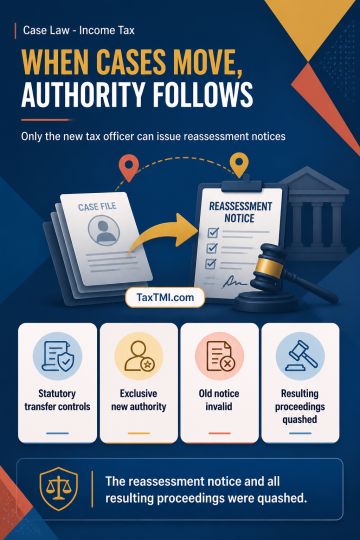
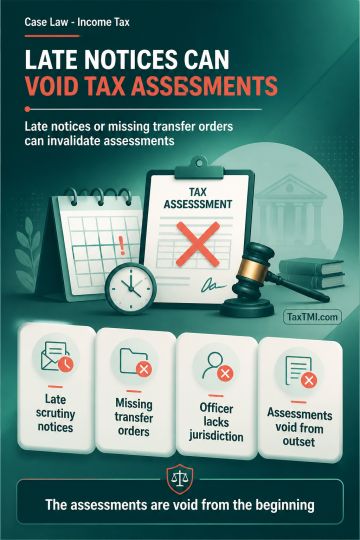
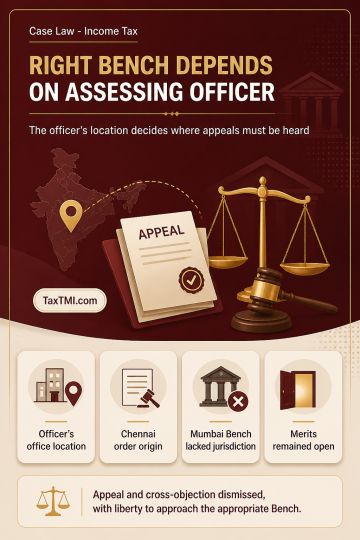
Assessing Officer jurisdiction after statutory transfer invalidates reassessment notices issued by transferor officers and nullifies resulting proceed...
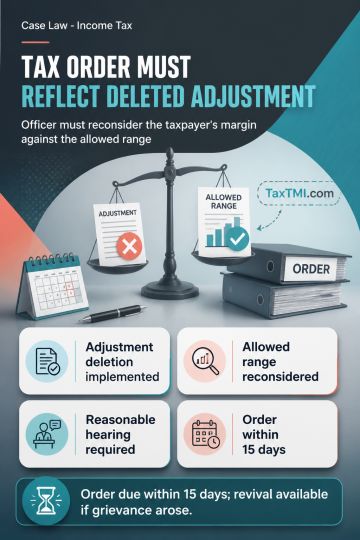
Consequential appeal-effect orders must implement rectification deleting working-capital adjustments and reconsider the resulting arm's-length range c...
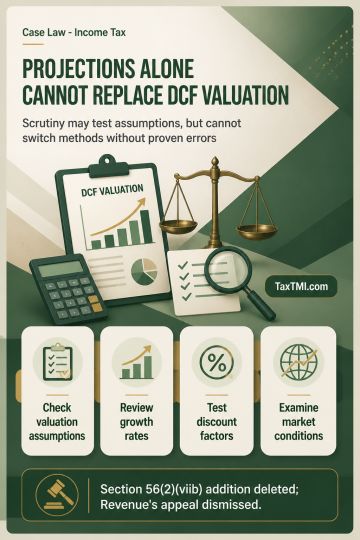
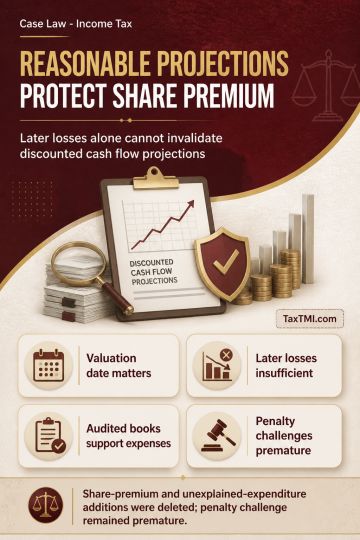
Discounted cash flow valuation protects share premium where projections are reasonable, while audited book expenses defeat unexplained-expenditure add...
Section 54 construction relief survives pre-transfer commencement when completion occurs within the statutory period, excluding ineligible spouse-owne...
The case deals with the levy of service tax on 'indent commission' received by an Indian company from its overseas holding company for providing business auxiliary services. The judgments of the Delhi High Court in Verizon Communication India Pvt. Ltd. and the Larger Bench of CESTAT in Paul Merchants Limited were analyzed. It was observed that the Indian company provided necessary details of customers in India to foreign steel mills, enabling them to execute contracts directly with Indian customers. The Indian company satisfied the conditions of the Export of Service Rules, 2005, as payments were received in convertible foreign exchange. Applying the principles laid down in the cited cases, it was held that the services rendered by the appellant to its holding company fell within the scope of the Export of Service Rules, 2005. Consequently, the demand for service tax could not be sustained, and the impugned orders were set aside.
The case deals with the levy of service tax on 'indent commission' received by an Indian company from its overseas holding company for providing business auxiliary services. The judgments of the Delhi High Court in Verizon Communication India Pvt. Ltd. and the Larger Bench of CESTAT in Paul Merchants Limited were analyzed. It was observed that the Indian company provided necessary details of customers in India to foreign steel mills, enabling them to execute contracts directly with Indian customers. The Indian company satisfied the conditions of the Export of Service Rules, 2005, as payments were received in convertible foreign exchange. Applying the principles laid down in the cited cases, it was held that the services rendered by the appellant to its holding company fell within the scope of the Export of Service Rules, 2005. Consequently, the demand for service tax could not be sustained, and the impugned orders were set aside.
Note: It is a system-generated summary and is for quick reference only.
 TaxTMI
  TaxTMI
 of 4881