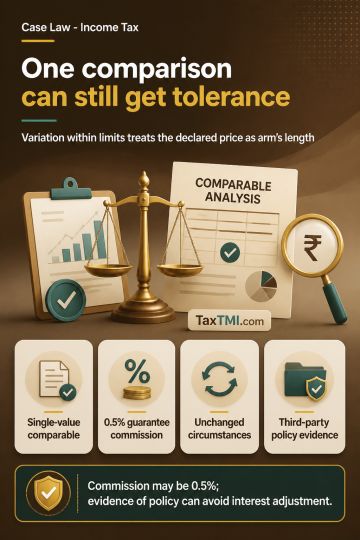
Transfer-pricing aggregation of distinct support-service and subcontract transactions was rejected, while debt-free receivables attracted no notional ...
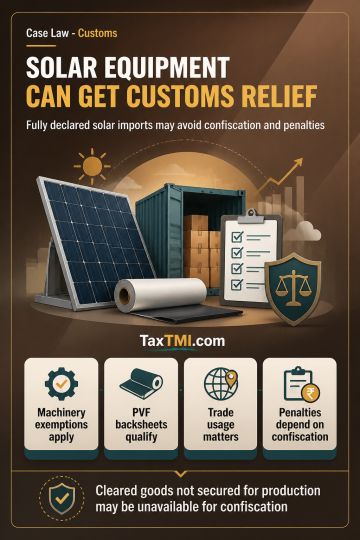
Customs exemptions cover photovoltaic assembly machinery and PVF backsheets, while fully declared cleared imports may avoid confiscation and penalties...
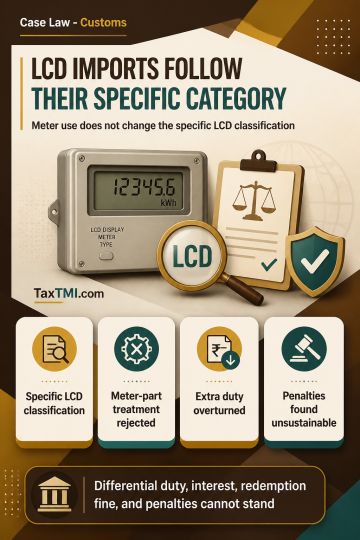
Specific tariff classification for LCD devices overrides treatment as electricity-meter parts, defeating differential duty, extended limitation, and p...
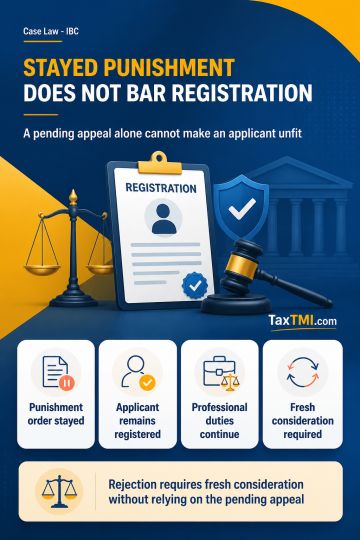
Stayed disciplinary punishment does not establish unfitness for insolvency professional registration; reconsideration must disregard mere pendency of ...
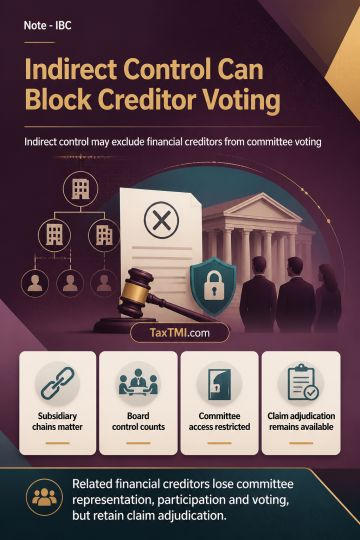
Indirect corporate control can create related-party status, excluding financial creditors from Committee of Creditors representation, participation an...
Page of 4881
Press 'Enter' after typing page number.
101 to 120 of 97618 Results
❮
❯
❯❯
0 / 200
Expand Note
Add to Folder
No Folders have been created
+
Are you sure you want to delete "My most important" ?
The petitioner's obligation under the contract was to source non-standard goods, as per KINFRA's designs and specifications, from vendors outside the state for incorporation in the works contract in Kerala. Even though the goods initially entered Kerala before being incorporated, breaking the chain of movement, this did not alter the inter-state nature of the transaction as the goods were specifically sourced from outside for the contract. The mere intervening event of the goods entering Kerala could not render it an intra-state sale. Therefore, the petitioner was not liable to pay tax under the KGST Act on the inter-state supply of goods for the works contract execution in Kerala. The High Court allowed the revisions, setting aside the Appellate Tribunal's orders and answering the questions of law in favor of the assessee against the revenue.
The petitioner's obligation under the contract was to source non-standard goods, as per KINFRA's designs and specifications, from vendors outside the state for incorporation in the works contract in Kerala. Even though the goods initially entered Kerala before being incorporated, breaking the chain of movement, this did not alter the inter-state nature of the transaction as the goods were specifically sourced from outside for the contract. The mere intervening event of the goods entering Kerala could not render it an intra-state sale. Therefore, the petitioner was not liable to pay tax under the KGST Act on the inter-state supply of goods for the works contract execution in Kerala. The High Court allowed the revisions, setting aside the Appellate Tribunal's orders and answering the questions of law in favor of the assessee against the revenue.
Note: It is a system-generated summary and is for quick reference only.
 TaxTMI
  TaxTMI
 of 4881