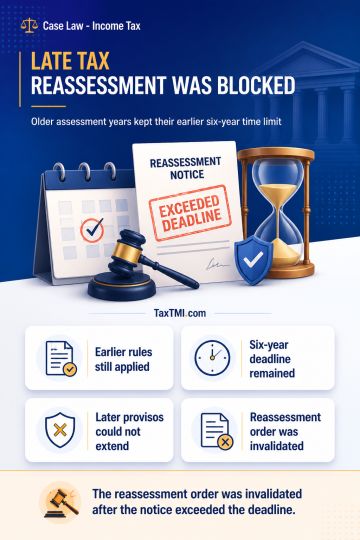
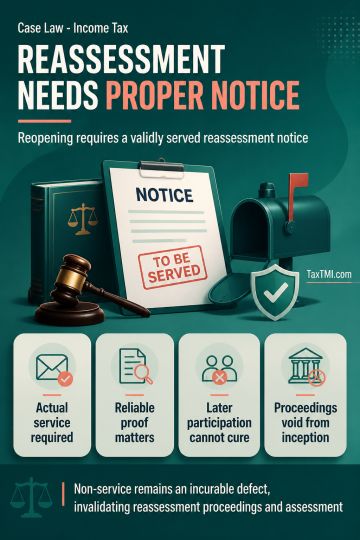
Pre-amendment reassessment limitation bars late notices under the preserved regime, invalidating consequential reassessment for affected earlier asses...
Cash-sales explanations for bank deposits require documentary reconciliation; reassessment notice survived where effective response time was available...
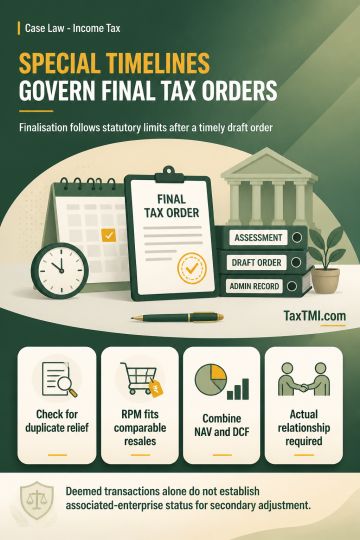
Functional comparability in transfer pricing prevents ad hoc arm's length adjustments where functions, assets, risks and reliable comparables are unes...
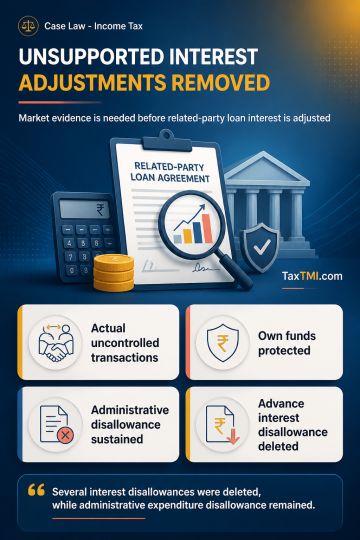
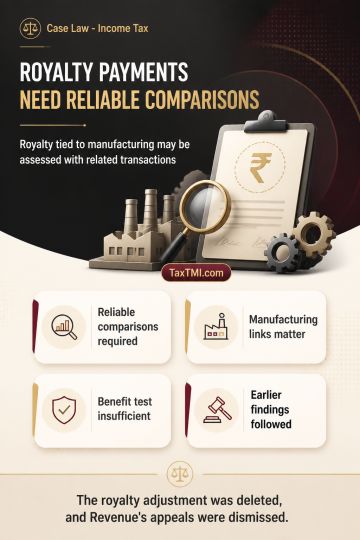
Contingency expenses, exempt-income disallowance, and royalty benchmarking: unsupported adjustments were deleted under consistent accounting and trans...
Validity of input tax credit (ITC) u/s 16 of the UP GST Act hinges on compliance with specified conditions to avoid double taxation. The burden lies on the dealer to prove fulfillment of conditions for claiming ITC. Merely producing tax invoices, e-way bills, and banking channel payments is insufficient. Proof of actual physical movement of goods, genuineness of transportation, payment of freight charges, acknowledgment of delivery, toll receipts, and filing of GSTR 2A is necessary. The Supreme Court has held that the primary burden is on the dealer to furnish details like selling dealer, vehicle number, freight payment, delivery acknowledgment, tax invoices, and payment particulars to establish actual goods movement. Submitting only invoices, e-way bills, or payment details is inadequate. Consequently, the High Court dismissed the writ petition, upholding the orders denying ITC for non-compliance with statutory conditions.
Validity of input tax credit (ITC) u/s 16 of the UP GST Act hinges on compliance with specified conditions to avoid double taxation. The burden lies on the dealer to prove fulfillment of conditions for claiming ITC. Merely producing tax invoices, e-way bills, and banking channel payments is insufficient. Proof of actual physical movement of goods, genuineness of transportation, payment of freight charges, acknowledgment of delivery, toll receipts, and filing of GSTR 2A is necessary. The Supreme Court has held that the primary burden is on the dealer to furnish details like selling dealer, vehicle number, freight payment, delivery acknowledgment, tax invoices, and payment particulars to establish actual goods movement. Submitting only invoices, e-way bills, or payment details is inadequate. Consequently, the High Court dismissed the writ petition, upholding the orders denying ITC for non-compliance with statutory conditions.
Note: It is a system-generated summary and is for quick reference only.
 TaxTMI
 TaxTMI

 of 4918