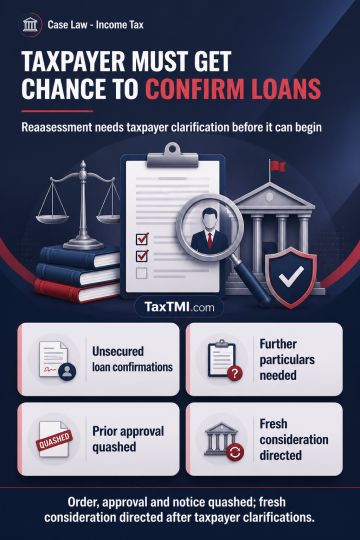
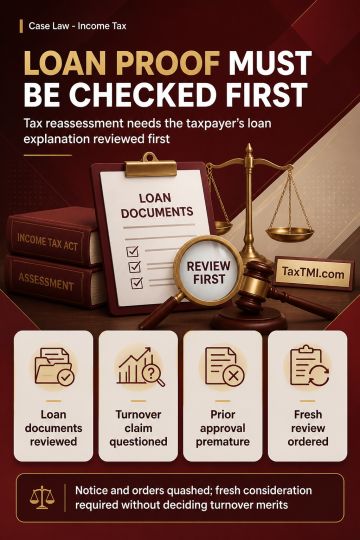
Opportunity to furnish unsecured-loan confirmations is required before reassessment initiation; proceedings require fresh consideration after taxpayer...
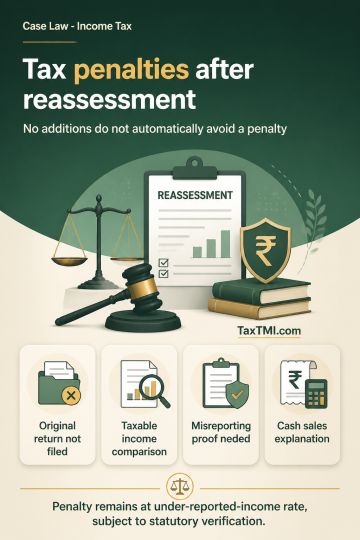
Under-reporting on a first reassessment return attracts penalty, while enhanced misreporting penalty requires proof of a statutory misreporting catego...
The case pertains to revision u/s 263 regarding adjustment made in profit on account of tangible fixed assets. The assessee's audited financial statements indicated an increase in profit as per ICDS-V (tangible fixed assets). However, the Assessing Officer (AO) failed to add back the impugned amount despite the auditors' recommendation. The Commissioner of Income Tax (CIT) provisionally computed excess depreciation granted at 15%. The Appellate Tribunal held that the accounts' working of depreciation chargeable under the profit and loss account was correctly worked out and disclosed in the audit report filed with the return of income. The AO considered the assessee's explanation and dropped any adverse treatment. The CIT erroneously failed to consider the details in the audit report, leading to an erroneous conclusion. The order was quashed, and the decision was in favor of the assessee.
The case pertains to revision u/s 263 regarding adjustment made in profit on account of tangible fixed assets. The assessee's audited financial statements indicated an increase in profit as per ICDS-V (tangible fixed assets). However, the Assessing Officer (AO) failed to add back the impugned amount despite the auditors' recommendation. The Commissioner of Income Tax (CIT) provisionally computed excess depreciation granted at 15%. The Appellate Tribunal held that the accounts' working of depreciation chargeable under the profit and loss account was correctly worked out and disclosed in the audit report filed with the return of income. The AO considered the assessee's explanation and dropped any adverse treatment. The CIT erroneously failed to consider the details in the audit report, leading to an erroneous conclusion. The order was quashed, and the decision was in favor of the assessee.
Note: It is a system-generated summary and is for quick reference only.
 TaxTMI
  TaxTMI
 of 4918