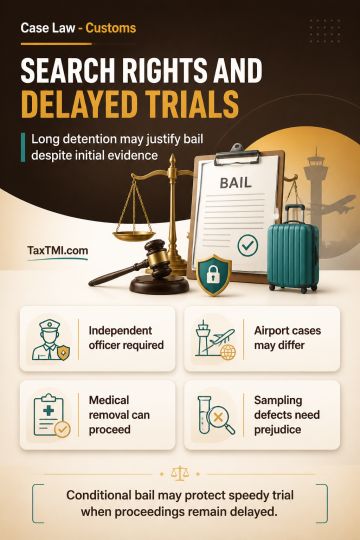
Food import sampling requirements support provisional release where unseized consignments conform to standards and raw areca classification is unestab...
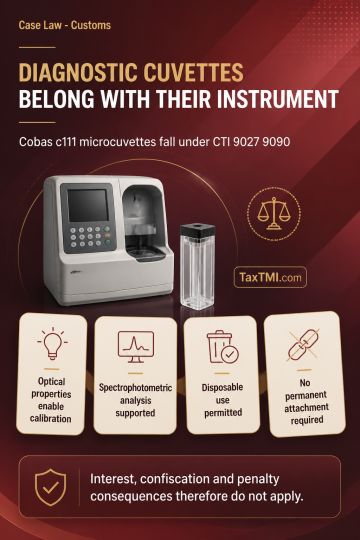
Diagnostic microcuvette classification follows sole-use analytical function, placing specialised disposable cuvettes with their analyser rather than g...
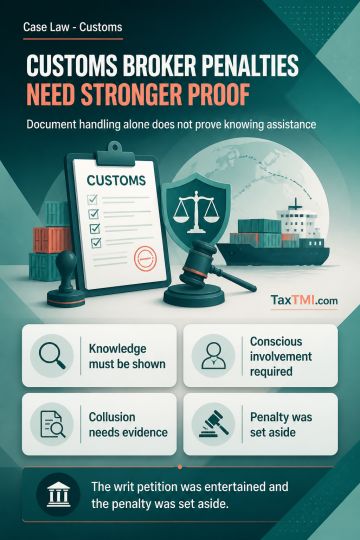
Customs Broker licensing proceedings fail when their offence-report foundation collapses and authorisation, advisory, and KYC duties remain unbreached...
The case involved a dispute regarding the dishonour of cheques, with the key issue being whether the Respondent had a legal obligation to pay back the money under the cheques. The Appellate Court considered the scope of interference in a judgment acquitting the accused and the statutory presumptions u/ss 138 and 139 of the NI Act. The Respondent admitted executing promissory notes and cheques which were later dishonoured. The Court noted that the presumption u/s 139 could be rebutted by the accused with a defense based on a preponderance of probabilities. The Respondent successfully rebutted the presumption by raising doubts about the Petitioner's claims, shifting the burden of proof. The Petitioner failed to discharge this burden, leading to the Respondent's acquittal u/s 138 of the NI Act. The petition seeking leave to appeal was dismissed by the High Court.
The case involved a dispute regarding the dishonour of cheques, with the key issue being whether the Respondent had a legal obligation to pay back the money under the cheques. The Appellate Court considered the scope of interference in a judgment acquitting the accused and the statutory presumptions u/ss 138 and 139 of the NI Act. The Respondent admitted executing promissory notes and cheques which were later dishonoured. The Court noted that the presumption u/s 139 could be rebutted by the accused with a defense based on a preponderance of probabilities. The Respondent successfully rebutted the presumption by raising doubts about the Petitioner's claims, shifting the burden of proof. The Petitioner failed to discharge this burden, leading to the Respondent's acquittal u/s 138 of the NI Act. The petition seeking leave to appeal was dismissed by the High Court.
Note: It is a system-generated summary and is for quick reference only.
 TaxTMI
  TaxTMI
 of 4881