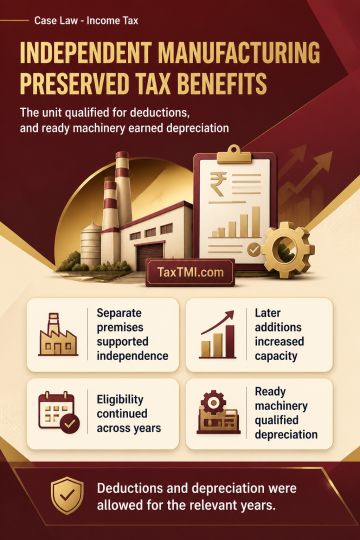
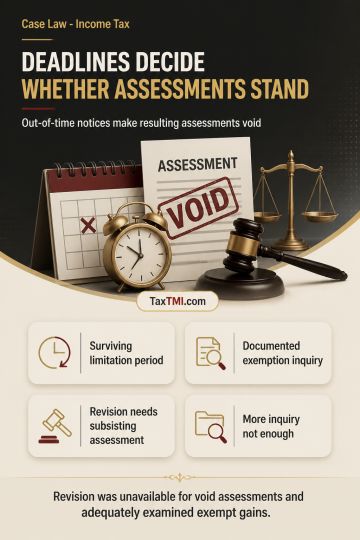
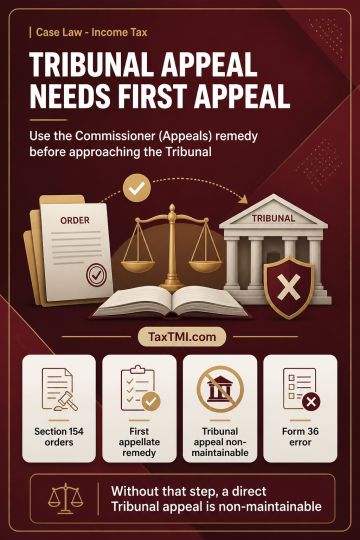
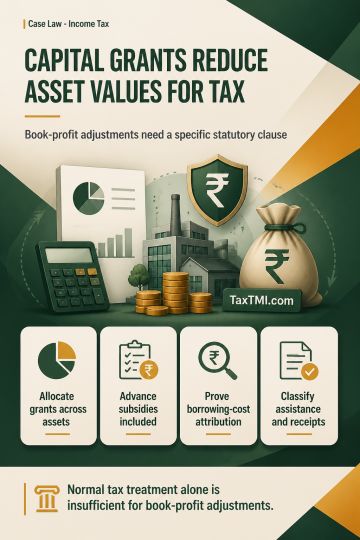
Independent manufacturing undertaking eligibility preserves Section 80IA/80IB deductions, while machinery kept ready for use qualifies for depreciatio...
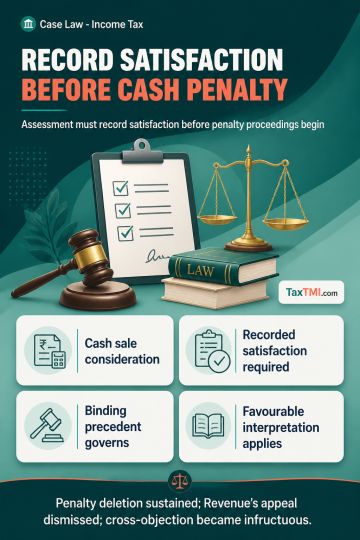
Assessing Officer Satisfaction Requirement Bars Penalty for Cash Receipt in Immovable-Property Sale Cases Where Initiation Lacks Recorded Satisfaction...
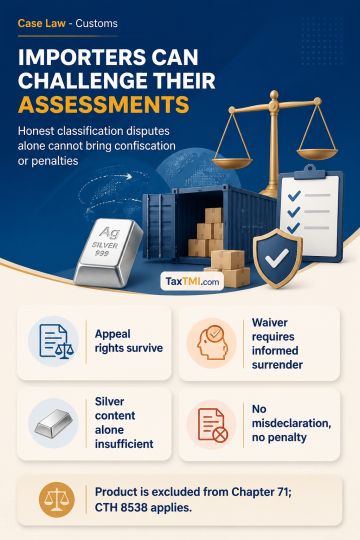
Self-assessed import entries remain appealable, while bona fide classification disputes without misdeclaration cannot justify confiscation or penaltie...
Page of 4894
Press 'Enter' after typing page number.
641 to 660 of 97867 Results
❮
❯
❯❯
0 / 200
Expand Note
Add to Folder
No Folders have been created
+
Are you sure you want to delete "My most important" ?
The appellant was granted bail in the Excise Policy case due to prolonged incarceration and denial of the right to speedy trial, despite the seriousness of the allegations. The Supreme Court observed that the trial was unlikely to conclude anytime soon, given the voluminous evidence and witnesses involved. Keeping the appellant incarcerated indefinitely would violate their fundamental right to liberty under Article 21. The court noted the appellant's deep societal roots and imposed conditions like furnishing bail bonds to address concerns about tampering with evidence or influencing witnesses. The High Court's order denying bail was quashed, and the appellant was directed to be released on bail upon furnishing bonds of Rs. 10,00,000 with two sureties of the same amount.
The appellant was granted bail in the Excise Policy case due to prolonged incarceration and denial of the right to speedy trial, despite the seriousness of the allegations. The Supreme Court observed that the trial was unlikely to conclude anytime soon, given the voluminous evidence and witnesses involved. Keeping the appellant incarcerated indefinitely would violate their fundamental right to liberty under Article 21. The court noted the appellant's deep societal roots and imposed conditions like furnishing bail bonds to address concerns about tampering with evidence or influencing witnesses. The High Court's order denying bail was quashed, and the appellant was directed to be released on bail upon furnishing bonds of Rs. 10,00,000 with two sureties of the same amount.
Note: It is a system-generated summary and is for quick reference only.
 TaxTMI
  TaxTMI
 of 4894