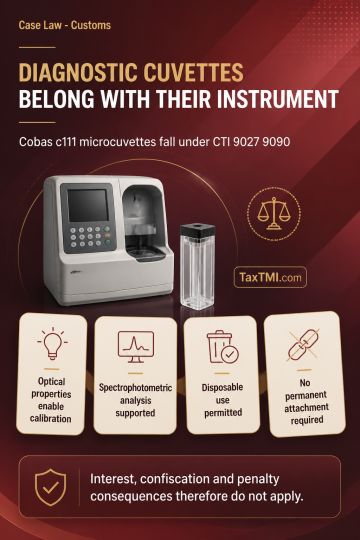
Diagnostic microcuvette classification follows sole-use analytical function, placing specialised disposable cuvettes with their analyser rather than g...
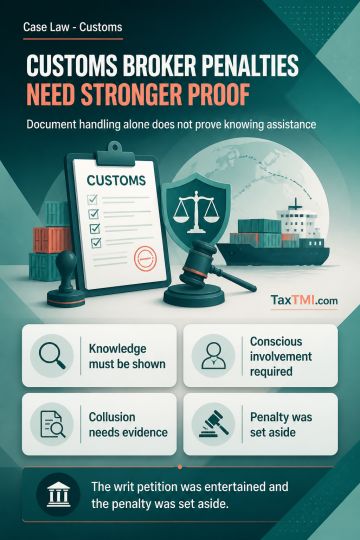
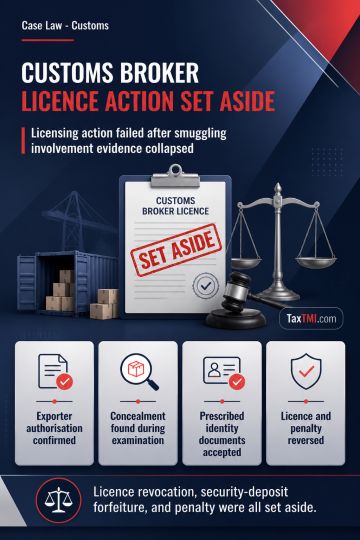
Customs Broker licensing proceedings fail when their offence-report foundation collapses and authorisation, advisory, and KYC duties remain unbreached...
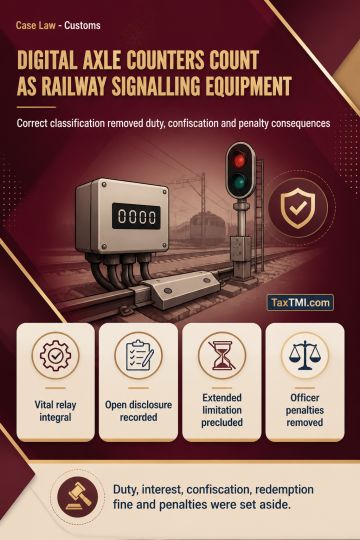
Tariff classification of Digital Axle Counters affirmed as electro-mechanical railway signalling equipment, eliminating duty, confiscation and penalty...
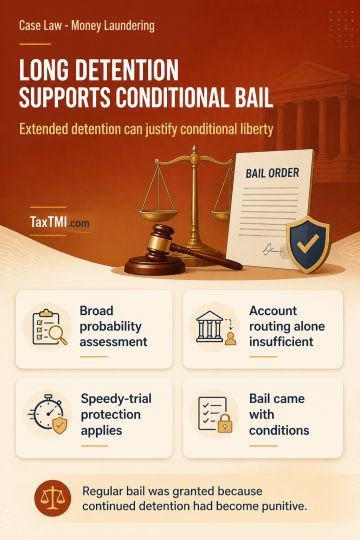
The appellant was granted bail in the Excise Policy case due to prolonged incarceration and denial of the right to speedy trial, despite the seriousness of the allegations. The Supreme Court observed that the trial was unlikely to conclude anytime soon, given the voluminous evidence and witnesses involved. Keeping the appellant incarcerated indefinitely would violate their fundamental right to liberty under Article 21. The court noted the appellant's deep societal roots and imposed conditions like furnishing bail bonds to address concerns about tampering with evidence or influencing witnesses. The High Court's order denying bail was quashed, and the appellant was directed to be released on bail upon furnishing bonds of Rs. 10,00,000 with two sureties of the same amount.
The appellant was granted bail in the Excise Policy case due to prolonged incarceration and denial of the right to speedy trial, despite the seriousness of the allegations. The Supreme Court observed that the trial was unlikely to conclude anytime soon, given the voluminous evidence and witnesses involved. Keeping the appellant incarcerated indefinitely would violate their fundamental right to liberty under Article 21. The court noted the appellant's deep societal roots and imposed conditions like furnishing bail bonds to address concerns about tampering with evidence or influencing witnesses. The High Court's order denying bail was quashed, and the appellant was directed to be released on bail upon furnishing bonds of Rs. 10,00,000 with two sureties of the same amount.
Note: It is a system-generated summary and is for quick reference only.
 TaxTMI
  TaxTMI
 of 4883