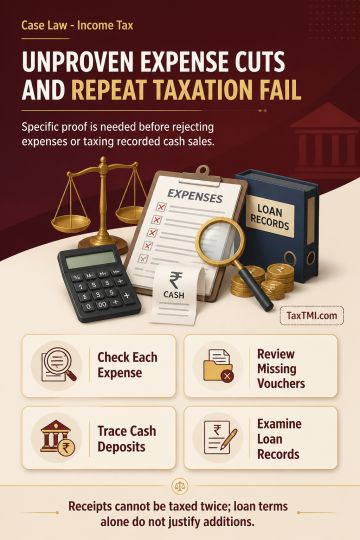
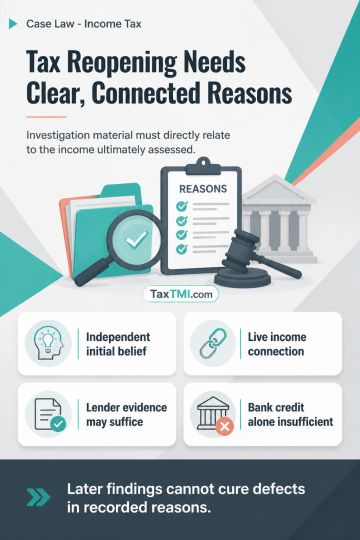
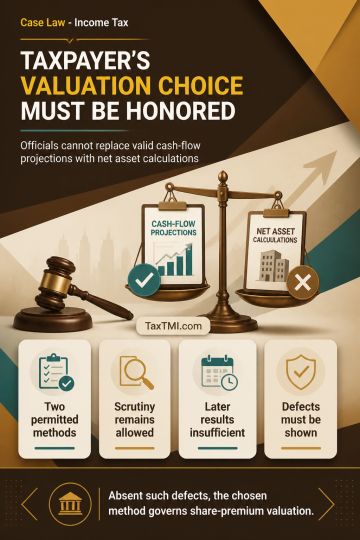
Capital-gains exemption for charitable trusts extends to qualifying fixed deposits, while unrecoverable TDS write-offs may constitute income applicati...
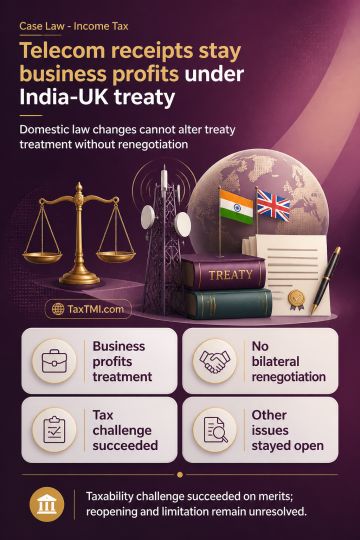
India-UK treaty characterisation of telecom-service receipts as business profits withstands unilateral domestic-law amendments for Indian tax purposes...
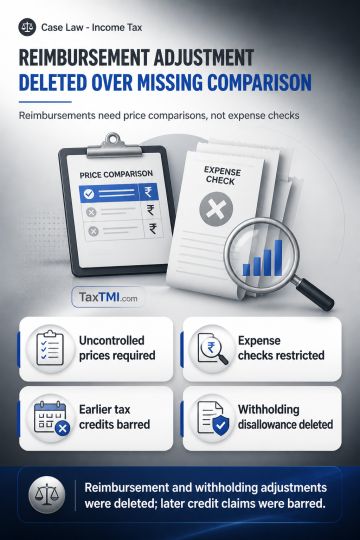
Transfer-pricing reimbursement adjustments require uncontrolled comparables and cannot become expense-genuineness reviews, resulting in deletion of th...
Food import sampling requirements support provisional release where unseized consignments conform to standards and raw areca classification is unestab...
Page of 4883
Press 'Enter' after typing page number.
321 to 340 of 97649 Results
❮
❯
❯❯
0 / 200
Expand Note
Add to Folder
No Folders have been created
+
Are you sure you want to delete "My most important" ?
The appellant was granted bail in the Excise Policy case due to prolonged incarceration and denial of the right to speedy trial, despite the seriousness of the allegations. The Supreme Court observed that the trial was unlikely to conclude anytime soon, given the voluminous evidence and witnesses involved. Keeping the appellant incarcerated indefinitely would violate their fundamental right to liberty under Article 21. The court noted the appellant's deep societal roots and imposed conditions like furnishing bail bonds to address concerns about tampering with evidence or influencing witnesses. The High Court's order denying bail was quashed, and the appellant was directed to be released on bail upon furnishing bonds of Rs. 10,00,000 with two sureties of the same amount.
The appellant was granted bail in the Excise Policy case due to prolonged incarceration and denial of the right to speedy trial, despite the seriousness of the allegations. The Supreme Court observed that the trial was unlikely to conclude anytime soon, given the voluminous evidence and witnesses involved. Keeping the appellant incarcerated indefinitely would violate their fundamental right to liberty under Article 21. The court noted the appellant's deep societal roots and imposed conditions like furnishing bail bonds to address concerns about tampering with evidence or influencing witnesses. The High Court's order denying bail was quashed, and the appellant was directed to be released on bail upon furnishing bonds of Rs. 10,00,000 with two sureties of the same amount.
Note: It is a system-generated summary and is for quick reference only.
 TaxTMI
  TaxTMI
 of 4883