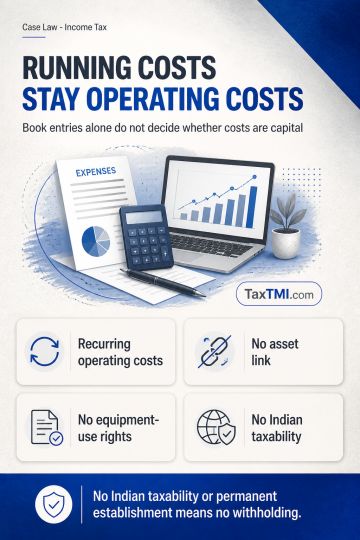
Business expenditure and depreciation rules allow operational outgoings while limiting disallowances for personal elements and unsupported third-party...
Compromise-and-arrangement extensions may accommodate debt assignment where creditor commercial judgment supports value maximisation and avoids proced...
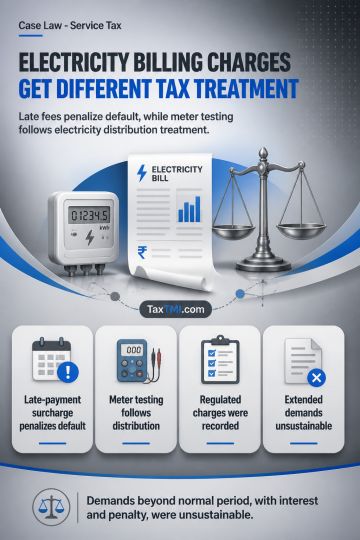
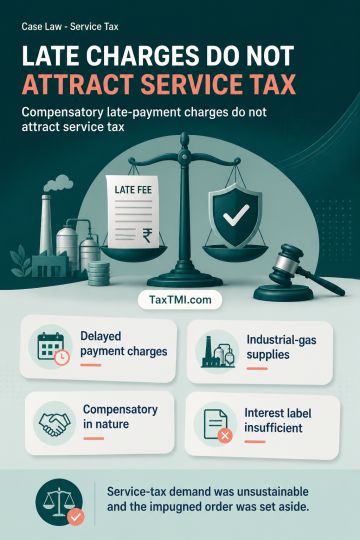
Delayed-payment surcharge is not taxable tolerance consideration where it penalises default, while meter testing follows electricity distribution trea...
Sufficient cause for delayed revenue income-tax appeals requires bona fides, due diligence and a credible explanation; otherwise limitation bars appea...
Inverted-duty-structure refunds remain available for unchanged-rate apparel supplies despite trader status and require tax-period-specific computation...
The assessee's appeal was allowed and the addition was deleted. The authorities failed to analyze the assessee's specific stand and incorrectly assumed availability of unexplained cash credit. The AO's findings regarding abnormal cash deposit trend during demonetization and earlier months were incorrect, as demonstrated by the assessee's tabulated details showing gradual increase in turnover. The AO did not visualize the circumstances during demonetization, where all amounts had to be routed through bank accounts. The CIT(A) reduced the quantum addition but adopted a different analogy, calculating cash availability based on turnover increase without analyzing purchases and resulting profit. The ITAT held that the addition was unsustainable, as the authorities did not examine whether the profit ratio could be swindled to that magnitude, and books of account should not have been rejected.
The assessee's appeal was allowed and the addition was deleted. The authorities failed to analyze the assessee's specific stand and incorrectly assumed availability of unexplained cash credit. The AO's findings regarding abnormal cash deposit trend during demonetization and earlier months were incorrect, as demonstrated by the assessee's tabulated details showing gradual increase in turnover. The AO did not visualize the circumstances during demonetization, where all amounts had to be routed through bank accounts. The CIT(A) reduced the quantum addition but adopted a different analogy, calculating cash availability based on turnover increase without analyzing purchases and resulting profit. The ITAT held that the addition was unsustainable, as the authorities did not examine whether the profit ratio could be swindled to that magnitude, and books of account should not have been rejected.
Note: It is a system-generated summary and is for quick reference only.
 TaxTMI
  TaxTMI
 of 4888