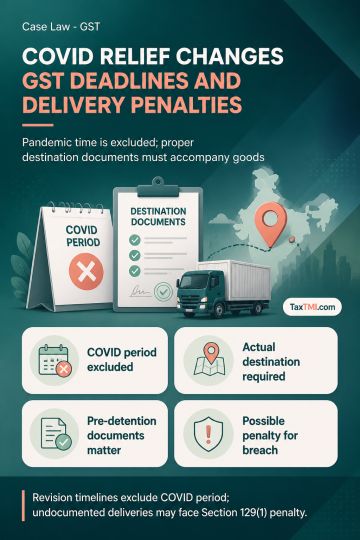
COVID-19 limitation exclusion and destination-specific e-way bills govern revisional timelines and penalties for undocumented third-party plywood deli...
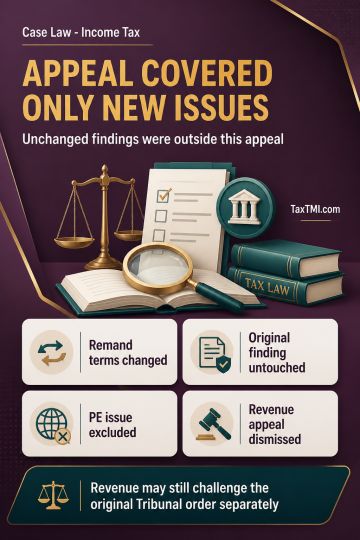
Questions arising from miscellaneous application orders cannot challenge unaltered Tribunal findings, leaving the original order separately challengea...
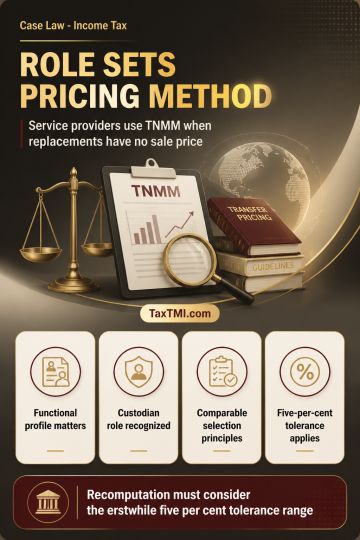
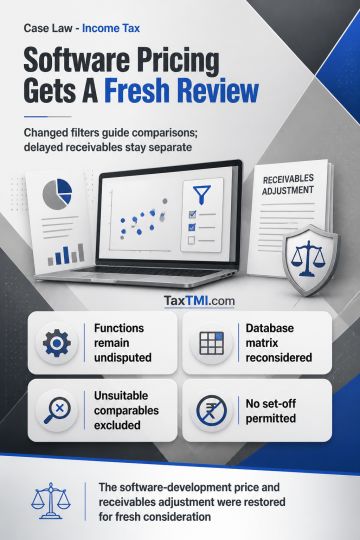
Transfer-pricing comparability filters require fresh arm's-length analysis, while delayed receivables need separate reconsideration with working-capit...
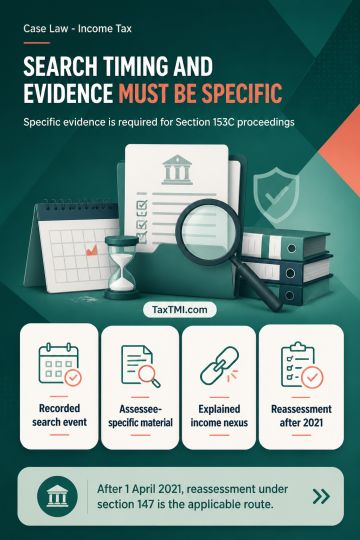
Section 153C jurisdiction requires timely deemed search and assessee-specific satisfaction material; otherwise reassessment must use the proper statut...
The assessee's appeal was allowed and the addition was deleted. The authorities failed to analyze the assessee's specific stand and incorrectly assumed availability of unexplained cash credit. The AO's findings regarding abnormal cash deposit trend during demonetization and earlier months were incorrect, as demonstrated by the assessee's tabulated details showing gradual increase in turnover. The AO did not visualize the circumstances during demonetization, where all amounts had to be routed through bank accounts. The CIT(A) reduced the quantum addition but adopted a different analogy, calculating cash availability based on turnover increase without analyzing purchases and resulting profit. The ITAT held that the addition was unsustainable, as the authorities did not examine whether the profit ratio could be swindled to that magnitude, and books of account should not have been rejected.
The assessee's appeal was allowed and the addition was deleted. The authorities failed to analyze the assessee's specific stand and incorrectly assumed availability of unexplained cash credit. The AO's findings regarding abnormal cash deposit trend during demonetization and earlier months were incorrect, as demonstrated by the assessee's tabulated details showing gradual increase in turnover. The AO did not visualize the circumstances during demonetization, where all amounts had to be routed through bank accounts. The CIT(A) reduced the quantum addition but adopted a different analogy, calculating cash availability based on turnover increase without analyzing purchases and resulting profit. The ITAT held that the addition was unsustainable, as the authorities did not examine whether the profit ratio could be swindled to that magnitude, and books of account should not have been rejected.
Note: It is a system-generated summary and is for quick reference only.
 TaxTMI
  TaxTMI
 of 4881