Loading...

⚠ ✕
❮ Top
☎ Help
☰
×

By creating an account you can:

Logo TaxTMI
Call Us / Help / Feedback✕

Contact Us At :

✉ E-mail: [email protected]

✆ Call / WhatsApp at: +91 99117 96707

For more information, Check Contact Us

FAQs :

To know Frequently Asked Questions, Check FAQs

Most Asked Video Tutorials :

For more tutorials, Check Video Tutorials

Submit Feedback/Suggestion :

Email :
Please provide your email address so we can follow up on your feedback.
Category :
Description :
Min 15 characters 0/2000
Make Most of Text Search ✕
  1. Checkout this video tutorial: How to search effectively on TaxTMI.
  2. Put words in double quotes for exact word search, eg: "income tax"
  3. Avoid noise words such as : 'and, of, the, a'
  4. Sort by Relevance to get the most relevant document.
  5. Press Enter to add multiple terms/multiple phrases, and then click on Search to Search.
  6. Text Search
  7. The system will try to fetch results that contains ALL your words.
  8. Once you add keywords, you'll see a new 'Search In' filter that makes your results even more precise.
  9. Text Search
╳
Add to...
You have not created any category. Kindly create one to bookmark this item!
✕
Create New Category
Hide
Title :
Description :
❮❮ Hide
❮ Default View
Expand ❯❯
Close ✕
🔎 Filters / Advanced Search ❯
TEXT

Press 'Enter' to add multiple search terms. Rules for Better Search

Search In
Main Text + AI Text ❯
  • Main Text
  • Main Text + AI Text
  • AI Text
Law:
---- All Laws---- ❯
  • ---- All Laws----
  • Income Tax
  • Direct Taxes
  • Benami Property
  • Central GST Laws
  • SGST - State GST Laws
  • Customs
  • FTP - Foreign Trade Policy
  • SEZ - Special Economic Zone
  • FEMA - Foreign Exchange Management
  • Companies Law
  • SEBI - Securities & Exchange Board of India
  • IBC - Insolvency and Bankruptcy
  • Law of Competition
  • PMLA - Money-Laundering
  • Indian Laws
  • Bill / Finance Bills
  • Wealth Tax
  • Service Tax
  • Central Excise
  • VAT / Sales Tax
Month:
---- All Months ---- ❯
  • ---- All Months ----
  • January
  • February
  • March
  • April
  • May
  • June
  • July
  • August
  • September
  • October
  • November
  • December
Year:
---- All Years ---- ❯
  • ---- All Years ----
  • 2026
  • 2025
  • 2024
  • 2023
  • 2022
  • 2021
  • 2020
  • 2019
  • 2018
  • 2017
  • 2016
  • 2015
  • 2014
  • 2013
  • 2012
  • 2011
Sort By: ?
In Sort By 'Default', exact matches for text search are shown at the top, followed by the remaining results in their regular order.
Relevance Default Date
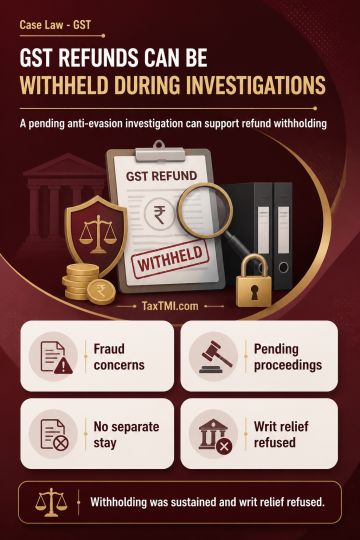
    GST refund withholding under Section 54(11) remains available during anti-evasion proceedings without a separate judicial stay.
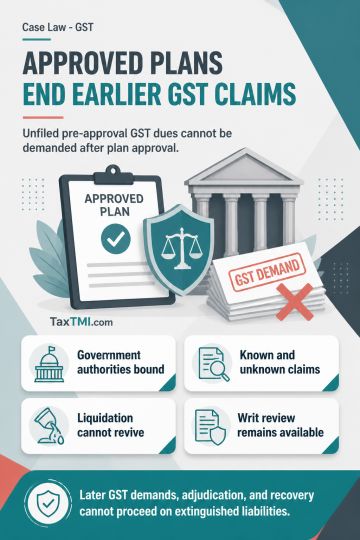
    Resolution-plan extinguishment bars unfiled GST dues and permits writ review despite a statutory appellate remedy.
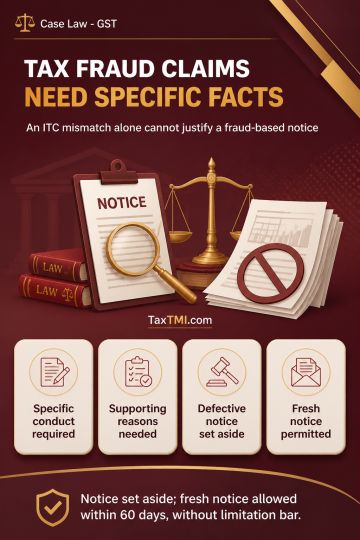
    Section 74 fraud allegations must be particularised; an ITC mismatch alone cannot sustain a notice for wrongful credit.
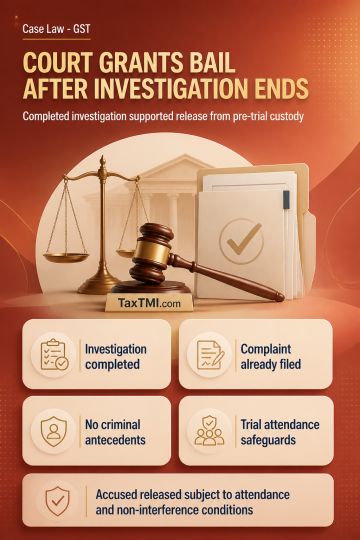
    Bail in CGST prosecution: completed investigation and documentary evidence supported release subject to safeguards against trial interference.
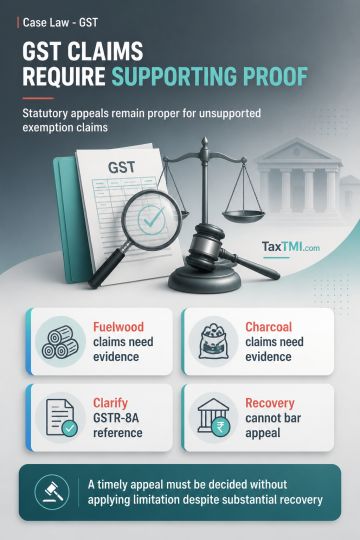
    Statutory GST appeals remain the appropriate remedy where exemption claims lack substantiation during adjudication proceedings.
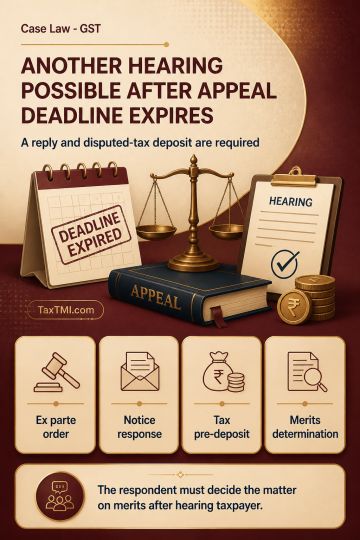
    Ex parte GST assessment permits fresh adjudication subject to reply and disputed-tax pre-deposit despite expired appellate limitation.
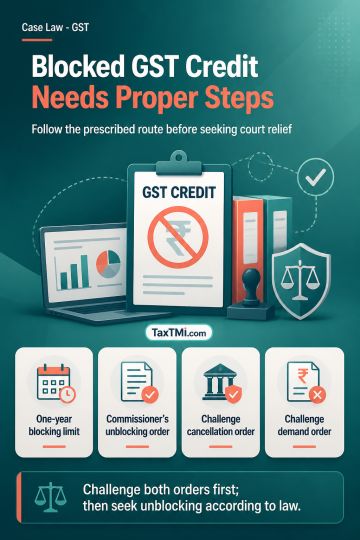
    Input tax credit blocking requires use of the prescribed unblocking remedy before writ relief, especially after demand proceedings.
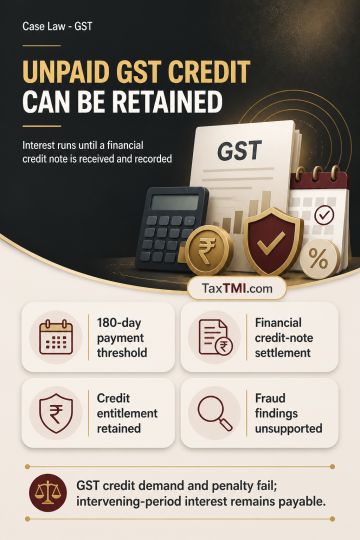
    Input tax credit on unpaid consideration attracts interest despite later financial credit-note settlement and retained credit entitlement.
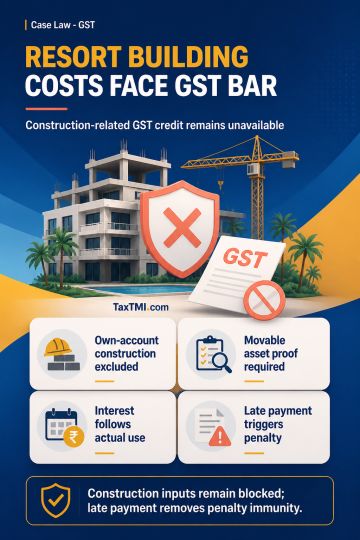
    Blocked input tax credit for resort construction remains unavailable; interest follows actual utilisation, while delayed payment attracts statutory pe...
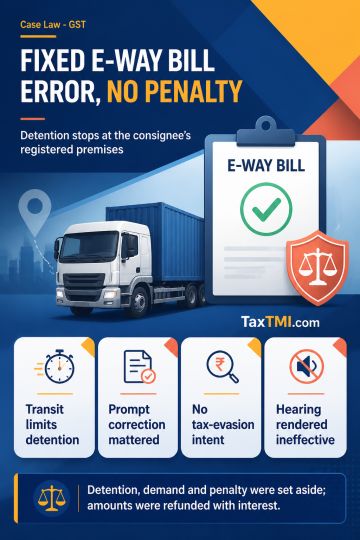
    Detention authority ends when transit ends; curable e-way bill omissions cannot justify penalties without tax-evasion intent.
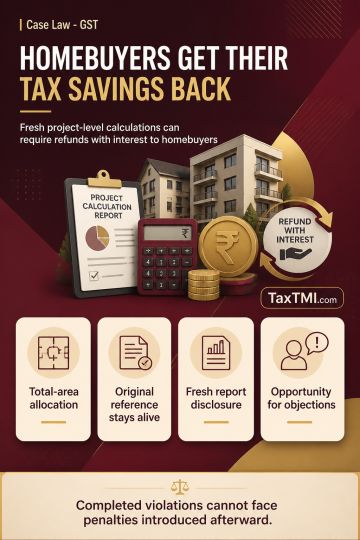
    Revised anti-profiteering methodology permits project-level ITC recalculation, requiring homebuyer refunds with interest while excluding retrospective...
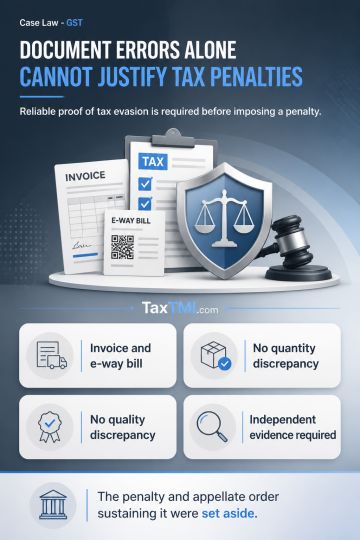
    Technical transport-document discrepancies cannot justify tax penalties without reliable evidence of deliberate contravention and intent to evade tax.
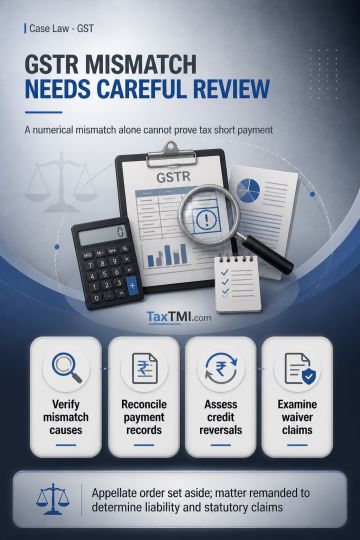
    GSTR return mismatches require liability verification, with reasoned reconsideration where tax, interest, penalty, and credit issues remain unresolved...
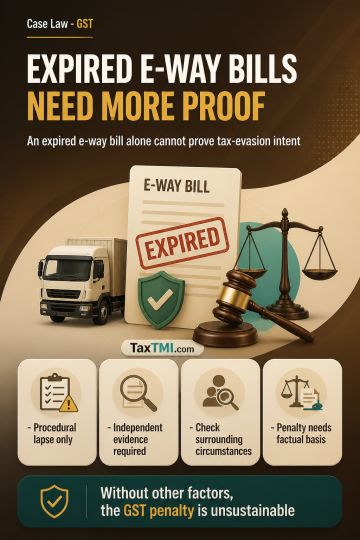
    Expired e-way bills alone do not establish tax-evasion intent, requiring independent evidence before GST penalties may be imposed.
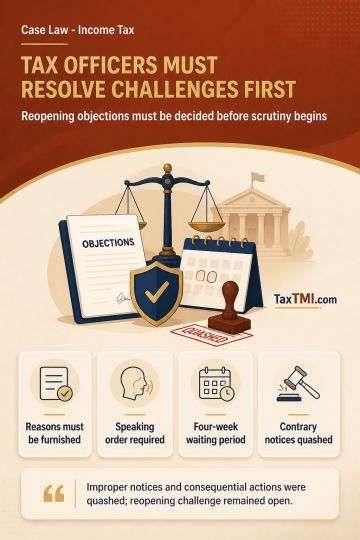
    Reassessment objections must be decided before scrutiny, and assessment notices cannot issue during the four-week challenge period.
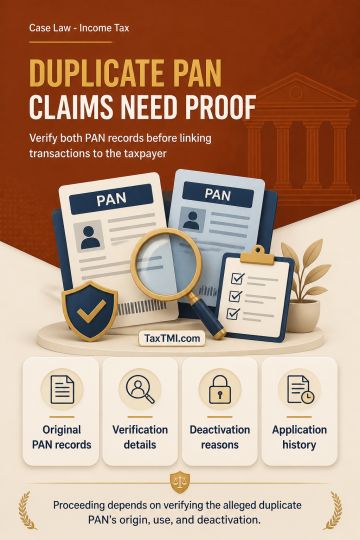
    Duplicate PAN allocation requires record verification and deactivation reasons before assessment-related transactions can be attributed to an assessee...
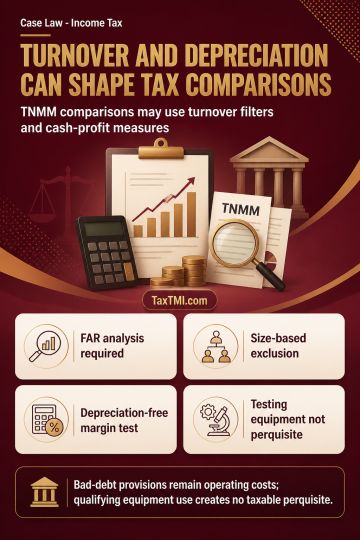
    Transfer-pricing comparability under TNMM permits turnover filtering and depreciation-adjusted cash profit indicators where functional differences mat...
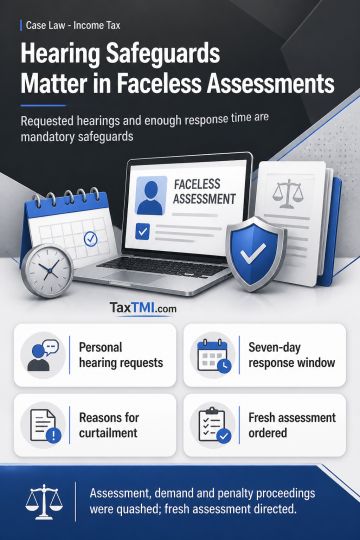
    Faceless assessment safeguards require requested personal hearings and adequate final show-cause response time, failing which reassessment is required...
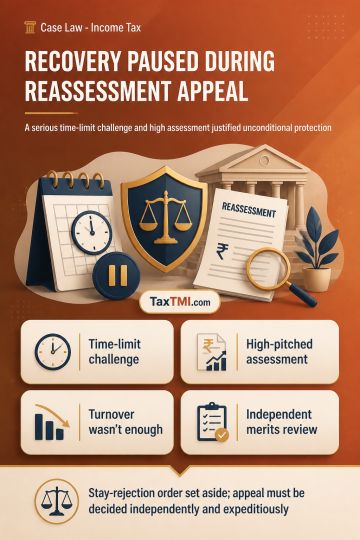
    Prima facie limitation challenges and high-pitched reassessments can justify full recovery stays pending independent appellate determination.
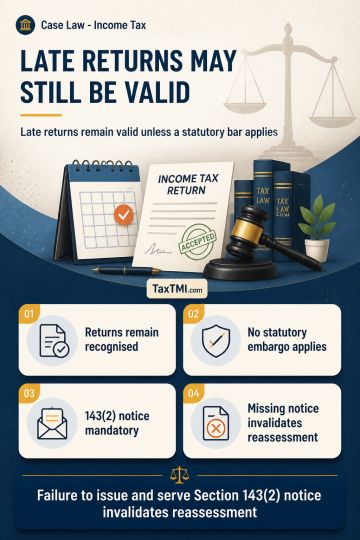
    Late reassessment returns remain valid where no statutory bar applies, requiring Section 143(2) notice before assessment.
❮
❯
❯❯
Maximize Maximize Maximize
0 / 200
Expand Note
Add to Folder

No Folders have been created

+

Are you sure you want to delete "My most important" ?

NOTE:

Highlights
Showing Results for :
Reset Filters
Results Found:
Show All Summaries Hide All Summaries

Highlights

Back

All Highlights

Showing Results for :
Reset Filters
No Records Found

Highlights

Back

All Highlights

The bogus transactions are a camouflage and dishonest attempt to...

Revenue's Appeal Upheld: AO to Assess Bogus Transactions at 12.5% Annually After CIT(A) Incorrectly Reduced Rate.

Contents
Summary
Note

Note

-

Bookmark

Print

Print

Income Tax August 10, 2024 Case Laws HC
The bogus transactions are a camouflage and dishonest attempt to avoid tax, resulting in addition to the assessee's income. The AO's approach should be well-considered, adhering to lawful norms and principles. If transactions are found bogus, they must be discarded by making appropriate permissible additions. The CIT(A) erred in reducing the gross profit returned by the assessee from 12% to 4.74%, as it had no bearing on purchases made by procuring bills to save VAT. The revenue's appeal was allowed, directing the AO to assess income from such transactions at 12.5% in each assessment year on the purchases made. The assessee accepted this finding as beneficial. If authorities view purchases as questionable or bogus, they must undertake necessary inquiries, including procuring information from other departments, to ascertain correct facts and bring such transactions to tax to prevent tax evasion and ensure real income is taxed.

Topics

Acts Income Tax