Electronic certificates of origin enable preferential tariffs under the India-New Zealand FTA when format, verification, and filing requirements are m...
Customs approval for liquid cargo exports extends designated jetty operations while existing boarding station and customs area limits remain unchanged...
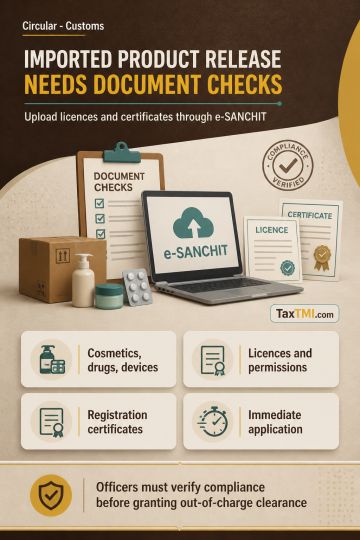
Mandatory compliance document verification now conditions out-of-charge clearance for imported cosmetics, drugs, and medical devices through PGA-facil...
Double taxation of turnover requires holistic verification across separately registered units and permits limited rectification of overlapping assessm...
Income Tax: The proposed amendments aim to introduce a time limitation of six years from the end of the relevant financial year or two years from the end of the financial year in which the correction statement is delivered, whichever is later, for issuing orders deeming any person as an assessee in default for failure to deduct/collect tax. This time limit applies to both resident and non-resident payees/persons u/ss 201 and 206C of the Income Tax Act. The amendments seek to provide certainty and address the existing lack of time limitation for non-residents u/s 201. The changes are set to take effect from April 1, 2025.
Income Tax: The proposed amendments aim to introduce a time limitation of six years from the end of the relevant financial year or two years from the end of the financial year in which the correction statement is delivered, whichever is later, for issuing orders deeming any person as an assessee in default for failure to deduct/collect tax. This time limit applies to both resident and non-resident payees/persons u/ss 201 and 206C of the Income Tax Act. The amendments seek to provide certainty and address the existing lack of time limitation for non-residents u/s 201. The changes are set to take effect from April 1, 2025.
Note: It is a system-generated summary and is for quick reference only.
 TaxTMI
 TaxTMI