Political contribution deductions require genuine transactions; banking records and party registration alone cannot defeat evidence of accommodation e...
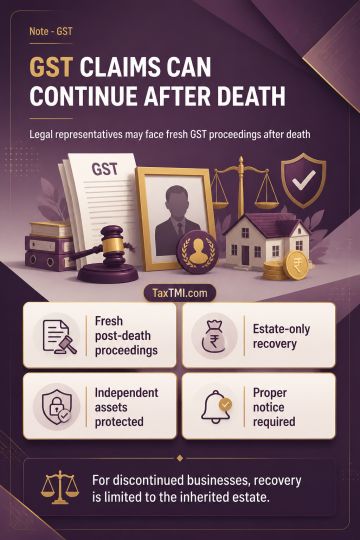
Post-death GST liability permits fresh proceedings against legal representatives, while discontinued-business recovery remains limited to the inherite...
Non-confirmation of FEMA seizure prevents adjudicators from overriding pending appellate findings on recorded reasons and suspected foreign asset hold...
The key aspects of the case relate to the maintainability of an application before the Advance Ruling Authority, classification of imported goods, and the applicability of Rule 2(a) for determining the classification. The court held that the expression "business" in Section 28E(a) of the Customs Act must be given a wide meaning, encompassing business models/modus operandi, not just products. The change in the applicant's business model constituted an "activity" for the purpose of Section 28E, rendering the application maintainable. Regarding classification, the court reiterated that until all components of a complete article are presented together for assessment, Rule 2(a) cannot be invoked to classify the parts as a complete article. As six essential components were procured from Indian vendors, the imports could not be classified as motor vehicles u/r 2(a). Consequently, the court dismissed the writ petition, upholding the impugned order.
The key aspects of the case relate to the maintainability of an application before the Advance Ruling Authority, classification of imported goods, and the applicability of Rule 2(a) for determining the classification. The court held that the expression "business" in Section 28E(a) of the Customs Act must be given a wide meaning, encompassing business models/modus operandi, not just products. The change in the applicant's business model constituted an "activity" for the purpose of Section 28E, rendering the application maintainable. Regarding classification, the court reiterated that until all components of a complete article are presented together for assessment, Rule 2(a) cannot be invoked to classify the parts as a complete article. As six essential components were procured from Indian vendors, the imports could not be classified as motor vehicles u/r 2(a). Consequently, the court dismissed the writ petition, upholding the impugned order.
Note: It is a system-generated summary and is for quick reference only.
 TaxTMI
  TaxTMI
 of 4918