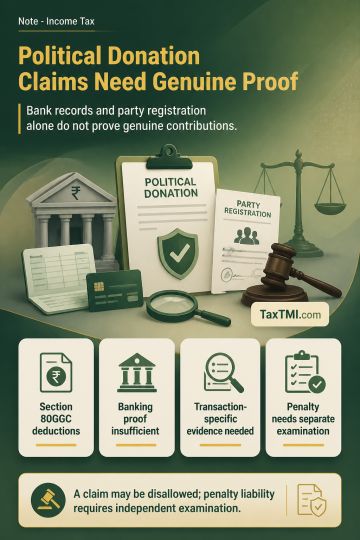
Political contribution deductions require genuine transactions; banking records and party registration alone cannot defeat evidence of accommodation e...
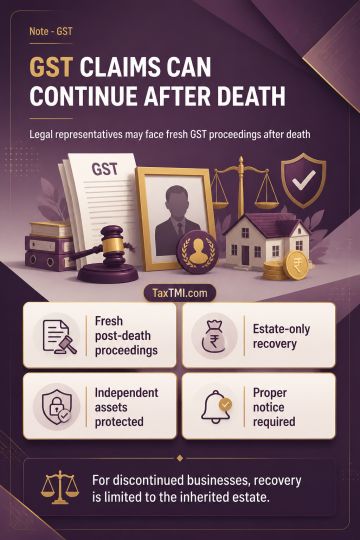
Post-death GST liability permits fresh proceedings against legal representatives, while discontinued-business recovery remains limited to the inherite...
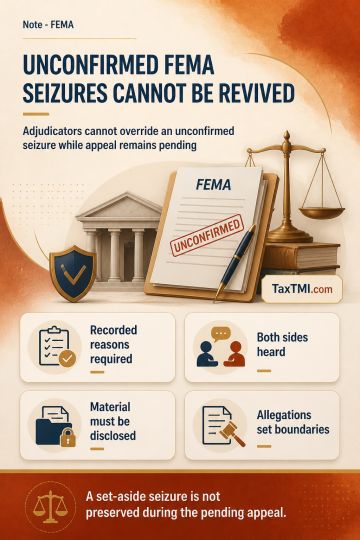
Non-confirmation of FEMA seizure prevents adjudicators from overriding pending appellate findings on recorded reasons and suspected foreign asset hold...
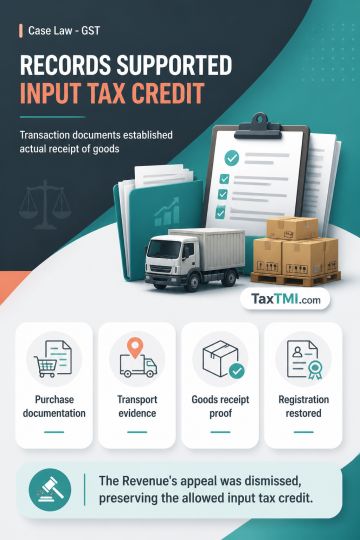
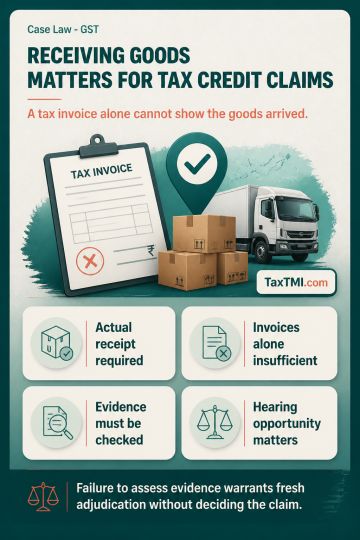
The appellant was issued penalty u/r 26(2) of Central Excise Rules, 2002, alleging that second stage dealers based in Jaipur were issuing cenvatable invoices to the main noticee without delivering goods, which were purchased from first stage dealers and manufactured by non-existent or non-working manufacturers. The Commissioner (Appeals) recorded categorical findings that the main noticee had duly received goods and made duty payment. Tribunal held that when the demand for cenvat credit itself is not maintainable, there is no justification to affirm penalty on the appellant. Following the principles enunciated by Division Bench in Drolia Electrosteel case, where department accepted findings of Commissioner (Appeals), there is no justification to uphold penalty imposition on appellant. The impugned order was set aside and appeal allowed.
The appellant was issued penalty u/r 26(2) of Central Excise Rules, 2002, alleging that second stage dealers based in Jaipur were issuing cenvatable invoices to the main noticee without delivering goods, which were purchased from first stage dealers and manufactured by non-existent or non-working manufacturers. The Commissioner (Appeals) recorded categorical findings that the main noticee had duly received goods and made duty payment. Tribunal held that when the demand for cenvat credit itself is not maintainable, there is no justification to affirm penalty on the appellant. Following the principles enunciated by Division Bench in Drolia Electrosteel case, where department accepted findings of Commissioner (Appeals), there is no justification to uphold penalty imposition on appellant. The impugned order was set aside and appeal allowed.
Note: It is a system-generated summary and is for quick reference only.
 TaxTMI
  TaxTMI
 of 4918