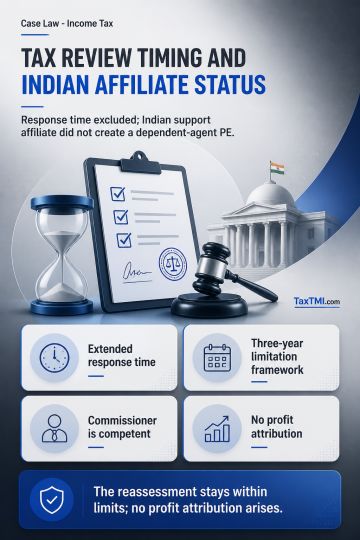
Supervisory permanent establishment requires project-wise duration and qualifying construction nexus; offshore supplies and salary reimbursements rema...
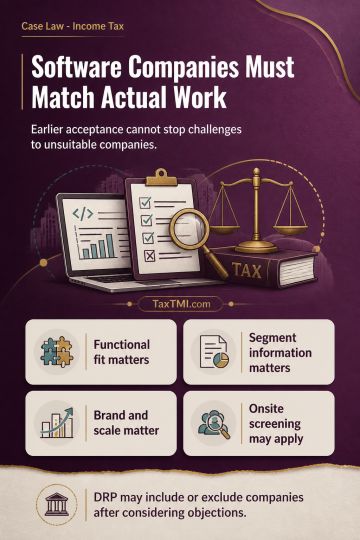
Transfer-pricing comparability permits fresh objections and filters where software service comparables are functionally unsuitable for arm's-length pr...
Territorial rendering requirement excludes China-based management and consultancy services from fees for technical services under the India-China DTAA...
Reassessment proceedings were held invalid due to lack of proper jurisdiction by the Assistant Commissioner of Income Tax while issuing the notice u/s 148. The assessment order was not passed by the person issuing the notice, rendering it a curable defect u/s 292BB. The ACIT lacked pecuniary jurisdiction as the assessee's total income for the relevant assessment year fell within the Income Tax Officer's jurisdiction. The subsequent transfer of assessment records by the ACIT to the ITO was deemed illegal, as transfers can only be done u/s 127 of the Income Tax Act, 1961. The defect was deemed incurable and not amenable to correction u/s 292BB. Consequently, the notice issued u/s 148 was without jurisdiction, and the consequent assessment order was held invalid. The Appellate Tribunal ruled in favor of the assessee, aligning with the Bombay High Court's judgment in Ashok Devichand Jain v. Union of India & Ors.
Reassessment proceedings were held invalid due to lack of proper jurisdiction by the Assistant Commissioner of Income Tax while issuing the notice u/s 148. The assessment order was not passed by the person issuing the notice, rendering it a curable defect u/s 292BB. The ACIT lacked pecuniary jurisdiction as the assessee's total income for the relevant assessment year fell within the Income Tax Officer's jurisdiction. The subsequent transfer of assessment records by the ACIT to the ITO was deemed illegal, as transfers can only be done u/s 127 of the Income Tax Act, 1961. The defect was deemed incurable and not amenable to correction u/s 292BB. Consequently, the notice issued u/s 148 was without jurisdiction, and the consequent assessment order was held invalid. The Appellate Tribunal ruled in favor of the assessee, aligning with the Bombay High Court's judgment in Ashok Devichand Jain v. Union of India & Ors.
Note: It is a system-generated summary and is for quick reference only.
 TaxTMI
  TaxTMI
 of 4879