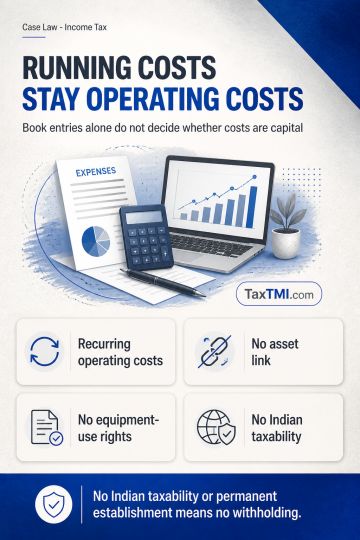
Business expenditure and depreciation rules allow operational outgoings while limiting disallowances for personal elements and unsupported third-party...
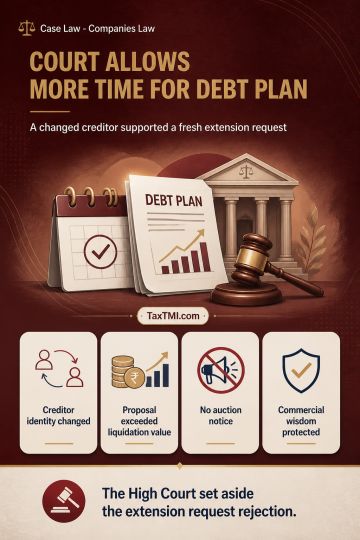
Compromise-and-arrangement extensions may accommodate debt assignment where creditor commercial judgment supports value maximisation and avoids proced...
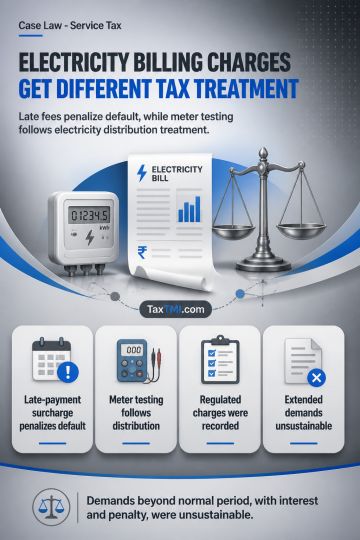
Delayed-payment surcharge is not taxable tolerance consideration where it penalises default, while meter testing follows electricity distribution trea...
Sufficient cause for delayed revenue income-tax appeals requires bona fides, due diligence and a credible explanation; otherwise limitation bars appea...
Inverted-duty-structure refunds remain available for unchanged-rate apparel supplies despite trader status and require tax-period-specific computation...
Reassessment proceedings were held invalid due to lack of proper jurisdiction by the Assistant Commissioner of Income Tax while issuing the notice u/s 148. The assessment order was not passed by the person issuing the notice, rendering it a curable defect u/s 292BB. The ACIT lacked pecuniary jurisdiction as the assessee's total income for the relevant assessment year fell within the Income Tax Officer's jurisdiction. The subsequent transfer of assessment records by the ACIT to the ITO was deemed illegal, as transfers can only be done u/s 127 of the Income Tax Act, 1961. The defect was deemed incurable and not amenable to correction u/s 292BB. Consequently, the notice issued u/s 148 was without jurisdiction, and the consequent assessment order was held invalid. The Appellate Tribunal ruled in favor of the assessee, aligning with the Bombay High Court's judgment in Ashok Devichand Jain v. Union of India & Ors.
Reassessment proceedings were held invalid due to lack of proper jurisdiction by the Assistant Commissioner of Income Tax while issuing the notice u/s 148. The assessment order was not passed by the person issuing the notice, rendering it a curable defect u/s 292BB. The ACIT lacked pecuniary jurisdiction as the assessee's total income for the relevant assessment year fell within the Income Tax Officer's jurisdiction. The subsequent transfer of assessment records by the ACIT to the ITO was deemed illegal, as transfers can only be done u/s 127 of the Income Tax Act, 1961. The defect was deemed incurable and not amenable to correction u/s 292BB. Consequently, the notice issued u/s 148 was without jurisdiction, and the consequent assessment order was held invalid. The Appellate Tribunal ruled in favor of the assessee, aligning with the Bombay High Court's judgment in Ashok Devichand Jain v. Union of India & Ors.
Note: It is a system-generated summary and is for quick reference only.
 TaxTMI
  TaxTMI
 of 4888