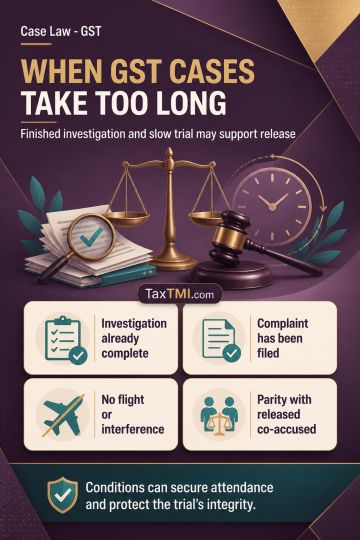
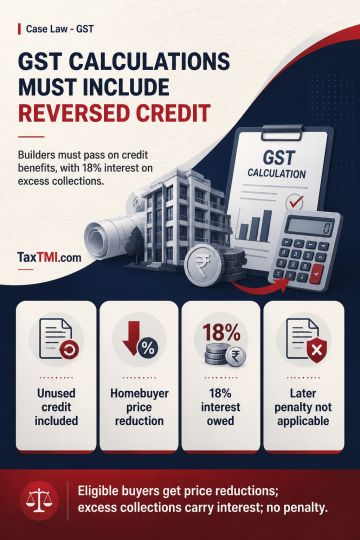
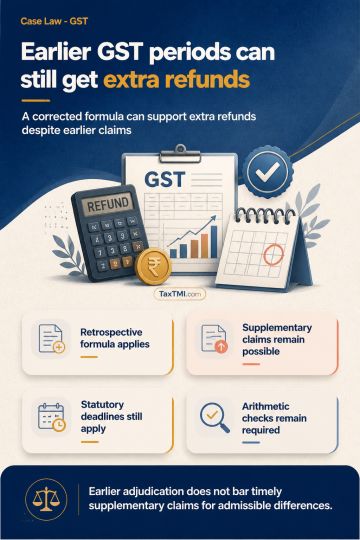
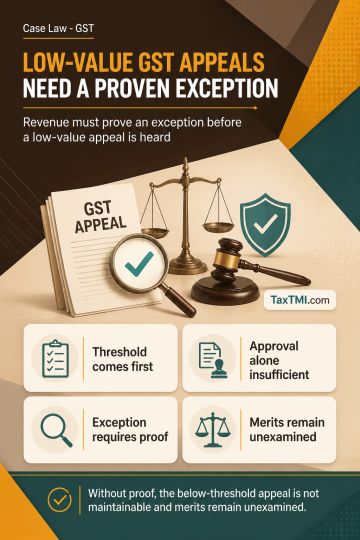
Coercive recovery during GST searches is restrained pending scrutiny, preserving normal business operations and requiring adherence to investigation g...
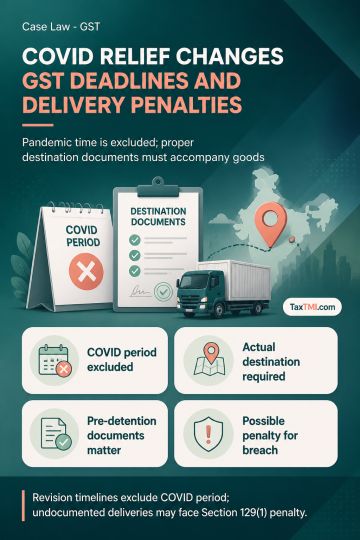
COVID-19 limitation exclusion and destination-specific e-way bills govern revisional timelines and penalties for undocumented third-party plywood deli...
Questions arising from miscellaneous application orders cannot challenge unaltered Tribunal findings, leaving the original order separately challengea...
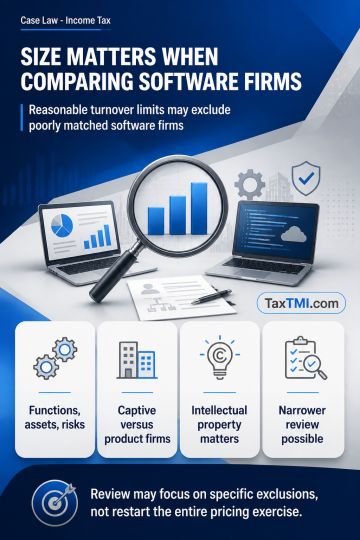
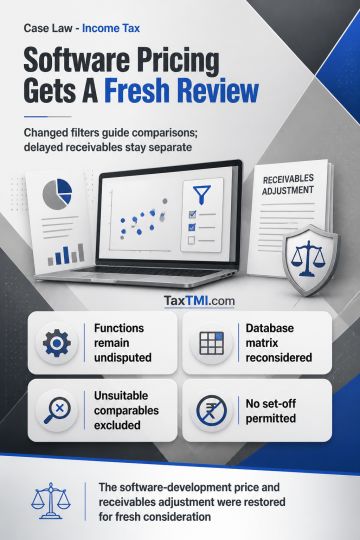
Transfer-pricing comparability filters require fresh arm's-length analysis, while delayed receivables need separate reconsideration with working-capit...
Page of 4894
Press 'Enter' after typing page number.
721 to 740 of 97867 Results
❮
❯
❯❯
0 / 200
Expand Note
Add to Folder
No Folders have been created
+
Are you sure you want to delete "My most important" ?
The AO denied exemption u/s 11 to the assessee trust based on incriminating evidence of undisclosed income declared under PMGKY, systematic recovery of staff salaries, bogus corpus donations, and other fraudulent activities violating Sections 13(1)(c) and 13(1)(d). The trust's participation in PMGKY does not absolve it from wrongdoing. The CIT(A) failed to provide reasons justifying the trust's adherence to its objects. The accounts were unreliable due to the trustees' consistent involvement in fraud. The admission of undisclosed income under PMGKY and misuse of trust funds for taxes indicate deviation from charitable objectives. The AO's extrapolation was based on direct evidence of systematic fraud. The exemptions u/ss 11 and 12 were rightly denied, and income should be taxed at the maximum marginal rate u/s 164(2), excluding exemptions but giving credit for PMGKY disclosure after avoiding double additions.
The AO denied exemption u/s 11 to the assessee trust based on incriminating evidence of undisclosed income declared under PMGKY, systematic recovery of staff salaries, bogus corpus donations, and other fraudulent activities violating Sections 13(1)(c) and 13(1)(d). The trust's participation in PMGKY does not absolve it from wrongdoing. The CIT(A) failed to provide reasons justifying the trust's adherence to its objects. The accounts were unreliable due to the trustees' consistent involvement in fraud. The admission of undisclosed income under PMGKY and misuse of trust funds for taxes indicate deviation from charitable objectives. The AO's extrapolation was based on direct evidence of systematic fraud. The exemptions u/ss 11 and 12 were rightly denied, and income should be taxed at the maximum marginal rate u/s 164(2), excluding exemptions but giving credit for PMGKY disclosure after avoiding double additions.
Note: It is a system-generated summary and is for quick reference only.
 TaxTMI
  TaxTMI
 of 4894