Permanent establishment tests: independent subsidiary premises and principal-to-principal dealings did not create Indian taxability for offshore suppl...
Valuation Officer estimates govern property-value additions once statutory valuation is invoked, requiring fresh consideration of objections and compa...
Waiver of written show-cause notice may prevent a later procedural challenge after participation in customs adjudication, preserving statutory appella...
Retrospective invalidity of ocean-freight IGST supports refunds despite non-party status and prior credit utilisation, subject to authorised appeal gr...
Additional evidence in departmental appeals may include show-cause-notice material without introducing a new case where it merely corroborates existin...
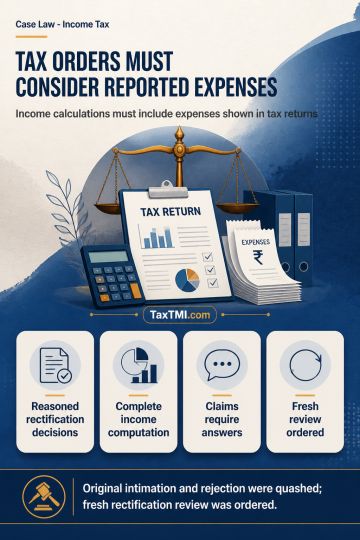
Reasoned rectification orders require consideration of expenditure disclosed in income-tax returns, preventing revision based on incomplete income com...
Modified returns after business reorganisations cannot trigger fresh scrutiny once the original assessment was complete, invalidating related transfer...
Page of 4891
Press 'Enter' after typing page number.
21 to 40 of 97820 Results
❮
❯
❯❯
0 / 200
Expand Note
Add to Folder
No Folders have been created
+
Are you sure you want to delete "My most important" ?
The Court held that the builder had forfeited its right to file a written statement, but its right to participate in the proceedings was protected. The rigour of the rule of pleadings under the Code of Civil Procedure mandates that no pleading shall raise any new ground or contain allegations inconsistent with previous pleadings. The builder did not seek permission to cross-examine the witness or raise grievance of denial of such opportunity. The builder could be permitted only to argue legal questions, lapses, and non-admissibility of evidence. The Court found no error in the NCDRC's decision, as the builder could not bring forth anything admissible due to the forfeiture order. The appeal was partly allowed, modifying the formula for payment of compensation for delay in handing over possession of flats, directing the developer to pay interest at 6% per annum from the due date till the date of offering possession.
The Court held that the builder had forfeited its right to file a written statement, but its right to participate in the proceedings was protected. The rigour of the rule of pleadings under the Code of Civil Procedure mandates that no pleading shall raise any new ground or contain allegations inconsistent with previous pleadings. The builder did not seek permission to cross-examine the witness or raise grievance of denial of such opportunity. The builder could be permitted only to argue legal questions, lapses, and non-admissibility of evidence. The Court found no error in the NCDRC's decision, as the builder could not bring forth anything admissible due to the forfeiture order. The appeal was partly allowed, modifying the formula for payment of compensation for delay in handing over possession of flats, directing the developer to pay interest at 6% per annum from the due date till the date of offering possession.
Note: It is a system-generated summary and is for quick reference only.
 TaxTMI
  TaxTMI
 of 4891