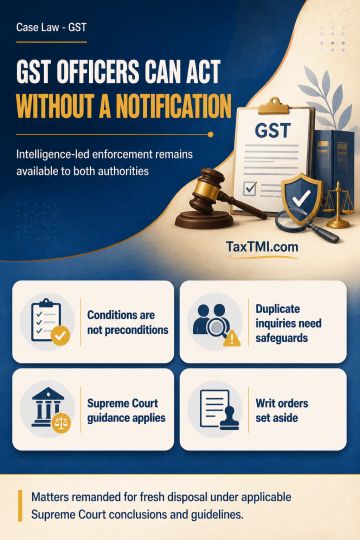
GST cross-empowerment remains effective without conditional notification, while duplicate proceedings require established safeguards against overlappi...
The Advance Ruling Authority determined that the levy of GST on liquidated damages constitutes a supply of service under the Central Goods and Services Tax Act. Liquidated damages received for breach of contract or non-performance are considered income and fall under the definition of consideration for tolerating an act, thereby attracting GST. The imposition of compensation or penalty is governed by the Indian Contract Act to prevent defaulting acts. Compensation for tolerating non-performance constitutes a supply of service, making such payments subject to GST.
The Advance Ruling Authority determined that the levy of GST on liquidated damages constitutes a supply of service under the Central Goods and Services Tax Act. Liquidated damages received for breach of contract or non-performance are considered income and fall under the definition of consideration for tolerating an act, thereby attracting GST. The imposition of compensation or penalty is governed by the Indian Contract Act to prevent defaulting acts. Compensation for tolerating non-performance constitutes a supply of service, making such payments subject to GST.
Note: It is a system-generated summary and is for quick reference only.
 TaxTMI
  TaxTMI
 of 4884