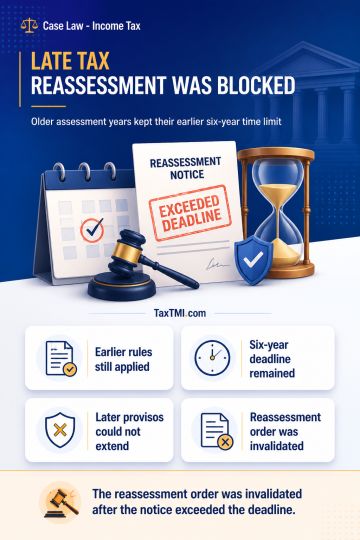
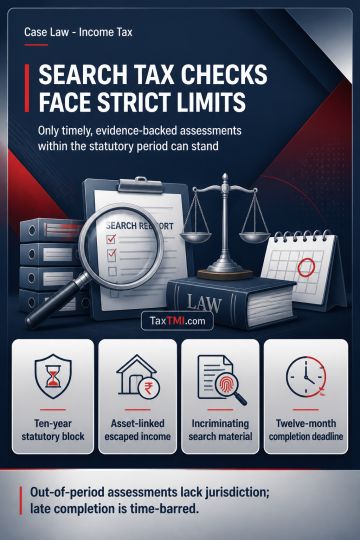
Pre-amendment reassessment limitation bars late notices under the preserved regime, invalidating consequential reassessment for affected earlier asses...
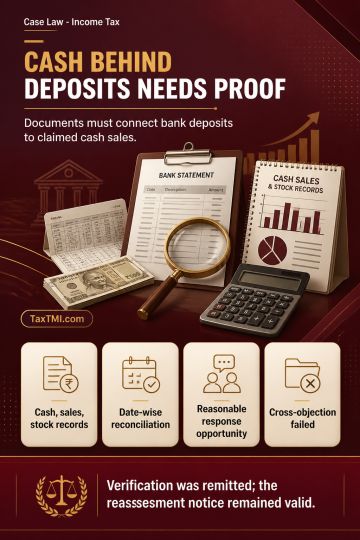
Cash-sales explanations for bank deposits require documentary reconciliation; reassessment notice survived where effective response time was available...
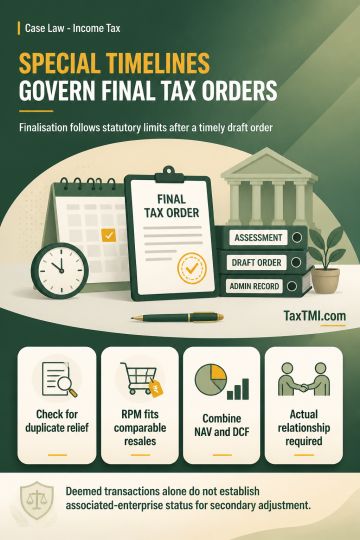
Functional comparability in transfer pricing prevents ad hoc arm's length adjustments where functions, assets, risks and reliable comparables are unes...
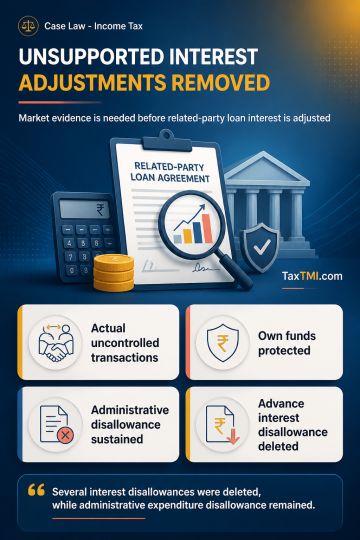
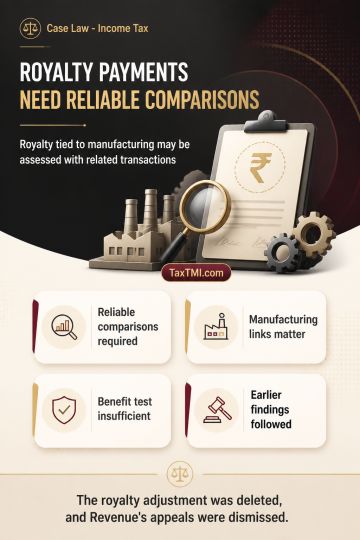
Contingency expenses, exempt-income disallowance, and royalty benchmarking: unsupported adjustments were deleted under consistent accounting and trans...
Page of 4920
Press 'Enter' after typing page number.
61 to 80 of 98394 Results
❮
❯
❯❯
0 / 200
Expand Note
Add to Folder
No Folders have been created
+
Are you sure you want to delete "My most important" ?
The ITAT, an Appellate Tribunal, addressed the issue of whether income deemed to accrue or arise in India through royalty and fees for technical support services. The tribunal analyzed the "make available" clause in the India-USA DTAA and determined that the services provided were customized and differentiated, not constituting royalty. Referring to a Supreme Court decision, it was held that payments to non-resident vendors for technical support were not taxable as royalty under the DTAA. Consequently, revenue from cloud-based services subscriptions was deemed non-taxable under the India-US DTAA. The decision favored the assessee in this case.
The ITAT, an Appellate Tribunal, addressed the issue of whether income deemed to accrue or arise in India through royalty and fees for technical support services. The tribunal analyzed the "make available" clause in the India-USA DTAA and determined that the services provided were customized and differentiated, not constituting royalty. Referring to a Supreme Court decision, it was held that payments to non-resident vendors for technical support were not taxable as royalty under the DTAA. Consequently, revenue from cloud-based services subscriptions was deemed non-taxable under the India-US DTAA. The decision favored the assessee in this case.
Note: It is a system-generated summary and is for quick reference only.
 TaxTMI
 TaxTMI

 of 4920