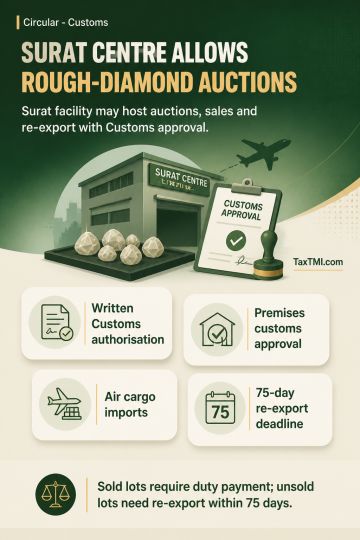
Customs exemptions cover photovoltaic assembly machinery and PVF backsheets, while fully declared cleared imports may avoid confiscation and penalties...
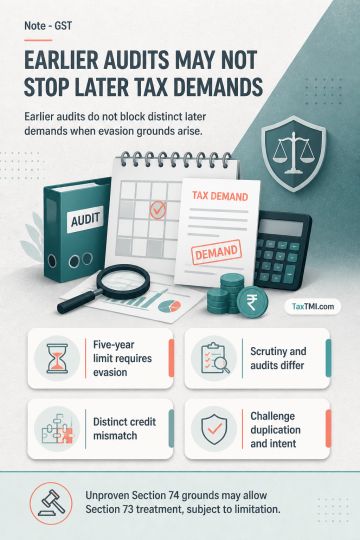
Specific tariff classification for LCD devices overrides treatment as electricity-meter parts, defeating differential duty, extended limitation, and p...
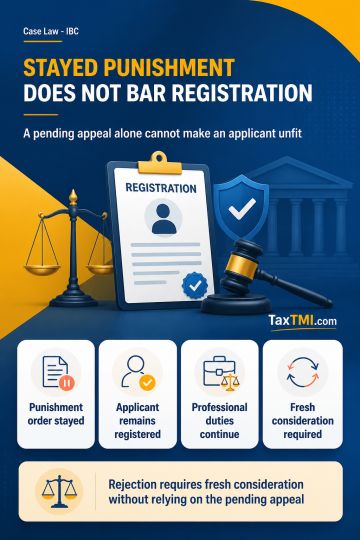
Stayed disciplinary punishment does not establish unfitness for insolvency professional registration; reconsideration must disregard mere pendency of ...
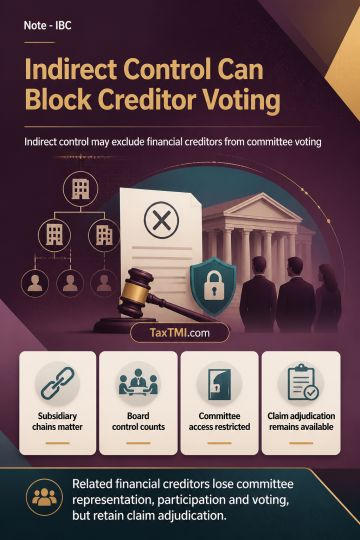
Indirect corporate control can create related-party status, excluding financial creditors from Committee of Creditors representation, participation an...
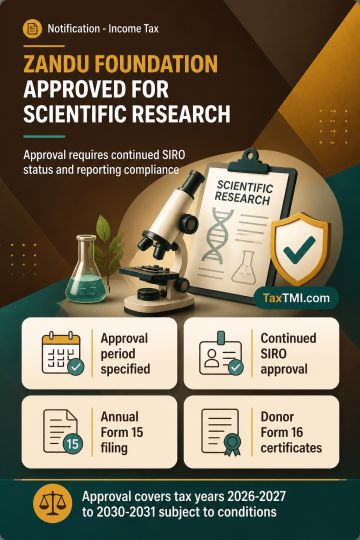
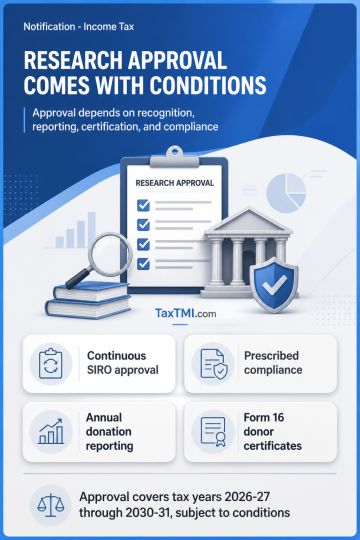
Scientific research association approval requires continuing SIRO status, annual donation reporting, and donor certificates for the approved foundatio...
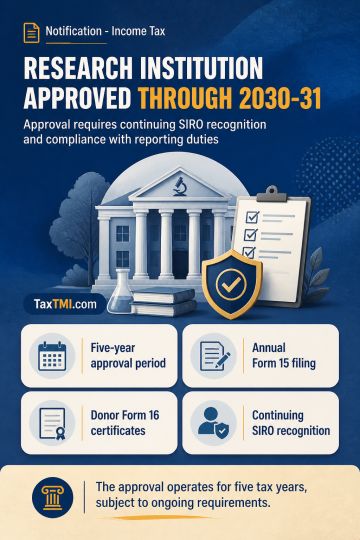
Scientific research institution approval is conditional on SIRO recognition, annual donation reporting, donor certification, and prescribed compliance...
The High Court considered the maintainability of a review petition based on a subsequent judgment and the condonation of a 619-day delay in filing the civil review petition. The appellant attributed the delay to the Counsel's actions. The main issue was the entitlement of exemption u/s 80-P(2)(a)(i) and the taxability of transfer charges received by the Samiti. The Court referred to a Supreme Court decision regarding the nature of transfer charges. The Court held that a decision based on a question of law, if subsequently reversed or modified by a superior court, does not form grounds for review. The Court noted a split verdict in another Supreme Court case. The Court emphasized that entertaining a review petition ignoring statutory provisions would create uncertainty. Consequently, the appeal for condonation of the delay in filing the civil review petition was dismissed.
The High Court considered the maintainability of a review petition based on a subsequent judgment and the condonation of a 619-day delay in filing the civil review petition. The appellant attributed the delay to the Counsel's actions. The main issue was the entitlement of exemption u/s 80-P(2)(a)(i) and the taxability of transfer charges received by the Samiti. The Court referred to a Supreme Court decision regarding the nature of transfer charges. The Court held that a decision based on a question of law, if subsequently reversed or modified by a superior court, does not form grounds for review. The Court noted a split verdict in another Supreme Court case. The Court emphasized that entertaining a review petition ignoring statutory provisions would create uncertainty. Consequently, the appeal for condonation of the delay in filing the civil review petition was dismissed.
Note: It is a system-generated summary and is for quick reference only.
 TaxTMI
  TaxTMI
 of 4879