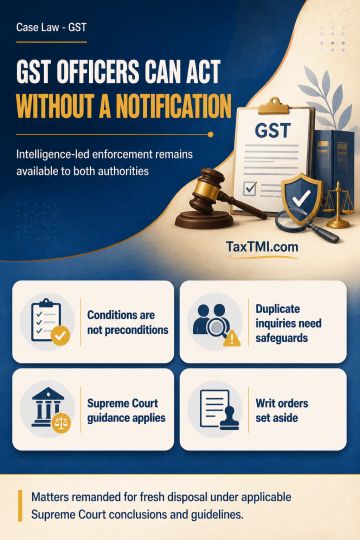
GST cross-empowerment remains effective without conditional notification, while duplicate proceedings require established safeguards against overlappi...
The High Court considered the maintainability of a review petition based on a subsequent judgment and the condonation of a 619-day delay in filing the civil review petition. The appellant attributed the delay to the Counsel's actions. The main issue was the entitlement of exemption u/s 80-P(2)(a)(i) and the taxability of transfer charges received by the Samiti. The Court referred to a Supreme Court decision regarding the nature of transfer charges. The Court held that a decision based on a question of law, if subsequently reversed or modified by a superior court, does not form grounds for review. The Court noted a split verdict in another Supreme Court case. The Court emphasized that entertaining a review petition ignoring statutory provisions would create uncertainty. Consequently, the appeal for condonation of the delay in filing the civil review petition was dismissed.
The High Court considered the maintainability of a review petition based on a subsequent judgment and the condonation of a 619-day delay in filing the civil review petition. The appellant attributed the delay to the Counsel's actions. The main issue was the entitlement of exemption u/s 80-P(2)(a)(i) and the taxability of transfer charges received by the Samiti. The Court referred to a Supreme Court decision regarding the nature of transfer charges. The Court held that a decision based on a question of law, if subsequently reversed or modified by a superior court, does not form grounds for review. The Court noted a split verdict in another Supreme Court case. The Court emphasized that entertaining a review petition ignoring statutory provisions would create uncertainty. Consequently, the appeal for condonation of the delay in filing the civil review petition was dismissed.
Note: It is a system-generated summary and is for quick reference only.
 TaxTMI
  TaxTMI
 of 4891