Customs-controlled cargo movement now includes GDL, subject to EXIM prioritisation, segregation, verification, reconciliation and enforcement safeguar...
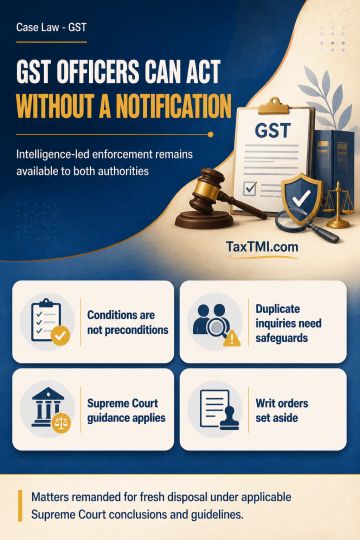
GST cross-empowerment remains effective without conditional notification, while duplicate proceedings require established safeguards against overlappi...
The Appellate Tribunal considered the validity of assessment proceedings under Sec 153A where the approval process under Sec 153D was not followed by the Assessing Officer (AO). The Tribunal noted that the approval granted lacked proper consideration of factual and legal aspects, being a mere formality without actual supervision by the sanctioning authority. The Tribunal found a similar issue favorably adjudicated in the assessee's own case for another assessment year, where the lack of propriety in such approvals was acknowledged. Consequently, the Tribunal held that the assessment order for the year in question, based on a deficient approval process, lacked enforceability in law and was therefore quashed in favor of the assessee.
The Appellate Tribunal considered the validity of assessment proceedings under Sec 153A where the approval process under Sec 153D was not followed by the Assessing Officer (AO). The Tribunal noted that the approval granted lacked proper consideration of factual and legal aspects, being a mere formality without actual supervision by the sanctioning authority. The Tribunal found a similar issue favorably adjudicated in the assessee's own case for another assessment year, where the lack of propriety in such approvals was acknowledged. Consequently, the Tribunal held that the assessment order for the year in question, based on a deficient approval process, lacked enforceability in law and was therefore quashed in favor of the assessee.
Note: It is a system-generated summary and is for quick reference only.
 TaxTMI
  TaxTMI
 of 4879